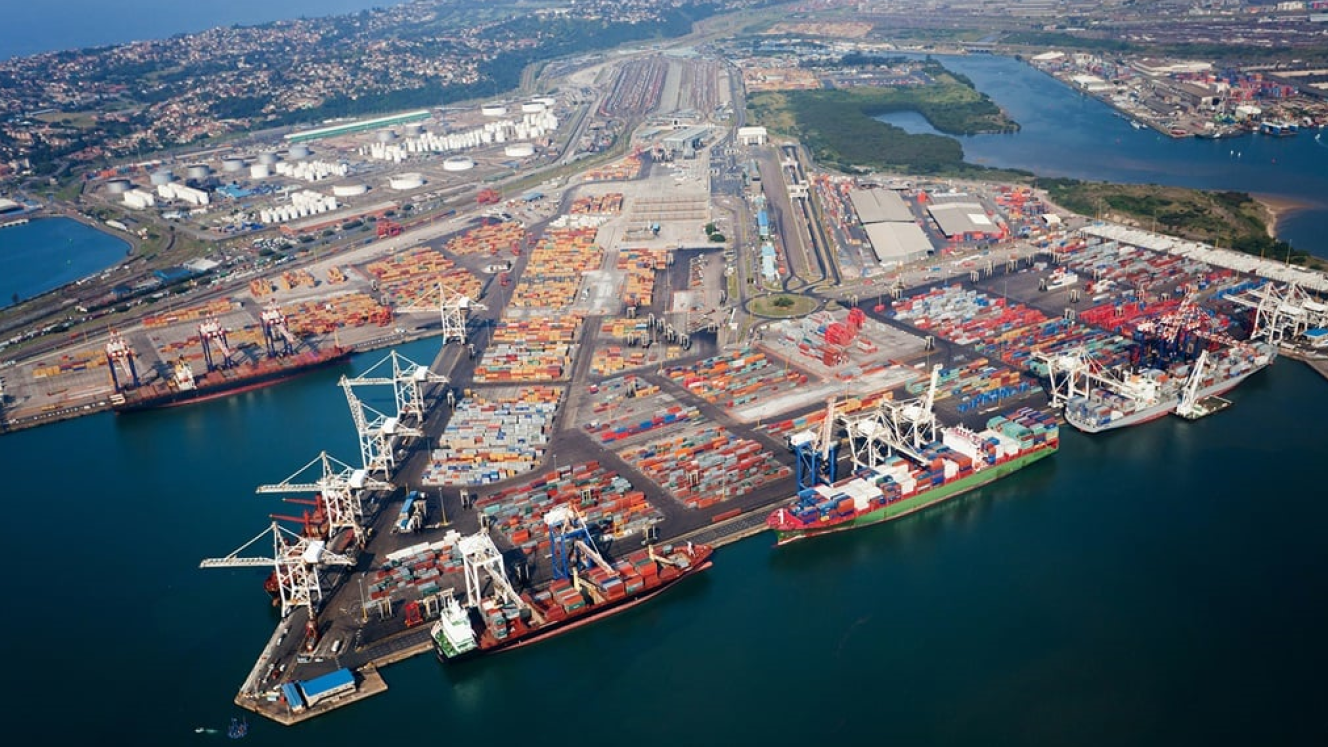
Analysis of the volumes passing through the main South African ports undertaken by Lance Pullan of Linernet point to brighter prospects after what Stats SA described as an economic “stumble” in the first quarter of 2019. Pullan’s graphs of volumes for car carrier and ro-ro vessels, and the number of vessel calls, both show a sharp increase in March this year. The number of vessels calling on all Transnetoperated ports rose by 49.18% between March and April this year – and 48.56% year-on-year (April 2018 vs 2019). Cape Town showed the biggest increase between March and April, at 153.15%, and Richards Bay the lowest at 6.25%. Cape Town is also 191.94% up year-on-year. Vehicle exports through all three car terminals – Durban, East London and
Port Elizabeth – started climbing strongly in March. The next set of statistics from Linernet will show a drop in May – which is expected to be temporary. The National Association of Automobile Manufacturers of South Africa (Naamsa) says in a statement that the May 2019 export sales number represented an “unexpected decline” with export sales at 29 850 vehicles reflecting a decrease of 8.8% compared to the 32 716 vehicles exported in the same month last year. Volumes are, however, expected to pick up. Pointing out that export volumes for the first five months of the year are 20.1% up on the same period last year, Naamsa says “the momentum of vehicle exports over the course of 2019 should increase further”. The prospects of more demand for logistics and freight services from other manufacturing sectors are not as bright. Stats SA says “South
Africa’s trade industry is now in recession, this being its second consecutive quarter of negative growth”. Agriculture production slumped by 13.2% after registering a 7.9% rise in activity in the fourth quarter of 2018. A slowdown in the production of field crops (wheat, sunflower seeds, and tobacco) and horticultural products (vegetables, citrus
and deciduous fruits) meant that there was less fresh produce to move internally and to export markets. The one growing area is citrus, with exports of a record 137 million boxes being forecast for 2019. With predictions that local economic demand is likely to remain subdued for some time, manufacturers will be looking at export markets – in which they will
face stiff competition. The World Bank predicts that global economic growth will ease to a weaker-thanexpected 2.6% in 2019 before inching up to 2.7% in 2020. Given the distance of South Africa to the major markets, there will be continued pressure on all suppliers in the logistics chain to cut costs in order to make the country’s exports more competitive.
Port stats put more positive spin on economy
Comments | 0
© Now Media. This content is protected by copyright and may not be adapted or republished. If you would like to discuss cooperation opportunities, please contact: editor@freightnews.co.za.