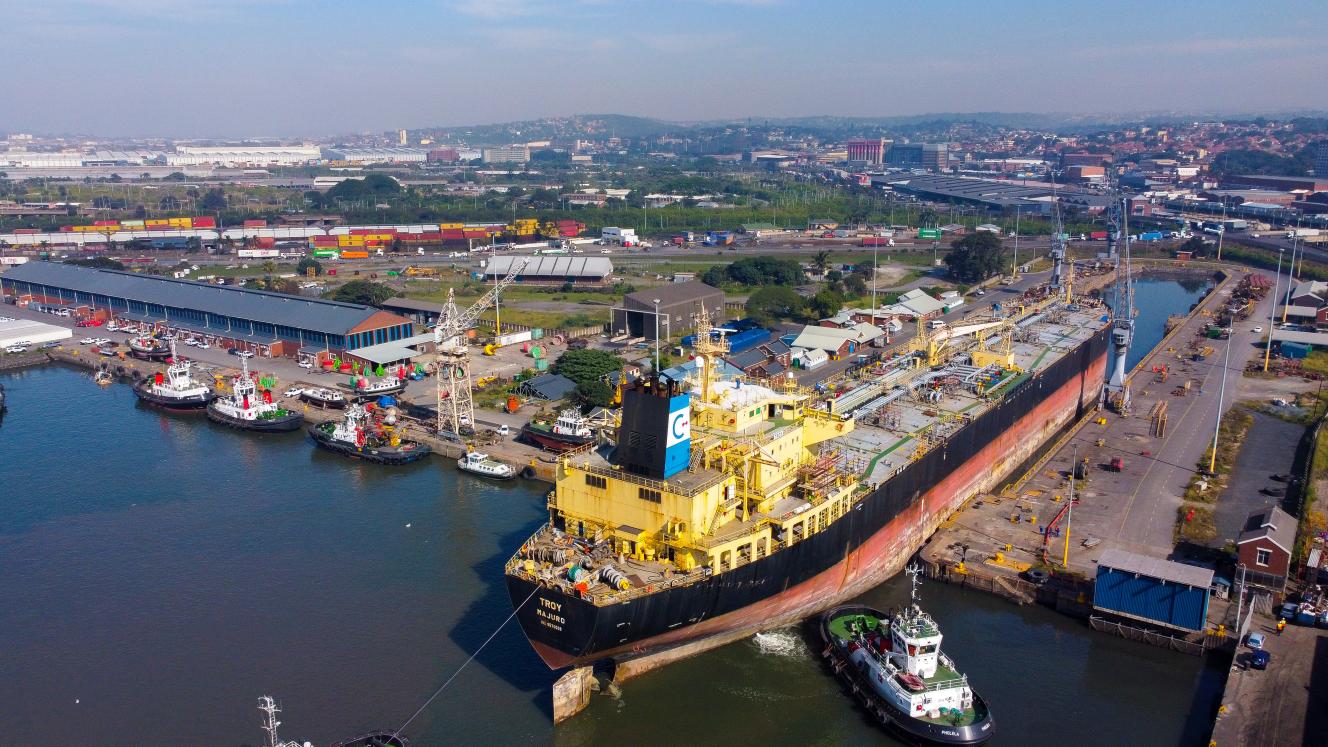
Bunker sales in South
Africa have been shrinking
significantly in recent years,
despite shipping volumes
having increased, according
to the International Bunker
Industry Association (Ibia)
– which recently held its
regional forum in Cape
Town.
“Several factors have
impacted the potential of
the bunker market in South
Africa, including the high
port calling costs, making
it unattractive for ‘bunker
only’ callers; product sources
being restricted to three
local refineries, which at
times has played havoc with
product availability; limited
range of fuel types on offer;
and a reduction in available
supply options in Durban
and Cape Town,” Ibia told
FTW.
Statistics presented at the
forum showed that between
2011 and 2015 the number
of ships lifting bunkers in
Durban had fallen from
more than 800 to fewer than
700. The worst hit market,
however, has been the Port
of Cape Town, where the
number dropped from just
over 800 in 2011 to fewer
than 400 in 2015.
Tahra Sergeant, regional
manager for Ibia Africa, says
the sharp fall in Cape Town’s
bunkering
volumes
has been
attributed to
the drop in
fishing vessels
taking fuel
there.
“That,
in turn, is
due to the
port’s supply
infrastructure
having
changed, with
deliveries
now being
undertaken
by one bunker barge, while
previously fishing vessels
used a series of pipelines
bringing product directly
from the Caltex refinery
to the port quayside,” she
explained.
According to Coen
Birkenstock, manager:
corporate affairs at Transnet
National Ports Authority
(TNPA), a decision has been
made around the refuelling
activities.
He told the forum that the
port saw a better commercial
opportunity in using the
quay space to increase cargo
handling
capacity.
But it is
not all doom
and gloom
for the local
market,
according to
Jon Hughes,
managing
director
of South
Africa-based
bunker
trading
company
SABT.
He said
there were some positives in
the South African bunker
market that were undersold.
“This is a market where you
get what you pay for and the
product is “on spec”, because
of reliable barge operators
and steady product
quality from the three
refineries producing fuels
for the country’s bunker
market. Despite reduced
competitiveness in recent
years, this makes Durban and
Cape Town competitive in
terms of value," said Hughes.
The biggest positive for
South Africa, however, is
still its strategic location on
international trade routes.
In this regard, Transnet
has said it is committed to
improving and expanding
port infrastructure and
hinted that it would support
growing the bunkering
industry.
Sergeant added: “There
is also huge interest in the
arrival on the South African
bunkering scene of Aegean
Marine Petroleum, which
launched the country’s first
ever offshore bunkering
at anchorage in Algoa Bay
in April this year. The fact
that a foreign company has
been given the first offshore
operating licence has caused
a lot of local criticism and
upset, but most of the
local bunker traders think
it is interesting and that
it has given the industry
an injection of energy
and incentive to be more
competitive.”
INSERT & CAPTION
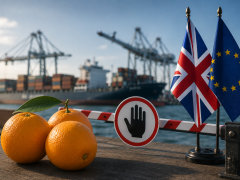
Several factors
have impacted the
potential of the
SA bunker market,
including the high
port calling costs.
– Tahra Sergeant
Port costs shrink SA bunker sales
Comments | 0
© Now Media. This content is protected by copyright and may not be adapted or republished. If you would like to discuss cooperation opportunities, please contact: editor@freightnews.co.za.