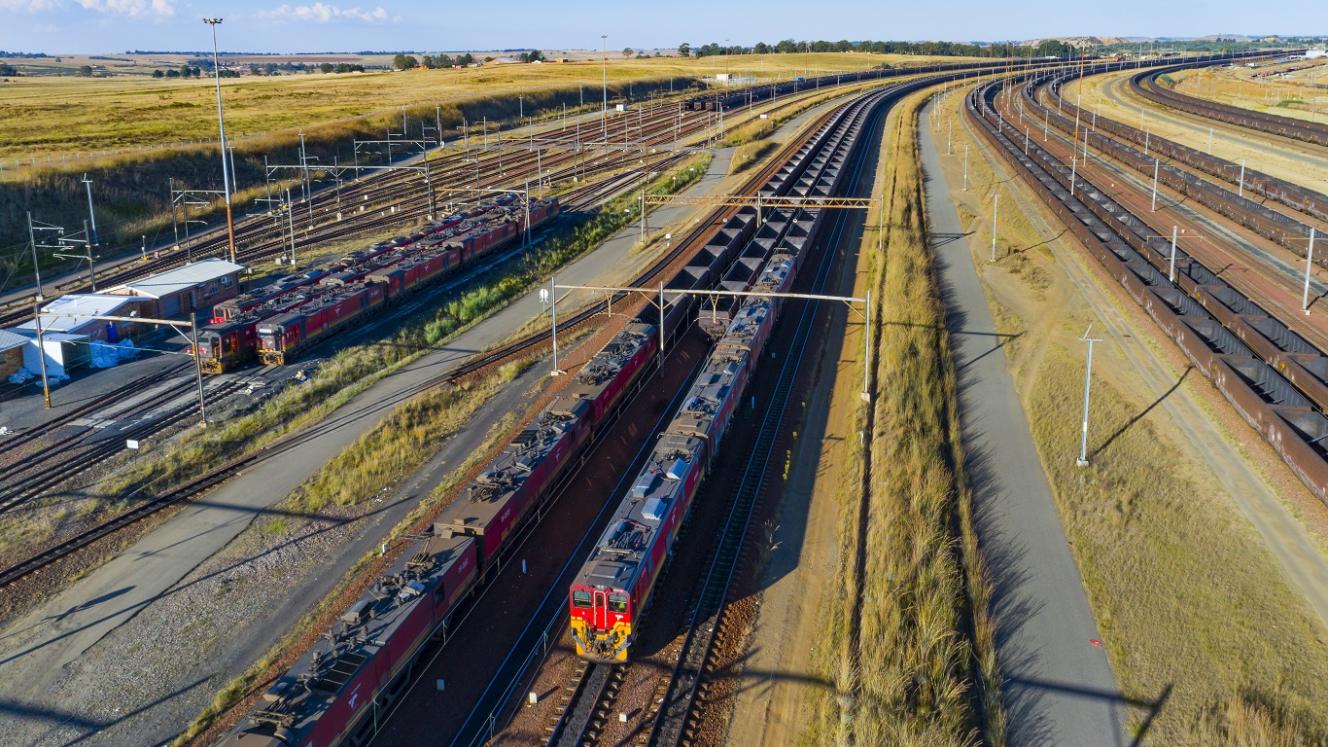
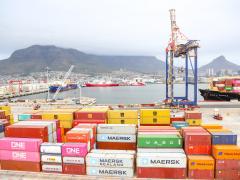
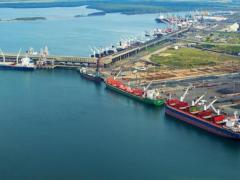
One of the most taxing problems facing Transnet during the ‘busy’ years of the mid to late 2000s was that of congestion at the container terminals, with Durban in particular handling record volumes and facing the prospect of ‘house full’ signs that forced shipping lines to wait outside for days at a time or even to bypass the port altogether. This led to a number of schemes being considered, each aimed at increasing container capacity – schemes that are still part of the mix, but due to the unexpected economic downturn, are now not so urgently required. Nevertheless, if there is one area that continues to be of concern to the eThekwini Municipality (Durban), to its motorists and to port users generally, and in particular to the road freight industry, it is ongoing road congestion – one of the major culprits in raising the cost of logistics in this country. Increased volumes arriving at the port are not the only reason for this problem. The loss of traffic from rail to road, which has been ongoing for some years, has now reached the point where approximately 90% of all containers arriving at Durban do so by road transport – 15 years ago rail’s share was between 35 and 40% and rail could be seen as still holding its own. Since then the transition to road transport has escalated and in addition Transnet Freight Rail’s inability, or unwillingness, to deliver dry bulk commodities – coal, ores of various descriptions, grains – has seen vastly increased numbers of tipper trucks arriving at both Durban and Richards Bay from as far afield as across the borders, Limpopo province and the Northern Cape. Added to this are considerable numbers of tanker lorries arriving simultaneously in the Bayhead region, with resultant massive road congestion becoming a serious problem and challenge. Transnet has tried to alleviate the problem among container deliveries by opening a truck stop facility outside DCT but has held off from making a decision to create a similar facility next to the Pier 1 Container Terminal. It has also held back on widening the remainder of Bayhead Road leading to the Pier 1 terminal. But the challenge remains latent and while the really bad logjams have largely disappeared with the decrease in container volumes, the number of long-distance tipper lorries arriving has continued – a single company advised recently that of its fleet of 480 tippers most would be delivering to destinations in the ports of Durban and Richards Bay.
Ongoing road congestion shows no sign of easing
Comments | 0
© Now Media. This content is protected by copyright and may not be adapted or republished. If you would like to discuss cooperation opportunities, please contact: editor@freightnews.co.za.