Both crude benchmark futures for oil had an immediate reaction after the International Energy Agency (IEA) announced its proposal for the largest-ever coordinated release of reserves to tame price volatility while the Middle East conflict drags on.
On Wednesday morning Brent had fallen 0.26% to US$87.57 per barrel (bbl) and West Texas Intermediate dropped 0.44% to $83.08/bbl shortly after the Wall Street Journal broke the news.
It brought crude prices down from recent peaks near $110/bbl, sparking fears in South Africa that the Department of Mineral and Petroleum Resources (DMPR) could substantially increase tank prices for petrol and diesel.
On Tuesday, Road Freight Association chief executive, Gavin Kelly, said there was no truth in news reports that the diesel price, a primary driver for transport costs in South Africa, could spike by as much as R7/litre in April.
He said the reports were based on speculation.
The DMPR has since also said there is no need to panic.
Eye Witness News reported on Wednesday morning that the department was in constant contact with local oil companies about South Africa’s oil supply status.
Currently, the country has two operational refineries, Natref (Sasol/TotalEnergies) in Sasolburg and Astron Energy in Cape Town, as well as Sasol Secunda's coal-to-liquids (CTL) facility.
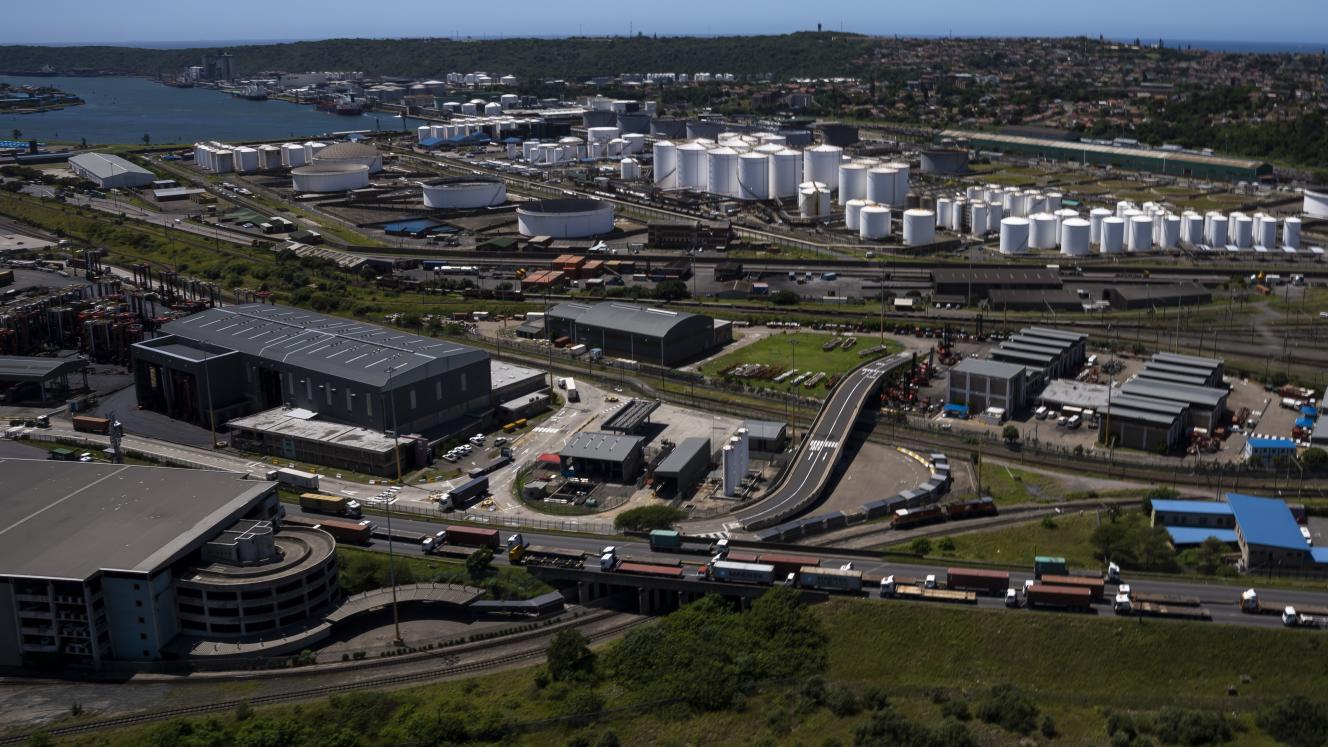
While the Engen and Sapref refineries in Durban are still closed, South Africa’s oil-refining capability remains heavily dependent on West African crude imports.
According to Fuels Industry, Natref has capacity for producing 108 000 barrels per day (bbl/d), despite occasional outages, while Astron has capacity for 100 000 bbl/d.
Sasol Secunda CTL’s critical synthetics capability is estimated to be 150 000-300 000 bbl/d.
Should the IEA proceed with a plan to release in excess of 182 million barrels of global oil reserves, it would be the largest since 2022 when an equivalent amount was released to mitigate energy markets fall-out because of Russia’s invasion of Ukraine.
CNBC has reported that an emergency meeting occurred on Tuesday, March 10, with G7 nations supportive but further talks needed on volume, allocations and timing.
IEA executive director, Fatih Birol, highlighted evaluating supply security amid elevated prices near $88-120/barrel.