Structural demand growth is dominating global container shipping while persistent geopolitical disruption sets the scene, the latest Container Movement Update (CMU) reports.
Compiled by the South African Association of Freight Forwarders (Saaff) and Business Unity SA, the update states that Alphaliner views the current growth trajectory as a continuation of industry’s robust response to Red Sea risk off Yemen’s coast.
According to the shipping intelligence platform, global port throughput increased by an estimated 5.2% in 2025, exceeding underlying trade growth of 4.7%.
The CMU states that network disruptions, particularly diversions away from the Bab-al-Mandeb Strait between the Red Sea and Gulf of Aden, and tariff-driven cargo reallocation, are the primary drivers of distortion in the ocean sector.
“Transhipment hubs have been the primary beneficiaries, with strong gains at ports such as Singapore, Colombo (Sri Lanka) and Tanjung Pelepas (Malaysia).”
Respectively, the ports saw throughput increases of 8.6%, 6.5%, and 14.5%.
It reflects “a sustained shift in routing toward Southeast Asia and Mediterranean gateways,” Saaff and Busa report.
“Volumes are now approximately 55% above pre-Covid levels, emphasising a structural reconfiguration of global container networks.”
The CMU adds: “In parallel, the Strait of Hormuz remains operational but highly unstable, functioning under constrained and politically contingent transit conditions.
“While not fully closed, vessel movements are tightly controlled, with reduced throughput and heightened operational risk.”
The impact of the waterway’s substantial closure, with most vessels squeezing through by skirting Iran’s coast due to friendly diplomatic relations with Tehran, has a significant impact on container movement.
“Approximately 204 000 TEUs are estimated to be affected,” the CMU says.
Notable congestion at regional ports such as Sharjah (UAE) and Bandar Abbas (Iran) have been recorded, the update adds.
Oil market volatility, with Brent crude futures fluctuating between $100 and $113 per barrel, “continues to transmit cost pressures into global supply chains”, the CMU says.
“Freight rates have begun responding to these dynamics and are up by $273 across the last three weeks.
“However, this remains cost-driven rather than demand-led, as elevated bunker costs, war-risk premiums, and surcharges drive pricing.”
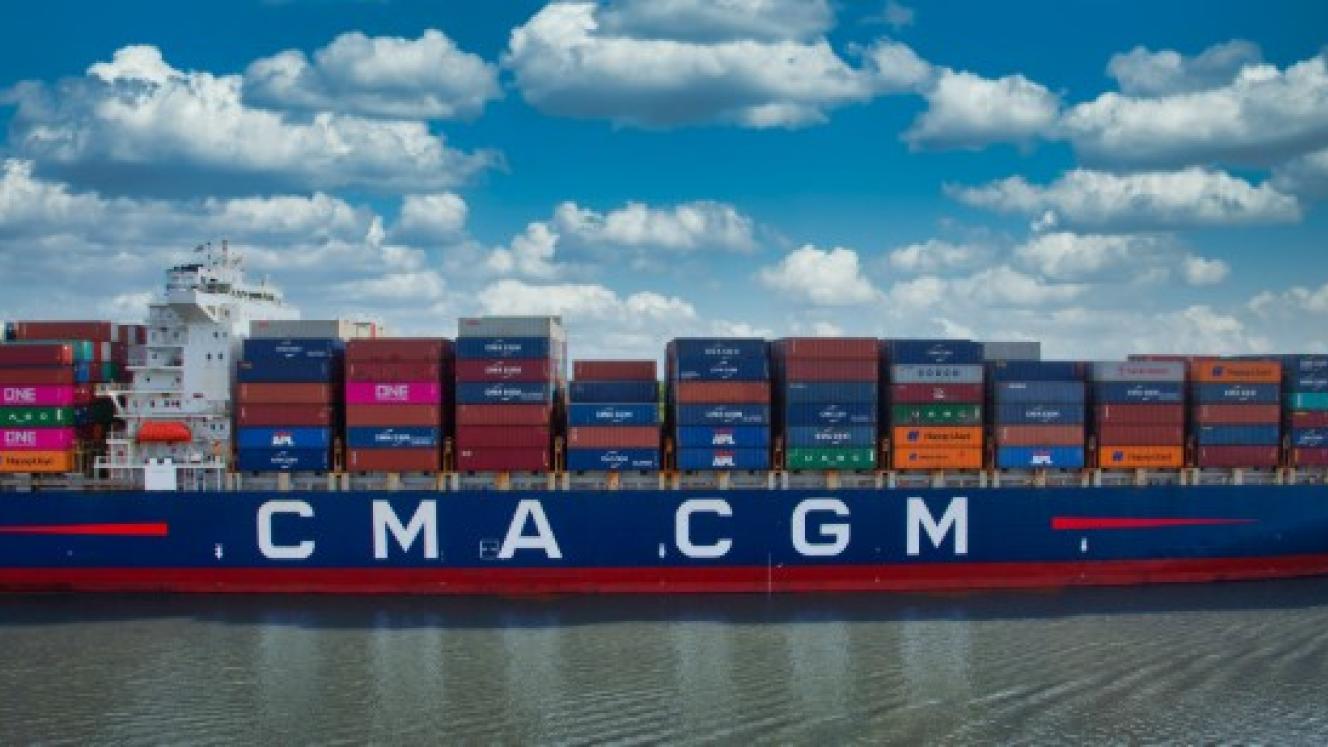
French line CMA CGA, for example, has implemented risk-related increases from pushing TEU costs from $150 to $265 per twenty-foot container.
“Despite upward pressure, rates remain 4% lower year-on-year, with weak capacity utilisation limiting carriers’ ability to sustain rate increases,” the update says.