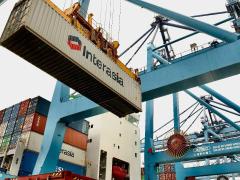
The National Regulator for Compulsory Specifications (NRCS) has made a clear and unequivocal indication that the organisation is getting a firm grip on the backlog of issuing letters of authority (LOAs) which has for years hobbled the flow of approved imports into the country. The regulator’s recently appointed CEO, Edward Mamadise, told a packed conference hall at the Johannesburg Chamber of Commerce and Industry (JCCI) last Friday that the backlog had been “drastically reduced” and he had figures on hand to prove that progress was afoot. Casting his mind back to October 2016 when he joined the NRCS, Mamadise recalled a “huge backlog” of 5231 applications for LOAs without which companies geared towards importing automotive, chemical, mechanical, electro-technical and other heavily regulated material could not proceed. Thankfully, parliamentary approval in the same year for regulator interventions rolled out in conjunction with the Department of Trade and Industry, with particular emphasis on the efficacy of risk-based assessment (RBA) processes, has manifested in a massive dent in the backlog. Whereas the LOA in-tray was still piled high last April, with 5236 delayed applications to be exact, that figure was sharply whittled away to 2760 by the end of December. The NRCS set itself a target of 120 days within which applications should be finally processed and approved. Mamadise said 186 applications had been outside the 120-day period at the end of 2018. And fresher figures recorded so far this year support the notion that the NRCS is well on course to backlog eradication. “At the end of January we had 1921 applications out of which 1300 have already been allocated to evaluators,” Mamadise said. “Of these 345 have already been evaluated, 500 are still to be allocated and 281 are outside the 120 days.” Considering Mamadise’s frank acknowledgement that the figure of applications outside the 120-day period had spiked since December, he made no secret of the fact that the battle against the backlog was in an early phase and much improvement was still required. Talking to FTW after the presentation, he identified automation as a primary concern holding back NRCS officials from adequately addressing the concerns and queries of applicants. While RBA is working exceedingly well in its handin-glove approach with accredited bodies abroad to pre-approve goods while they are still in their respective countries of origin, and the local system has been devised to sort applications according to high, medium and low risk, Mamadise believes a lot of time could be saved if systems were automated. “It’s one of the main reasons for existing delays in the system. RBA is working well but our staff still work with manual processes. It causes a significant disconnect and it’s why we have identified the need to modernise.” To this end the regulator, in addition to appointing a chief information officer in January, has also brought a project manager on board to oversee the roll-out of ICT, all in a bid to “make strides towards speeded-up implementation”. These “interventions”, by which the NRCS intends to mark milestones towards transformed LOA approval, include having RBA entrenched by 2020, having no applications outside the 120-day period by April, and getting on top of the First in First Out (Fifo) principle. Mamadise reiterated that modernisation issues had to be sorted out if the NRCS wanted to become a “gold standard” for compulsory specifications. “Some of our processes are manual which makes it difficult to fully implement Fifo and monitor adherence to the policy. “The only way we can move forward as an organisation is if we move with the times. We need to ensure that our systems are recent, useful and interactive. It’s the only way we can build strong relationships with our clients and become reputable.”
CAPTION
Automation is a primary concern holding back NRCS officials from adequately addressing the concerns of applicants. – Edward Mamadise