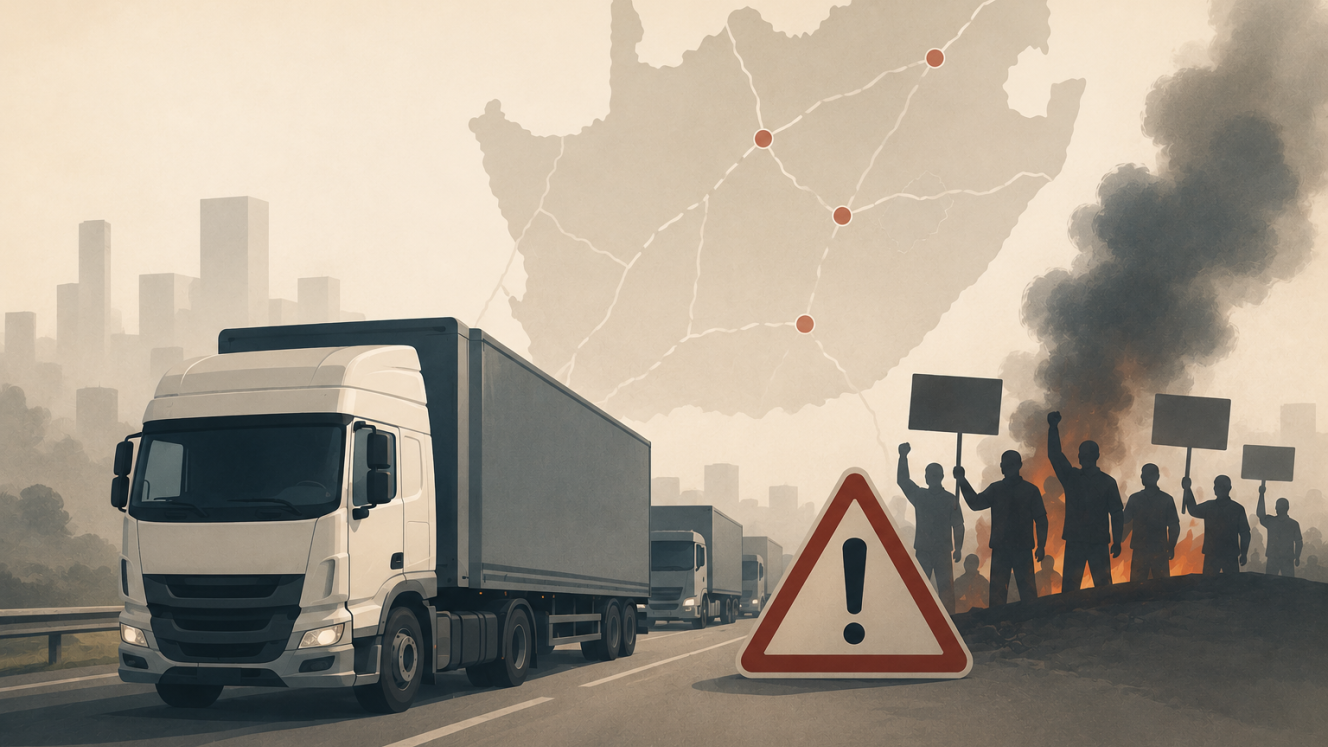
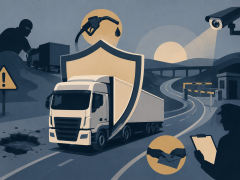
THE INTRODUCTION of a more uniform system of law enforcement for the road freight industry is about to become a reality with the imminent entry of a new agency – the Road Traffic Management Corporation. Created to unify law enforcement around the country, it was legislated in 1998/99 and formed last year to be implemented by mid-year. “Everyone holds the hope that they will not only enforce the law appropriately but will give us an idea of the extent to which heavy trucks are contributing to accident statistics,” says RFA technical and operations manager Gavin Kelly. “If a truck tips over and is 22m long it will block three lanes so it’s disruptive purely in terms of its size – but the truck is not always at fault.” The average perception, says Kelly, is that trucks are overloaded, drive dangerously and cause accidents. “There is an element of truth in this but if we look at information from roleplayers in the industry like toll concessionaires and law enforcement we see a different picture. “In Nelspruit last year the toll concessionaire reported that fewer than 4% of trucks were overloaded, which is an acceptable statistic.” At the moment it’s difficult to get accurate statistics from law enforcement, and hopefully the RTMC will help to establish who the culprits are and to identify the key issues. “There was a horrific accident a few months ago involving a cement truck for example. An investigation revealed that vehicles had pushed in front of the truck to cause the accident,” says Kelly. The RTMC was created by the Department of Transport to unify all the traffic policing authorities in the country – provincial and local. “The idea was that there would be uniform fines across all provinces and uniform methods of operating and checking for overloading. “There will be a single authority accountable for policing which is not the case at the moment, and the benefit will be centralised data capturing and accident investigation, education and awareness programmes. In essence it’s fixing a loophole created by the present Road Traffic Act.” Through transparent and fair interaction between law enforcementand the operators, it will become clear who the problem operators are and they will be targeted. “Hopefully bribery and corruption will also be reduced to a minimum because technology will not allow officers to solicit bribes.”
New roads agency will standardise national law enforcement
Comments | 0
© Now Media. This content is protected by copyright and may not be adapted or republished. If you would like to discuss cooperation opportunities, please contact: editor@freightnews.co.za.