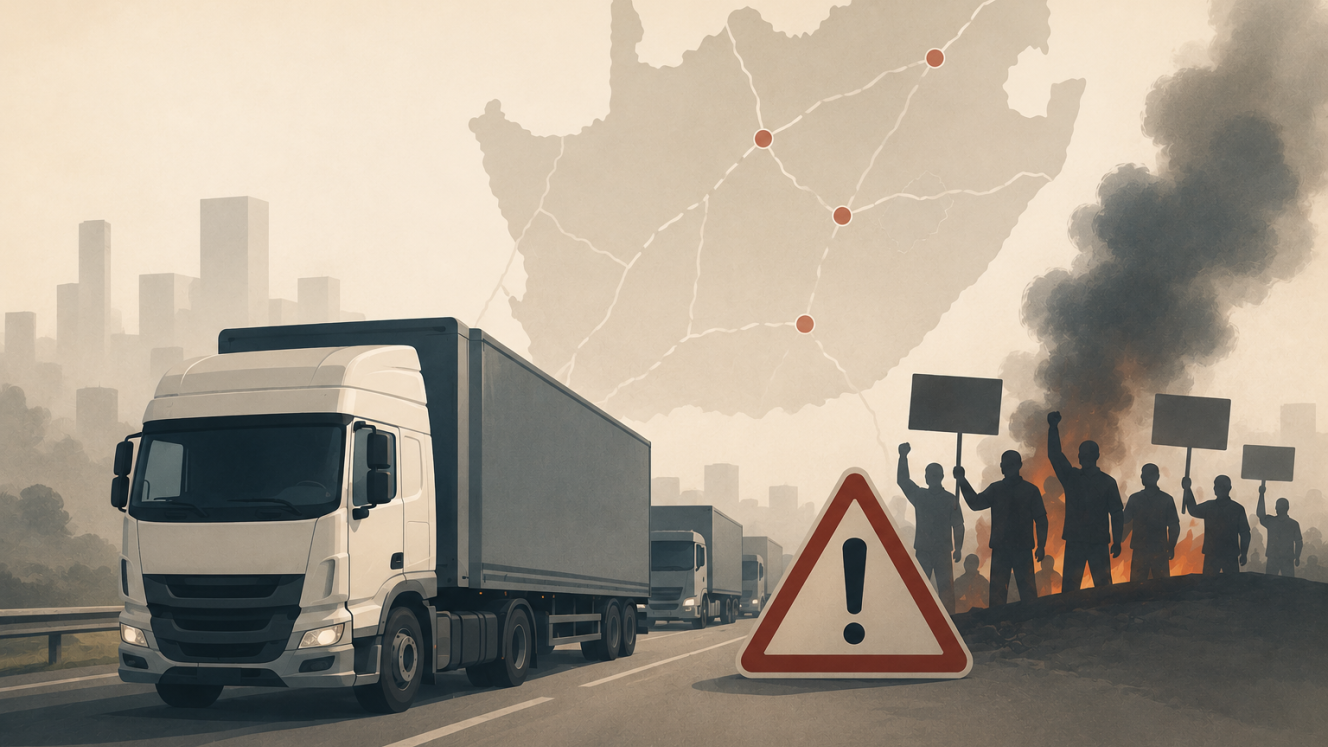
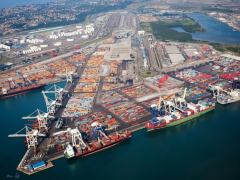
Alan Peat NEW LEGISLATION provides a serious challenge to the on-going issue of overweight/under-declared containers, according to Jack Webster, former head of the RFA (Road Freight Association). The original problem was SA's road traffic legislation where the only responsible party in the case of an overloaded (or unevenly loaded) container on the roads was the truck driver. This, said Webster, didn't necessarily place liability where it should have been applied and could lead to the undesirable situation where the party responsible for the overweight container could escape free-and-clear. But, he told FTW, the latest amendments to the Road Traffic Act now allow prosecution of the vehicle operator as well - under Section 49 of the new RTA. And, in Section 50, the penalty could be as much as removal of the operator's licence. However, this still left a loose thread in the legislation - where the responsible party was an SA exporter, or, worse still, an overseas supplier. But we are getting close to the situation where prosecution pressure can be brought to bear on these parties as well, according to Webster. August 1 marks the implementation of the dangerous goods section of the RTA. "And under this section," said Webster, "the road traffic authorities will be able to prosecute the consignor or consignee." This should deter importers and exporters from under-declaring the mass of containers, most often done to reduce freight costs or duty levies. It all delights the marine insurance industry, according to John Hill, m.d. of Associated Marine and chairman of Amusa (Association of Marine Underwriters of SA). "If you look at insurers' statistics," he told FTW, "we all talk about the problem of hijacking. "But the biggest problem of all is overloaded (or unevenly loaded) vehicles overturning. And that's getting worse as the road infrastructure deteriorates - in itself a result of overloading and inadequate maintenance." Riaan Grobbelaar, m.d. of Prestmarine, agrees. "Talking insurance," he said, "and especially freight forwarding insurance, gross overloading or incorrect loading is a curse. "But, with the new dangerous goods section, all those who want to avoid responsibility will not be able to do so under the new regulations." Hill also stresses that the ability to hit at the "consignee" will do a lot to control overloading and misdeclaration currently blamed on "overseas parties". "If the consignee suffers," he said, "he may desist from misdeclaration of container mass."
New law shifts blame in vehicle overloads
Comments | 0
© Now Media. This content is protected by copyright and may not be adapted or republished. If you would like to discuss cooperation opportunities, please contact: editor@freightnews.co.za.