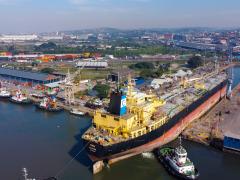
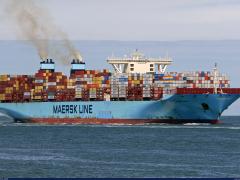
Transnet Port Terminals’ (TPT) controversial new breakbulk tariff structure – where all quayside costs are to be thrust upon the cargo owner/agent – will come into effect from October 1, according to Dave Watts, maritime adviser to the SA Association of Freight Forwarders (Saaff). “But,” he told FTW, “though we have received written confirmation from TPT that it is their intention to revise the charging arrangement for port cranes and labour (PCL) and ships gear and labour (SGL) from October 1, we have as yet to receive the official notification – which we expect any time now.” And, although Watts said they still weren’t too happy with the TPT decision, feeling, as he had already told FTW, that it was “a retrograde step that will result in an overall increase in breakbulk ocean supply chain costs”, Saaff had, after discussion with TPT, “accepted” the ultimatum. While the original TPT notification of the new tariffs was released in January this year, it was delayed till midyear. “This,” Don Maclean, TPT’s commercial GM, told FTW at the time, “has been on the cards for some time. There’s currently a split tariff, but we want to combine them. “But I don’t think the consultation has been sufficiently in-depth, and we need to have a full engagement with our customers and the shipping lines.” Part of this, Maclean added, was to “achieve some sort of understanding with the lines”, and make sure that they refund the invoicees for any costs that the lines are committed to in the transport contracts. But, although this consultation has now been completed, none of Saaff’s original protests has changed TPT’s thinking. What the new tariff structure imposes is that – in the case of breakbulk shipments carried under liner terms - PCL or SGL charges will fall to the account of the entity submitting the landing or shipping order, whereas, previously, these charges were for the account of the carrier. Said Watts: “Generally speaking, international practice has been for carriers to be billed with these charges, and presumably to include them in their freight rates. But that is not always the case, and to some extent depends on port practice. For some years now PCL/SGL charges have been included in TPT’s container terminal handling charge (THC) which is for the account of the cargo owner.” To avoid the possibility of shippers or importers of breakbulk cargo effectively paying these charges twice – once to the carrier in the freight rate and again to TPT – Saaff has recommended that members advise clients who will be impacted by this change to request that breakbulk be carried under “liner terms – hook-hook”. Said Watts: “This is best described as the shipper/ receiver arranging for delivery/ receipt of cargo to/from directly under ship’s hook – and the ship paying for the labour to stow the cargo in the vessel’s cargo holds, as well as on-board lashing and securing and provision of dunnage materials, and to discharge again over the ship’s side. “Where possible shippers should ensure that carriers clarify what charges are included in their freight rate offering.” Watts also pointed out that shippers and importers should be alert to distinct differences in the specialised shipping terms applying to this form of breakbulk carriage. “Charter terms such as liner terms, free in and out (FIOS) etcetera,” he said, “should not be confused with Incoterms. “The latter is a globally accepted standard of contract between buyer and seller, whereas charter terms – of which liner terms are one of many – define the contract between the carrier and the entity contracting with them, normally the shipper.” CAPTION In future, in the case of breakbulk shipments carried under liner terms, PCL or SGL charges will fall to the account of the entity submitting the landing or shipping order.
New breakbulk tariff set for October implementation
Comments | 0
© Now Media. This content is protected by copyright and may not be adapted or republished. If you would like to discuss cooperation opportunities, please contact: editor@freightnews.co.za.