As hearings continue around
the recent tabling of the
Promotion and Protection of
Investment Bill 2015 – the
latest held on Tuesday last week
– some European businesses
have put their South African
business projects on hold, while
others are exploring the option
of relocating their investments
to other African countries.
This despite assurances
from the department of trade
and industry (dti) that foreign
investment rights are protected
under the Constitution.
“We know there are a
number of projects pending
due to the uncertainty related
to South Africa’s investment
framework. And some of our
members are investigating
other destinations such as
Namibia, Nigeria and Kenya for
their regional operations,” said
Stefan Sakoschek, executive
chairman of the European
Union (EU) Chamber of
Commerce and Industry in
southern Africa.
According to him, the EU
not only represents 75% of
foreign direct investment in SA,
but also nearly 300 000 jobs.
“We remain committed to a
mutually advantageous longterm
partnership with the SA
government but the withdrawal
of the country’s bilateral
treaties with the EU member
states has sent an alarming
message to the European
business community regarding
the standard of protection of
investments,” said Sakoschek.
The American Chamber of
Commerce (AmCham) South
Africa – which
represents
around
R300bn worth
of investment
in South Africa
– has also been
vocal about this
issue, with the
organisation’s
executive
director, Carol
O’ Brien, noting
that business
confidence in
South Africa is at its lowest
level ever.
She agreed with Sakoschek
that the first expropriation
– made possible under the
Expropriation Bill – would
result in a flight of investment
out of SA. “Investors cannot
expect fair compensation
from the bill in its current
form. Promotion of foreign
investment is not evident
anywhere in the bill,” said
O’ Brien.
Foreign direct investment
(FDI) in
South Africa
is certainly
declining, with
a negative
balance
recorded
for 2014 as
outward flows
exceeded
inward flows
by R13bn,
according to Dr
Anthea Jeffery,
head of policy
research at the Institute for
Race Relations (IRR).
Another telling indication
of a lack of investor confidence
is global consulting firm,
AT Kearney’s Foreign Direct
Investment (FDI) Confidence
Index 2015 in which South
Africa does not even feature,
having dropped from 15th
place in 2014. A spokesperson
for AT Kearney attributed this
to “a lack of regulatory clarity”
in South Africa.
Jeffery told FTW that the
bill gave foreign investors
much less protection than
most of the bilateral trade
treaties provided for. “Under
the bill, foreign investors
would have to refer any
dispute they may have with
the SA government to the
country’s courts – the very
courts the ruling party has
been trying for many years to
bring to heel,” she said.
Jeffery also pointed out
that although the bill made
provision for international
arbitration, it only allowed
this on a state-to-state basis
which effectively excluded
direct investor participation.
Furthermore, instead
of the current bilateral
treaties, the rights of foreign
investors will be governed
by the Expropriation Bill
2015, which is now before
parliament.
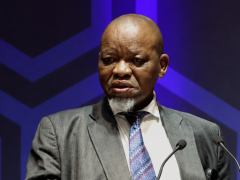
Responding to concerns
raised at the hearings, dti
director-general Lionel
October said in a statement
that SA had an “ambitious
development agenda” which
necessitated new policies and
regulations.
“SA is by far the favourite
destination for FDI in Africa.
We want to put to rest the
notion that there is less
protection under the bill,” he
said, adding that the country
offered one of the highest
levels of investor protection,
most of which was contained
in the Constitution.
October pointed out that
Section 25 of the Constitution
effectively meant that
compensation for a foreignowned
company, should it
be expropriated, would be at
market value.
INSERT & CAPTION
We want to put
to rest the notion
that there is less
protection under the
bill.
– Lionel October
New bill puts SA investment at major risk
Comments | 0
© Now Media. This content is protected by copyright and may not be adapted or republished. If you would like to discuss cooperation opportunities, please contact: editor@freightnews.co.za.