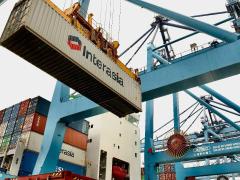
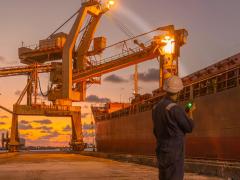
Known for its vast expanses and logistical challenges, Namibia plans to ease transport difficulties by expediting the development of hinterland linkages into the Southern African Development Community (SADC). Also, with the Port of Walvis Bay a few months away from officially commissioning a brandnew container terminal in August, and with plans under way to roll out enhanced rail infrastructure, Namibia is already beginning to aggressively market its key logistical attributes. Speaking at a presentation hosted by harbour authority Namport and logistics facilitator the Walvis Bay Corridor Group, Windhoek’s high commissioner to
Pretoria, Veiccoh Nghiwete, said Namibia was ready to become a “leading transit country for freight in and out of the SADC region”. To effect these plans meant that the country had to plough significant amounts of capital expenditure (capex) into developing infrastructure to serve some of its more remote corners, despite having a population of just over 2.6 million and a GDP of $13.24 billion. But some of these remote regions – such as the Caprivi panhandle, wedged in between Angola, Botswana and Zambia – are starting to contribute to Namibia’s ascending status as a logistical hub. In addition, said Nghiwete, “we have been credited by the UN
with having the highest standard of public safety among African countries, guaranteeing safe passage and security on our corridors to the destinations we serve”. One of these destinations, Ndola – in Zambia’s Copperbelt – has proven to be a boon for business crossing through Namibia, and is fast becoming a principal profit generator. Add speed of transit points to the equation, and Nghiwete has reason to believe that Namibia is meeting the objectives of the Harambee Prosperity Plan 2020 – a development programme that President Hage Geingob launched in April 2016. “We believe that these factors, speed and safety, are beginning to count in our favour,” said Nghiwete. “But a lot still needs to be done. “The expansion of our railway infrastructure is on the horizon. This, coupled with our road network [ranked as the
best in Africa by the European Union], means that Namibia remains committed to becoming a preferred transit country for the free flow of goods in and out of the region.” Commenting on the capex it has cost to upgrade a port like Walvis Bay – its South Port container terminal upgrade alone is costing
$400 million – Nghiwete said it was all part of the country’s growth strategy. “Along with agriculture and agro-processing, manufacturing and tourism, the infrastructural development of our logistics network has been identified as one of five priority sectors for Namibia’s development,” he said.
We’re beginning to believe that speed and safety are beginning to count in our favour. – Veiccoh Nghiwete