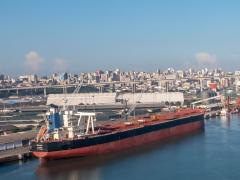
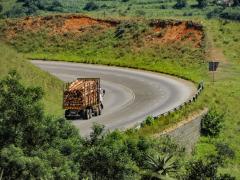
Billions are being invested in Mozambique’s port and supporting rail and road infrastructure to reconnect the hinterland of the country and neighbouring states to the world markets. Aged and outdated infrastructure is hampering economic development through the sub-region, and the Mozambican ports are regaining their traditional status as gateways to world trade through a number of public private partnerships. This comes at a time when the United Nations Conference on Trade and Development (Unctad) warns in its 2010 World Shipping report that the trend is towards larger container ships, which “pose a challenge to smaller ports as regards the necessary investments in infrastructure”. Manufacturers and exporters based in countries not served by ports capable of handling the bigger container vessels will become less competitive as they will not benefit from the economies of scale provided by the newer generations of container vessel. Mozambique offers a life-line through its natural deep-water ports of Nacala and Pemba, as well as Beira and Maputo to the south. Dredging has helped open up the ports of Beira and Mozambique to larger vessels. There are also plans for the smaller river ports of Chinde and Quelimane, with an upgrade of the Quelimane airport to open up the interior of Mozambique. Quelimane Airport The Danish agency for international development (Danida) has provided six million euros for the refurbishment of Quelimane airport in Mozambique, according to the director of airport management company Aeroportos de Moçambique in the Zambezia province, Joaquim Cachaço. The port itself has been upgraded to handle the export of tantalum concentrate from Noventa’s Marropino mine. In the northern ports of Mozambique, the port redevelopment is being supported by mining companies following the discovery of huge reserves of coal in Mozambique, as well as expanding exports from its neighbours. Vale Mining the world’s largest iron ore producer, has pledged to help develop the Port of Nacala to enhance mining activities in Zambia, Mozambique and the Democratic Republic of Congo. Work has started on a US$112-million transformation of the Nacala air base into an international airport. There are also plans to connect Moatize Zimbabwe to Nacala by a 200-kilometre rail link. Nacala is the deepest port in the Southern Africa region, and is situated in a 60-metre deep bay. The Nacala Development Corridor links the port to Malawi, and is home to about ten million people. Mozambican officials have also announced plans to expand the northern port of Pemba, in part to facilitate exploration for oil in the region by a number of companies. Pemba lies in the world’s thirdlargest bay. However, despite its deepwater harbour and strategic location, it has been serving primarily as a regional feeder port. A multi-million dollar expansion will allow Pemba to handle the rapidly increasing volumes of cargo passing through the port. Road and rail links Large-scale investment is required into the road and rail links to Pemba and Nacala. The fertile region is also subject to flooding, and is still suffering from the aftermath of the civil war. Short-term plans include the dredging of Beira and rebuilding of the road and rail links with the interior. The Sena Line between Moatize and Beira has recently been upgraded, while Vale Mining and its partner Riverside have refurbished Berth 8 for the export of 5Mtpa of coal from 2011. Tenders have been called for the Beira coal terminal and supporting rail network, expected to be expanded to handle 18 to 24 million tons a year. At present, the Matola terminal in Maputo handles most of the coal exports from Mozambique. An alternative for coal exports would be by barge down the Zambezi to the port of Chinde.
Mozambique ports providing lifeline for regional economies
Comments | 0
© Now Media. This content is protected by copyright and may not be adapted or republished. If you would like to discuss cooperation opportunities, please contact: editor@freightnews.co.za.