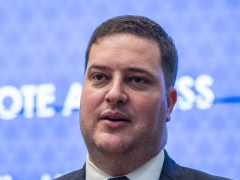
Misdeclaration of dangerous goods could cost cargo owners millions of dollars should a general average on a stricken container vessel be declared, said Susan Duvenage, divisional director at marine insurance company Prestmarine.
This comes on the back of Maersk Line’s recent announcement that it would declare general average on the Maersk Honam which caught fire en route from Singapore earlier this month. Although the cause of the fire is still being investigated, it has once again raised concerns over the fire safety on container vessels and the misdeclaration of dangerous cargo.
A general average declaration means that all parties with a financial interest in the voyage would proportionally share the losses resulting from the incident.
Speaking at the recent joint FTW/Johannesburg Chamber of Commerce and Industry (JCCI) breakfast seminar on dangerous goods handling, Duvenage pointed to last year’s devastating fire onboard APL Austria just off the Eastern Cape coast.
“The general average on that vessel was declared at 28% which meant that every cargo owner with a container on that vessel had to pay 28% of the damages,” she explained, highlighting that preliminary findings by the South African Maritime Safety Authority (Samsa) indicated that the chemical, calcium hydrochloride (pool acid), had been the cause of the fire – which Duvenage said was fast becoming one of the leading causes of dangerous goods insurance claims.
“Therefore cargo owners, who are always ultimately liable, have to understand the full scope of their insurance cover and ensure their broker understands all the risks to ensure the correct cover. She said if brokers could not answer all the questions, it was best to switch brokers.
“Some of the biggest issues we, as marine insurers, have with paying out claims is misinformation,” she said.
Many shipping customers were only focused on the bottom line and didn’t read the fine print, she added. “It can be an extremely costly mistake, particularly with dangerous goods as there are often consequential losses as well.” These could include environmental issues and loss of life.
Duvenage outlined some of the factors influencing risks around claim payouts, noting that many shippers often skipped certain risk mitigation steps due to the costs.
“But this could come back to bite them in the event of a claim as an insurer will refuse to pay a claim if they are found to have been negligent,” she said.
INSERT
Some of the biggest issues we, as marine insurers, have with paying out claims is misinformation. – Susan Duvenage