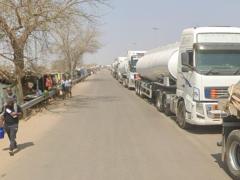
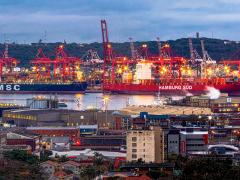
Following five years of massive growth on the African continent, volumes in 2012 stabilised to a steady flow, boding well for 2013. That’s according to Bruce Lovemore, joint managing director of Lovemore Bros, who believes that now more than ever South African companies should be extending their footprint in Africa. Lovemore specialises in the delivery of high-end machinery from ship side to shop floor as well as offering services such as abnormal transport, warehousing, sequencing, packing, delivery, crane hire and machine installation. “We should all be very positive about the potential growth in southern Africa as a result of our incredible stocks of raw materials,” said Lovemore. “There has been significant improvement at the borders and the roads and bridges are being upgraded at a rapid rate. The challenge for our leaders, from president down to government official, is to put aside personal gain and racial prejudice and take on the challenge of realising the potential of our continent.” According to Lovemore, the company has recently increased its service offering into Africa with more specialised equipment. “We operate extendable trailers (up to 35m), hydraulic gantries and skilled rigging crews, capable of mobilising at relatively short notice,” he said. But improved rail links are key to future growth in his view. “Rail must be upgraded and reintroduced as the preferred method of transport for general cargo,” he told FTW. He would also like to see the establishment of inland cargo handling centres and believes breakbulk cargo needs to be given more respect. “Government should engage with the private sector to provide a special breakbulk terminal. Road networks need to be built for out-of-gauge cargo to travel safely out of the city limits. Police traffic officer escorts need to be better trained and increased in number to handle the increased volumes.” The risk attached to working in neighbouring countries remains high and the implications of an incident are difficult to quantify or sell on to the client, he added. “An estimator will allow for all the known costs that they are aware of, but the unexpected costs can turn the project quickly into a loss for the transporter. “These can be genuine costs, such as breakdowns, accidents, fines and fuel-related issues. But then there are the ‘specials’ – bribery from various officials, standing time while trucks are held up trying to resolve local issues, exorbitant extra charges levied by unscrupulous escort operators, illegal toll fees charged by roadside opportunists, and legal fees when trying to repatriate your equipment and staff,” he said. “All of these must be addressed as we move forward and try to harness the many opportunities.” Also better infrastructure will serve the industry well, he said, as damage to vehicles and the high wear on equipment is also difficult to quantify. “Vehicles take an absolute hammering when negotiating the poor quality roads further north in Africa.” According to Lovemore, another concern for South Africa is that our ports are not geographically the closest to many of the inland destinations. “However our ports are selected due to the perceived efficiencies and infrastructure, already established here. But, bureaucratic bungling, unnecessary port delays, corruption and violent strikes are seriously affecting our image abroad and that must be addressed as too often the ports in other countries are being seriously considered as viable options.” CAPTION Delivery of high-end machinery from ship side to shop floor is part and parcel of Lovemore’s service offering.
Lovemore adds to specialised equipment range
Comments | 0
© Now Media. This content is protected by copyright and may not be adapted or republished. If you would like to discuss cooperation opportunities, please contact: editor@freightnews.co.za.