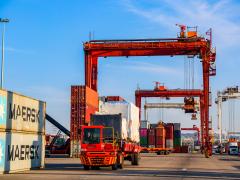
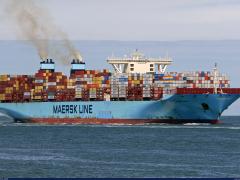
If South African aspires to a world class port infrastructure, it should look no further than China as a benchmark, says Maersk Line’s Thomas Eskesen. “China has by far the best productivity, probably three or four times better than South Africa, so this country has quite a way to go,” says Eskesen, the carrier’s senior director for reefer management. Eskesen is all too aware of the lambasting meted out to Transnet and Durban Container Terminal by Captain Salvatore Sarno, the head of rival MSC in South Africa. Sarno said it was absolutely unacceptable to pay for a first class ticket and travel third class and that the parastatal thought the shipping community was ‘like cows to be milked’. “The key is to have the necessary infrastructure and the right productivity because if productivity is still low, you do not want a big ship sitting in port.” Eskesen says the “key driver” for Maersk Line post April 2013, when Cape Town Container Terminal’s massive R5.5 billion upgrade is completed, is to focus on the “promising” worldwide reefer market out of Cape Town and also on inbound infrastructure for retail. For now, Maersk Line is mum on when it will introduce larger ships along the lines of the 8 000 TEU MSC vessels that have been calling at Ngqura, but Eskesen makes clear a bigger concern is whether South African ports have the ability to cope with such ships. Maersk Line sales director, Mark Cairns, says it appears Transnet Port Terminals has enough capacity to contend with for now at Ngqura “but the challenge is on the landside to get the rail infrastructure between the port and Gauteng in place.” As to his appraisal of Cape Town Container Terminal, Cairns says: “We are reasonably comfortable from a commercial point of view but if one looks at the overall statistics it is still not up to scratch to meet our expectations compared to global ports.” On Maputo, he says though the Mozambican port is becoming “an option” it will depend on the port’s ability to handle the size vessels currently deployed by Maersk Line.
‘Look East!’
Comments | 0
© Now Media. This content is protected by copyright and may not be adapted or republished. If you would like to discuss cooperation opportunities, please contact: editor@freightnews.co.za.