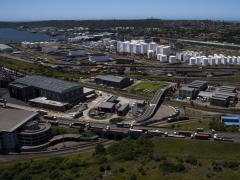
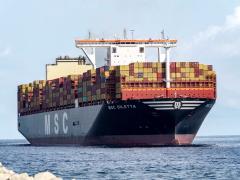
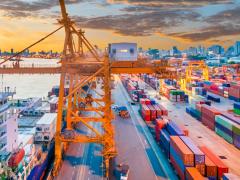
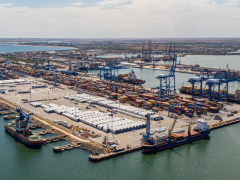
Convenient, cost-effective and efficient – not the words generally used to describe rail transport. But for a recent convert, that’s been the outcome of a road to rail switch. Logistics major UTi has moved at least 10 000 containers off the road in the past year in the Western Cape. According to the company’s ocean freight manager in Cape Town, Rion Henning, the Western Cape is the first region where the organisation is earnestly focusing on a roadto- rail strategy. “As a business we have realised that we need to do things differently and have aligned ourselves with the rail renaissance in the country that is aimed at moving more cargo off road onto rail,” he said. “Rail is not a space that we can continue to ignore taking into account the government developments around road transport and the introduction of carbon taxes. We have identified key routes and areas that we want to focus on in the Western Cape.” Henning said the Western Cape had been chosen as the pilot region for the rail strategy which would eventually be rolled out across the country. “We started working earnestly on transferring “railfriendly” cargo from road to rail about two years ago in an effort to improve efficiency and cost,” he said. “Having looked at the challenges of moving cargo in the Western Cape it was clear that many of the large distribution centres were in the north of Cape Town and closer to Transnet Freight Rail’s container depot, Belcon.” At the time, he said, the facility was not being utilised to full capacity and so movements in and out of the container depot were far faster compared to road. “There were major efficiencies gained for some clients by using rail and in 2014 we transferred at least 10 000 containers to rail that had previously been transported on road.” He said an interesting outcome was that most of the hauliers had bought into the strategy as well. The benefits should not be measured in a purely economic sense, he said. “We believe that as a business we have a responsibility to limit the supply chain carbon footprint on the environment – rail after all emits a quarter of the CO2 emitted by road transport. This will become a very important business imperative over the next couple of months with the imminent introduction of the 2016 carbon taxes.” He said there were still some challenges that had to be addressed when it came to rail – one of which was pricing – but with committed stakeholders from both the public and the private sector these challenges can be addressed. INSERT & CAPTION Pricing is one of the challenges that needs to be addressed. – Rion Henning
Logistics major switches to 'efficient, cost-effective' rail option
Comments | 0
© Now Media. This content is protected by copyright and may not be adapted or republished. If you would like to discuss cooperation opportunities, please contact: editor@freightnews.co.za.