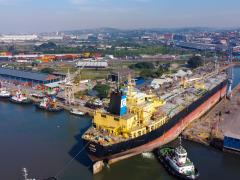
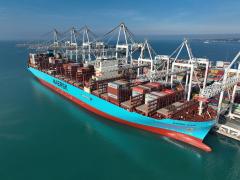
Three ships in grounding incidents in less than two months at the Port of Durban scream out “unsafe”. And, if that judgement were ever to be declared by the shipping lines or the marine insurance industry then – like a congestion surcharge follows congestion – all sorts of extra ‘unsafe port’ surcharges would be levied on the cargo owners. And such a situation is lurking just round the corner, with Transnet National Ports Authority (TNPA) leaping round like a headless chicken laying out knee-jerk regulations and scuttling around taking soundings in the port. The problem is that the bottoming out incidents would seem to suggest that the chart datum and actual bottom depths don’t seem to agree. And the question in the freight industry is: “Why was this not identified before?” Which led to the follow up: “Is TNPA monitoring the port and berth draughts as they should be?” The spate of groundings should be of major concern to ship owners and charterers alike, according to Andrew Pike, partner with maritime legal specialists, Bowman Gilfillan. “As I’m sure you know,” he told FTW, “almost every charterparty has a safe port/ safe berth warranty. This is where the charterer gives a warranty to the owner of the ship that the port at which it directs a vessel to call and the berth at which the vessel is required to dock is prospectively safe.” He suggested that one grounding was bad luck, but might well be a breach of the safe berth warranty. “More than one,” he added, “starts pointing to Durban being an unsafe port generally, which has significant liability implications for charterers and ship owners alike. Even more significantly, it has major reputational issues for the port.” Pike also felt that TNPA was obviously “trying to cover itself” by increasing the minimum under-keel clearance. “This may irritate the industry,” he said. “But it is the sensible thing to do while they figure out whether their charts are wrong, whether dredging has been sufficient, whether tides have changed or whatever else has given rise to the problem.” The shipping lines and insurance parties FTW has talked to are not prepared to officially predict what may happen. But off the record admit that a ‘safe’/‘unsafe’ declaration is very much on the cards. And it was also clearly pointed out that TNPA’s doubling of the necessary under-keel clearance all round the harbour, and a tidal entry for any vessels over 12.2 metres draught, was an admission that chart depths were doubtful – by as much as 30 centimetres. And TNPA demanding that any ships over the draught limit have to sign a letter of indemnity (LoI) was met with screeches of objection. “Asking us to sell all our rights, while agreeing that TNPA is not liable no matter what negligence they’re guilty of. You must be kidding.” That was one irate line executive expressing what Bowman Gilfillan partner, Mark van Velden, phrased more diplomatically. “In terms of signing the indemnity, the lines have absolutely refused.” CAPTION Photo: Shannon Van Zyl
Liability issues raised following ship grounding incidents
Comments | 0
© Now Media. This content is protected by copyright and may not be adapted or republished. If you would like to discuss cooperation opportunities, please contact: editor@freightnews.co.za.