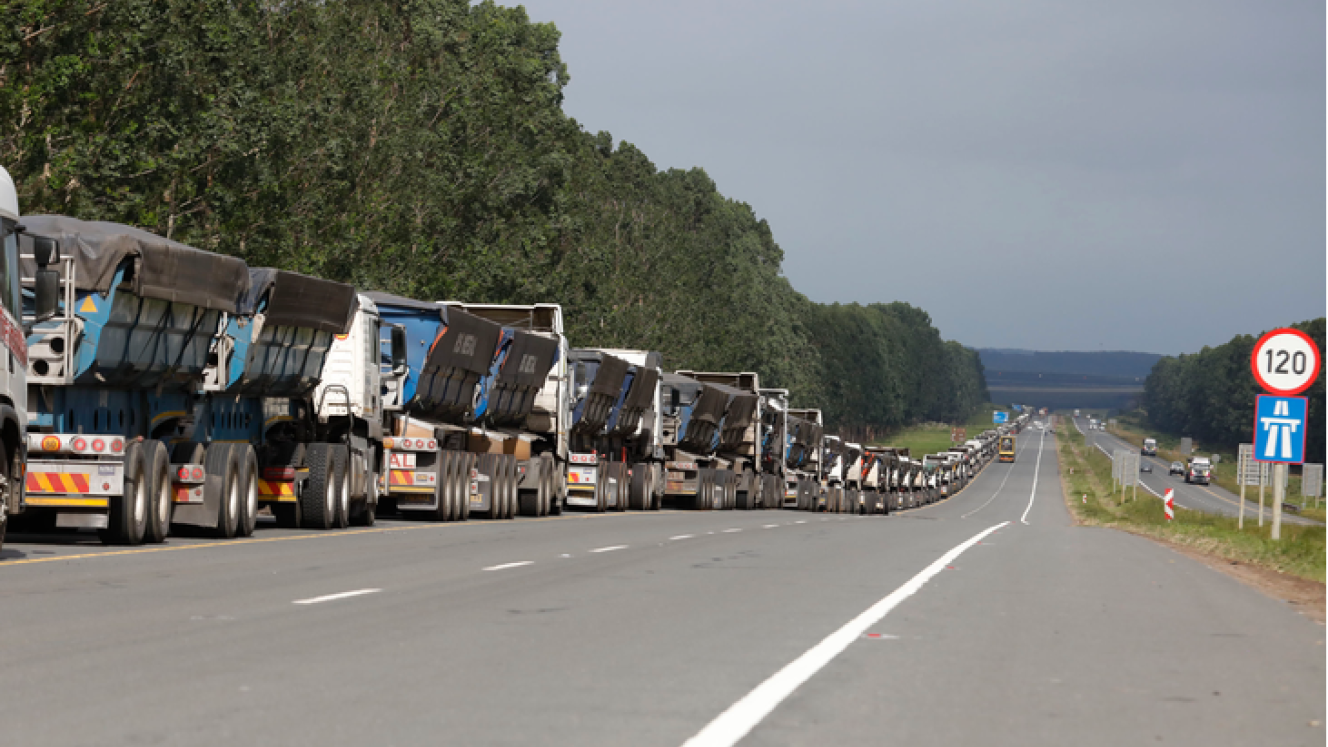
Despite the aftermath of the global crisis, Africa is still a good market for SA exporters, according to Alwyn Nel, MD of Kingfisher Freight Services. “There’s still enough business for us to be able to offer land, air and consolidation services,” he told FTW. “Express services are also doing well because standard consolidation services are taking anything up to 7-8 days to get through the border posts.” That’s also having an adverse effect on optimising vehicle use, with stand-down time just eating up profits, or forcing rate increases on the industry. Nel said that this was a special problem with Zimbabwe, but the same slow pattern was appearing in Mozambique and Zambia. “Express costs more, but the clients are getting their stuff there quicker, “he added, “and turning their money round quicker.” The customs modernisation programme being applied at the border has not been as disastrous as many predicted. Said Nel: “Co-operation of service providers with the SA Revenue Service (Sars) customs meant things went much better than most people expected.” The possible closure of the Groblersdrif border post (a handy alternative route between SA and Zambia via Botswana – and avoiding the Zimbabwe back-up) is still being discussed. “They want to restrict the cargo using that post to RIT only – where cargo is still in bond and has to be offloaded at a border warehouse, then uplifted by an over-border transporter for onward transport to its destination,” Nel said. It’s supposed to be easier for customs to manage, although Nel can’t see how. “And obviously preventing duty-paid cargo leaving through the border pushes the transporters’ and exporters’ costs up. Don’t see the sense in it.” On the SA-Africa trade, Nel sees volumes increasing substantially. “And it’s not only exports from SA,” he told FTW, “but foreignsourced goods in transit via SA, and then transported by road as far north as the DRC. “That’s becoming a larger volume day by day – and the fact is that SA is becoming a recognised hub for incoming, overborder cargoes.”
Lengthy border delays push up demand for express services
Comments | 0
© Now Media. This content is protected by copyright and may not be adapted or republished. If you would like to discuss cooperation opportunities, please contact: editor@freightnews.co.za.