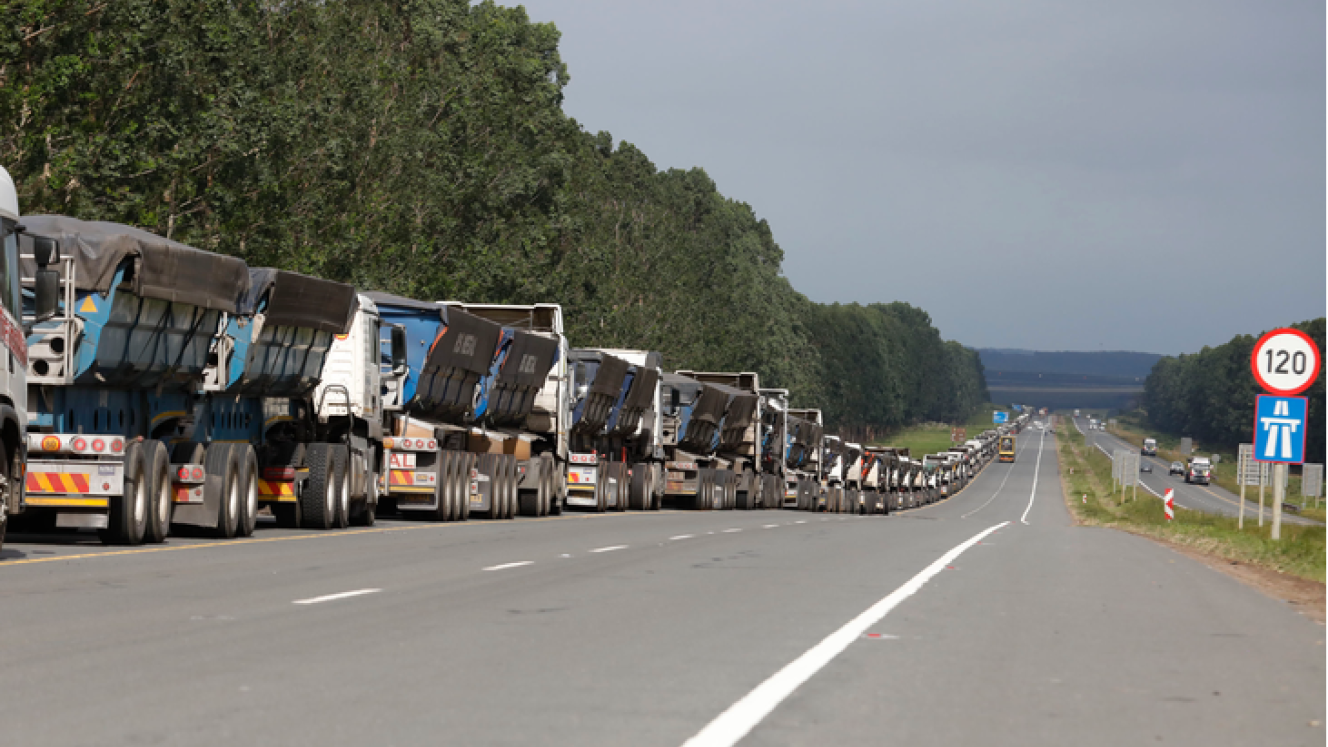
The proposed R17.2-million logistics study of the operational efficiency of selected key transport corridors has met with considerable stakeholder interest – but some of the enthusiasm has been somewhat blunted by the suspicion that it might go the same way as many other bright ideas, into oblivion. It is part of the efforts by the combined departments of public enterprises (DPE), transport (DoT) and trade and industry (dti) to improve the corridors’ logistics performance, and help guide infrastructure planning and future investment programmes. It has been titled the national corridor performance measurement (NCPM) programme, and the DPE is taking the lead role, according to Andrew Shaw, deputy directorgeneral for transport. He has revealed that a team from the University of Stellenbosch’s department of logistics – led by Dr Jan Havenga and Paul Aucamp – has been contracted for the threeyear study. It is designed to gather relevant performance data from stakeholders – like the logistics and transport sectors and their industrial users – on the six corridors: Gauteng-Durban; Gauteng- Cape Town; Gauteng-Port Elizabeth, Ngqura and East London; Gauteng- Maputo; Sishen-Saldanha; and Mpumalanga-Richards Bay. It will also study the four industrial sectors of automotive; metals and mining; containers; and agro-processing. The project manager is Neelesh Amaidas of the DPE, who said the initial step was to decide which corridor to study first. He hinted that either the bulk ironore line from Sishen to Saldanha, or the coal line from Mpumalanga to Richards Bay, was likely to be the first choice – with only a few stakeholders (like the railways and the harbour authorities) having all the necessary performance measurements. The idea of the study, Amaidas added, is to build both visibility and corridor-level intelligence.
Latest logistics study attracts muted response
Comments | 0
© Now Media. This content is protected by copyright and may not be adapted or republished. If you would like to discuss cooperation opportunities, please contact: editor@freightnews.co.za.