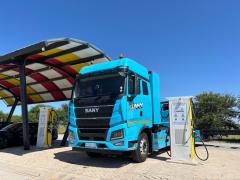
African transporters remain reliant on road, as it is still the most reliable and cost-efficient way of transporting goods across the continent. And as long as governments and the private sector don’t substantially invest in rail, landlocked countries especially will remain dependent on road transport. “Rail does have a lot of potential, because it would be faster and cheaper,” said Hannes Rust of Namgola. “But it is just not reliable at this stage and it is not developing. In some African countries the road infrastructure is still lacking, so rail is not really even on the agenda yet.” Specialising in transporting freight to countries like Angola, Mozambique and Namibia, Rust said rail infrastructure remained limited in many countries – even South Africa. “In Angola, for example, there are some places where the road is non-existent and trucks are struggling to get through. Angola needs road transporters to move its cargo.” Road, however, comes with its own set of challenges, said Namgola’s Ruan van der Westhuizen. Angola, having experienced serious port congestion, has managed to get containers moving again after sorting out its berthing delays. But it is now facing road congestion in its city centre. “The containers are all delivered to a depot in Luanda from where trucks have to pick them up, and that is causing major congestion in the city where the traffic is already heavy,” said Van der Westhuizen. “Road can be a slow option. It is therefore important for transporters to have the expertise and knowledge of how to deal with the various challenges and problems.”
Landlocked countries need investment in rail
Comments | 0
© Now Media. This content is protected by copyright and may not be adapted or republished. If you would like to discuss cooperation opportunities, please contact: editor@freightnews.co.za.