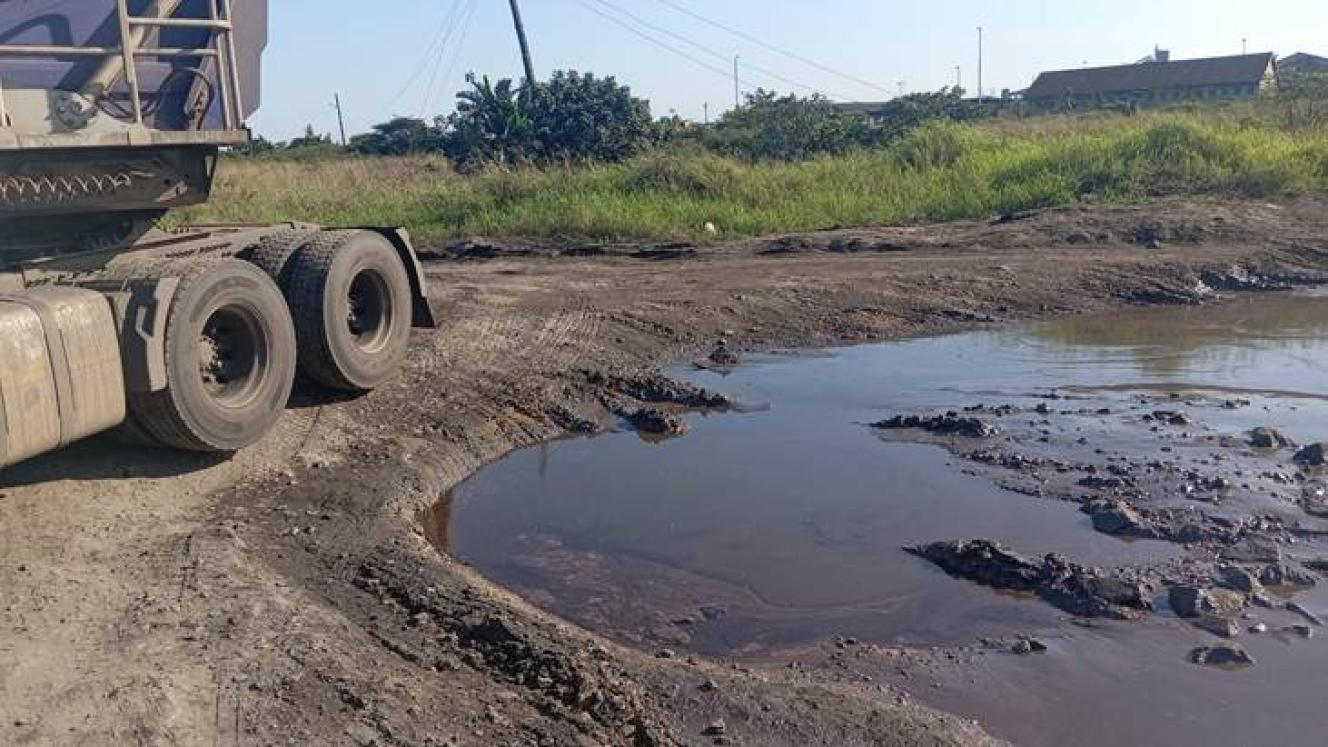
Over the past five years the South African National Roads Agency Limited has built 88km of new roads excluding the Gauteng Freeway Improvement Project (GFIP). A further 3 173km of existing roads were strengthened and/or improved. But while investments into the country’s comprehensive road network are ongoing, it is imperative to move more road cargo back to rail. This is especially important in light of the deterioration of the country’s provincial roads that are not considered to be in the same condition as the country’s national road network. According to Nadia Viljoen, scientific editor of the annual State of Logistics survey, the performance of South Africa ‘s logistics industry is very dependent on its transport infrastructure. She said it was generally accepted that a shift of freight from road back to rail was necessary to drive down the country’s logistics costs while at the same time preserving the road network and reducing congestion. “Ongoing investment in road is happening, but with rail investment having significantly increased in the past few years our research is showing that there is interest in rail,” she said. “In many cases we are still seeing many cargoes remaining on road merely because of the lack of capacity on rail.” Industry sources agree. “Capacity on rail is the constraint rather than its cost or efficiency,” said one, who preferred not to be named. “We have a big operation where we are moving magnetite from the north of the country to ports both locally and in Mozambique. It is a far better option to do it by rail, but they just cannot handle the volumes and so we have no choice but to use trucks.” He said while a lot of the volumes were moving on rail, it was at capacity. “And so what do you do? You use trucks to move the balance and we are not talking one or two trucks, but hundreds of trucks,” he said. Another source said the same was happening with iron ore from the Northern Province that could not all be accommodated on rail. “There is a lot of talk about heavily overloaded trucks on some of these routes between mines and port,” he said. “But with rail capacity at its limit there is no alternative but to use trucks for bulk minerals.” While overall rail capacity has increased slightly in recent years and some ground has been gained, it still falls way short with the pressure remaining on the national and provincial road networks. According to Sandra Gertenbach of Transnet Freight Rail (TFR), the organisation cannot address the systemic issues surrounding the road-rail modal split alone. She said South African companies needed to have a common objective to alleviate the pressure on the road system and to bring back to rail the commodities and containers that were suitable for rail transport. “It would require a paradigm shift for all the role-players where Transnet collaborates with road hauliers and logistics service providers to develop intermodal solutions that will allow the country to improve its overall competitiveness in the global market.” CAPTION Too many trucks on the road.
Lack of rail capacity keeps cargo on the road
Comments | 0
© Now Media. This content is protected by copyright and may not be adapted or republished. If you would like to discuss cooperation opportunities, please contact: editor@freightnews.co.za.