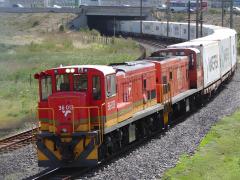
A SHARP decline in export volumes, largely lost to China, has enabled Japan to focus its energies on high value goods – and it’s one of the reasons for its limited export penetration in South Africa. “Metals and ferroalloys are the main commodities that we bring in from South Africa,” Shigeki Okada, deputy executive director for the Japan External Trade Organisation (JETRO), based in Johannesburg told FTW. “Japan does not have many goods to export to South Africa because of the high price of commodities here, so there is a trade deficit for Japan with South Africa.” According to Okada, trade with South Africa is of strategic importance to Japan because of the high tariffs placed on paper imported into Japan, paving the way for South African wood chip exports for paper-pulp production. “South Africa is also the second largest exporter of passenger cars to Japan.” Japan exports mainly auto parts and equipment for power generation to South Africa. “Japan’s Mitsui Corporation manufactured locomotives in 2005 for Spoornet (now Transnet Freight Rail) for use on its coal lines. And there are Japanese firms working closely with Eskom in the power generation sector,” added Okada. Japan’s ports have consistently lost market share to the hub ports in Singapore and Shanghai, and were dealt a major blow in 1996 when an earthquake closed Japan’s second largest port. But the lost port market share is not a big problem, says Okada. “High value goods do not need the bigger ships.” However, container availability is a major concern. There is a container vacuum in the Far East caused by China’s dominance, forcing up the rates. “The rate for a forty foot container from Yokohama to Durban is US$3200 – US$3600, but the Durban to Yokohama rate is around US$ 900,” he told FTW. And airfreight connections present their own set of challenges, says Okada. The lack of direct flights combined with the restrictions imposed on Japan’s major Narita airport by its own residential locality means none are open 24 hours. Pollution and noise-control combined with high landing fees further inhibit airfreight traffic. “To increase bilateral trade South Africa needs to compete with Australia and the USA on its exports, while Japan’s major competitor for SA trade is the EU,” says Okada.
Japan focuses on high value niche as China makes its impact
Comments | 0
© Now Media. This content is protected by copyright and may not be adapted or republished. If you would like to discuss cooperation opportunities, please contact: editor@freightnews.co.za.