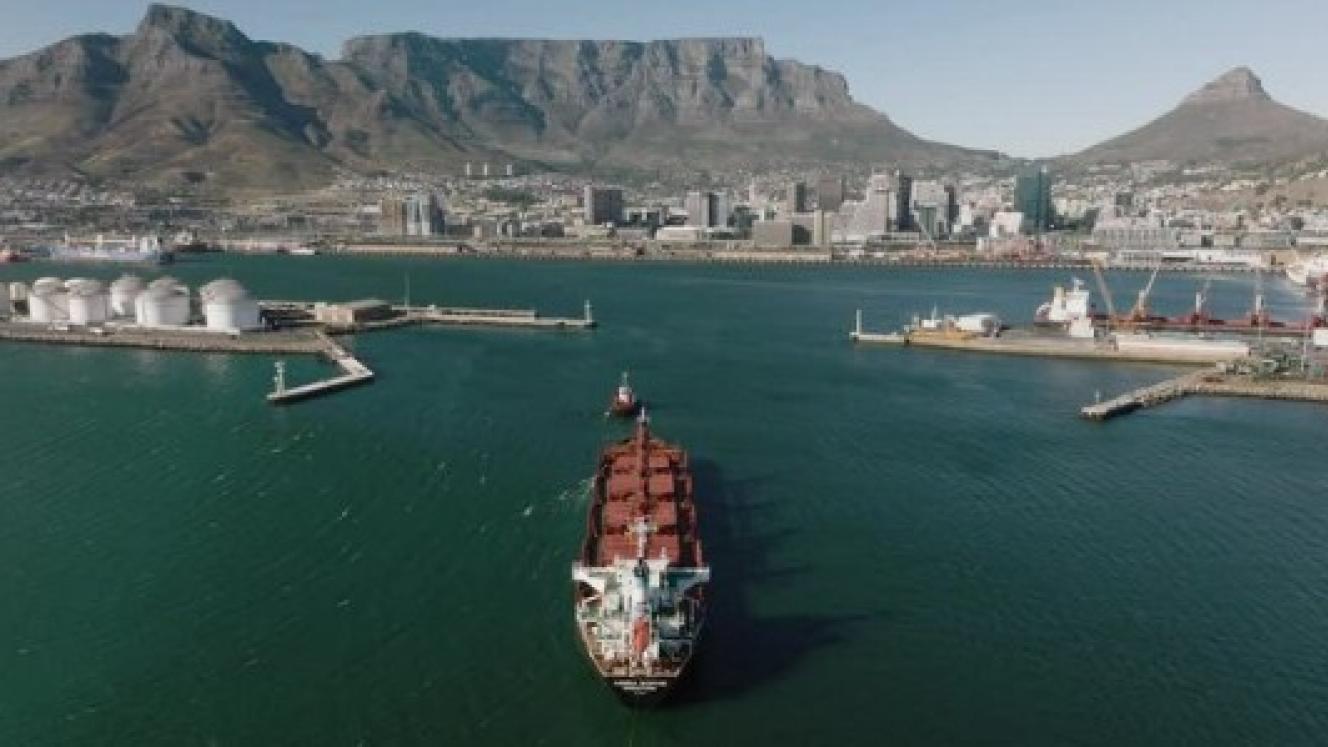
The Port of Cape Town is hardly seeing any additional vessel calls despite risk in the Red Sea and the near-total closure of the Strait of Hormuz leading to a 112% surge in maritime traffic around Table Bay.
Although estimates vary, vessel transits through the strait between the Persian Gulf and Gulf of Oman dropped by about 94% in the immediate aftermath of the US and Israel attacking Iran from February 28.
Since then, vessel-tracking platforms have recorded only 21 tankers passing through the strait compared with normal daily totals of at least 100.
By mid-March, the Cape Chamber of Commerce had reported a maritime spike of more than 100% around the Cape of Good Hope (CoGH) as lines increasingly avoid the Middle East.
But Cape Town’s Port Liaison Forum chairman, Terry Gale, said he only knew of two additional calls in the past week or so.
And yet it has been reported that existing bunker suppliers in Africa, notably Denmark's Monjasa, are attracting flourishing trade because of vessels taking the longer route around the continent, as opposed to shorter sea legs such as the Suez Canal.
Apparently, marine fuel firms like Vitol, Bunker Partner, Peninsula, Flex Commodities and Global Fuel Supply have all announced expansion plans along the West Coast of Africa.
A spokesperson for Global Marine Fuel Supplier, Thorstein Andreasen, has told BizCommunity that “volumes have been positively impacted by the Red Sea security situation, causing more vessels to reroute south of Africa”.
“No matter the outcome of the conflict, we expect overall volatility to remain high for a considerable period of time.”
This sentiment has been widely reported as aligning with strategic route reconfigurations by leading lines, with Maersk, Hapag-Lloyd and CMA CGM all indicating that the CoGH bypass has become a structural decision and not a short-term response to what’s happening in the Red Sea and the Strait of Hormuz.
Bhavan Vempati, Maersk's head of Asia Ocean Market, has said that the past two years of maritime tumult in the Middle East have forced the Danish line to think of sailing around the Cape as an “operational normal”, not a temporary measure.
But why is Table Bay not seeing more vessel calls?
Gale, who also heads up Exporters Western Cape, said it was because vessels were generally larger and could carry more fuel, enabling longer voyages without unnecessary port interruptions.
However, he added that the Port of Cape Town could make more of an effort to attract more maritime traffic.
“I’ve said it time and again, we could market ourselves better as the port is of strategic importance and could be proving its worth at a time like this. It is a safe and secure option, and we should be seeing more vessel calls because of what is happening at the moment.”
He said this was especially relevant given calmer summer seas off the Table Bay coast, allowing easier navigation in and out of the often weather-disrupted port.
According to Casey Sprake, chief market strategist at AG Capital, the world is sailing past South Africa’s door but it does not seem like anyone is stopping.
She has hinted at the lack of a strategic response by Transnet, commending the private-sector investment by International Container Services Inc at the Port of Durban, but adding that similar reform is not present in Cape Town.
She says, “To attract bunkering business, port calls, ship repair and logistics revenue from a global fleet now sailing past is ultimately a question about port competitiveness and infrastructure readiness.”
Despite Gale’s view that vessels have greater capacity for deep-sea long-hauls, it’s no industry secret that Namibia’s Port of Walvis Bay may be eating South Africa’s lunch.
Dubai may be taking a lot of hits because of Iran’s retaliation against so-called US allies, but its forward-thinking trade resilience is proved through Flex Commodities seeing opportunity in Walvis Bay ahead of the current chaos.
A managing partner for the UAE marine fuels firm, Rakesh Sharma, has said they identified the CoGH route for its growing volume and alternative bunkering potential.
Unathi Sonti, executive chairman for South Africa’s Maritime Business Chamber, has repeatedly criticised what he sees as an investor-unfriendly environment for bunkering.
As long ago as 2024, when refuelling vessels were delayed in Algoa Bay because of supposed tax revenue infringements, Sonti said bunkering off South Africa’s coast was restrictive and not conducive to either investment or vessel calls.
Sprake seems to agree with such sentiments.
She says location alone is not enough for South Africa to benefit from the increase in vessel traffic around the CoGH.
“Geography has done its part. The rest is up to Transnet.”