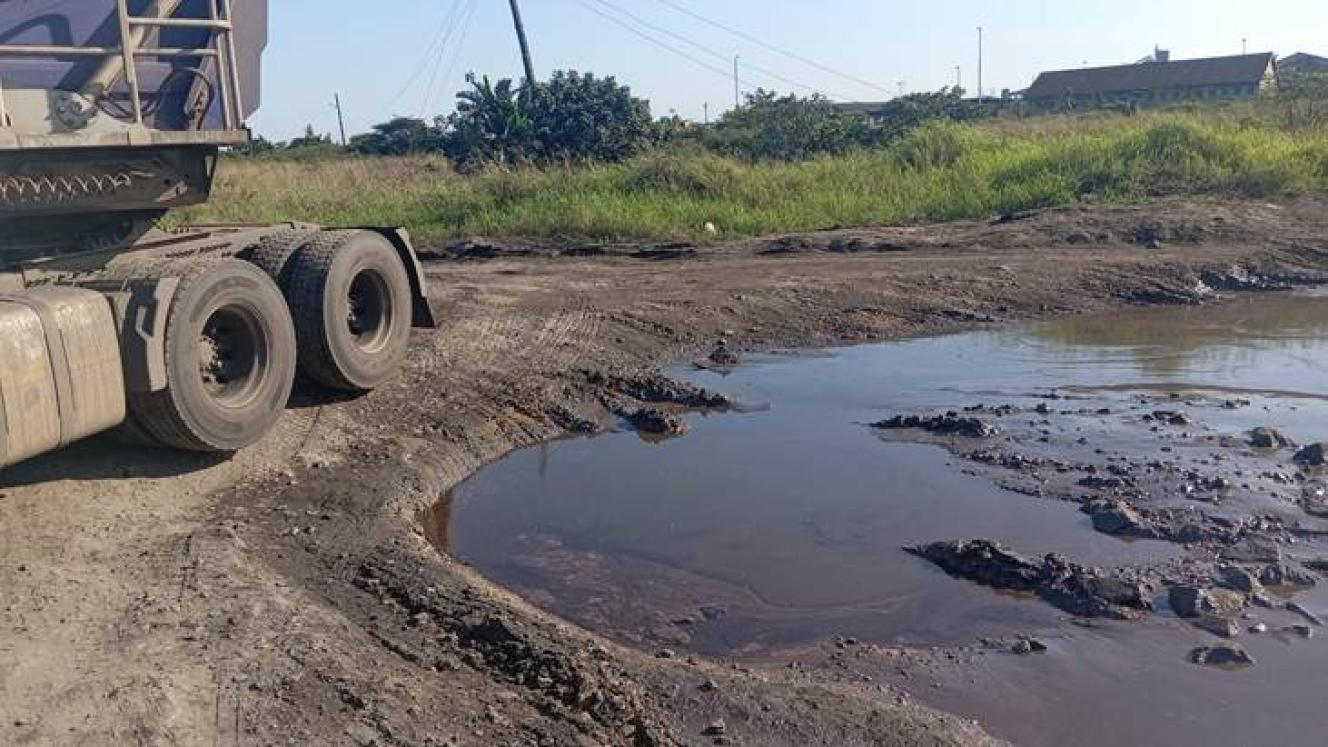
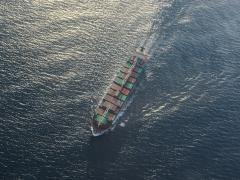
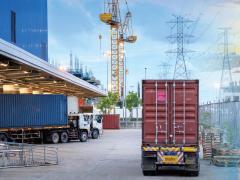
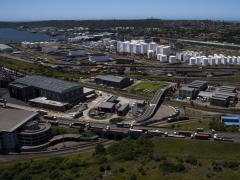
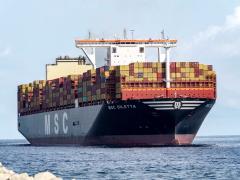
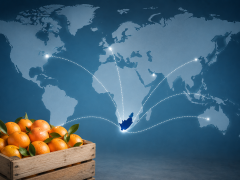
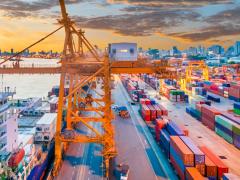
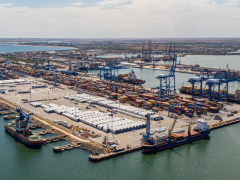
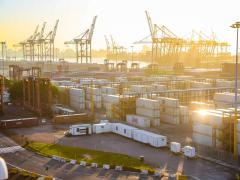
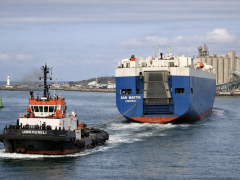
Shipping and airfreight links between South Africa and West Africa support growth in trade between the country and the region, which is home to some of the world’s fastest-growing economies. According to the 2015 Global Sovereign Statistical Trends report, the Democratic Republic of Congo and Côte d’Ivoire are expected to be among the top ten fastestgrowing economies in 2015. Bloomberg placed Nigeria sixth in its list of the top 20 growth economies in 2015. Supporting this growth is investment across the region in ports, airports, road and – to a lesser extent – rail infrastructure. All of which is making it easier for South African companies to trade with the region. There are regular connections between the ports of Durban, Ngqura and Cape Town with the major West African hubs of Walvis Bay, Luanda, Point Noire, Tincan Island, Cotonou, Lome and Abidjan. A number of lines service the route, and most of the world’s leading shipping lines call on West African ports. There are also two flights a day between OR Tambo and Murtala Muhammed International Airport (MMIA) in Lagos, which is the busiest airport in West Africa and the fifth-busiest in Africa. Freight and passengers can also travel between OR Tambo and Luanda, Kinshasa, Libreville, Douala, Accra, Abidjan and Dakar, among others. Governments and the private sector are supporting the economic growth by investing heavily in port and other logistics infrastructure. This has resulted in a “ports race” which has seen harbours in the region vying with each other to attract direct traffic. Côte d’Ivoire is one of the countries that has launched massive upgrades to its ports to support the growth of the natural resource sector and to grow its share of regional transit trade. A second container terminal is being built in the Abidjan harbour, which is undergoing a $2.5bn expansion that is due to be completed in 2020. The plans will enable the port to handle 2.25 million twenty-foot equivalent units (TEUs), which would give it the largest capacity in West Africa. It will, however, face growing competition. Over the next four years at least 3.54m TEUs of new deep water container terminal capacity will be added to the West African coast. Most will be able to take 10 000-TEU vessels, which is expected to result in a realignment of services to the region. Additional capacity may lead to a price and service war between the different ports in a region, which could well go from under- to overcapacity in the short term. Shipping lines will move their hubs to leastcost destinations, and transhipment is expected to move from remote ports such as Las Palmas or Algeciras to the West African coastline. The growth of intraregional shipping will be supported by the current and planned investment in the smaller feeder ports. How this will impact on trade links between South Africa and the region remains to be seen, but for now there is ample capacity to support additional exports and imports by both sea and air. INSERT 1 2.25m TEUs The potential capacity of Abidjan port once it has been upgraded. INSERT 2 For now there is ample capacity to support additional exports and imports by both sea and air. CAPTION Port of Luanda... a major West African hub.
Investment in infrastructure could create 'ports race'
Comments | 0
© Now Media. This content is protected by copyright and may not be adapted or republished. If you would like to discuss cooperation opportunities, please contact: editor@freightnews.co.za.