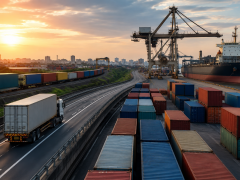
Agricultural production will have to increase by at least 60% – and 80% in developing countries – over the next four decades or so, translating into the additional production of almost one billion tonnes of cereals and just less than 200 million tonnes of meat every year by 2050. “And that food has to be moved across the world – which means food supply chains will have to cope with the increased volumes and be able to deliver to more people more often,” said John Purchase, CEO of the South African Agriculture Business Chamber. Regional trade would therefore have to grow significantly, he said, as it was the most cost-effective way forward. “At the moment we have situations where table grapes from southern Africa are exported into Europe before being exported back to Dakar in Senegal for example. That is nonsensical,” he said. “It would make much more sense to just move the perishable directly to the country of intent. A part of the problem is that intra African trade agreements are best described as a spaghetti bowl and economic transformation has been very slow.” He said if food supply chains were to cope with the expected volume increases to feed the growing population in Africa there would have to be a vast improvement on intraregional trade which at the moment is below 15%. INSERT Grapes from southern Africa are exported into Europe before being exported back to Dakar.
Intra-regional trade crucial in food logistics
Comments | 0
© Now Media. This content is protected by copyright and may not be adapted or republished. If you would like to discuss cooperation opportunities, please contact: editor@freightnews.co.za.