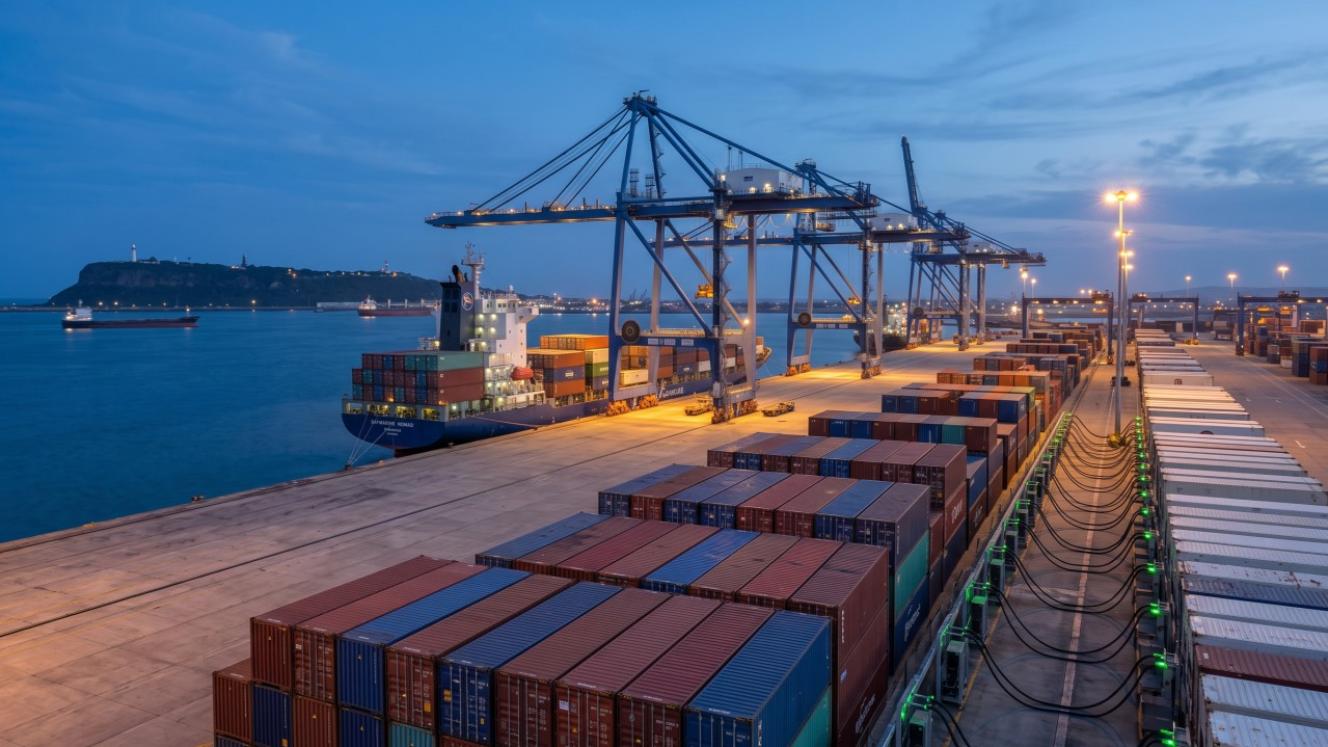
Marine insurers will be able to navigate the storms caused by the Middle East conflict, according to Mike Brews, director of Horizon Underwriting Managers. Asked what risk the marine insurance sector as a whole faces should the crisis trigger multiple simultaneous major claims across war risk, hull, cargo and loss of hire books, he told Freight News, at a global level, a multi-line loss event would be significant but unlikely to create a true systemic failure of the marine market. However, there are major knock-on effects. These include the rise in petrol and diesel prices, as South Africa is a net importer of refined fuels, and additional traffic around the Cape. For South Africa, this translates into increased risk along the coastline of spillage and accidents due to the growth in traffic, port congestion, particularly in Durban and Cape Town, and “further strain on an already constrained port infrastructure”. A further challenge is the growth of the shadow fleet, which sees an increased presence of poorly maintained vessels off the SA coastline. This exposes South Africa to pollution events and casualties requiring salvage support. Asked whether there has been any stress testing of the different scenarios, he said most South African insurers did not run geopolitical stress scenarios, but instead relied on reinsurer and broker models, where available, and generic global scenarios. “This tends to miss out port congestion modelling, power disruption impact (load shedding) and logistics breakdown scenarios.” He believes there is at present sufficient reinsurance capacity for the marine risk resulting from prolonged fighting in the region. “Capacity will be available as long as global markets offer local support. However, terms may deteriorate drastically. “Any withdrawal from South Africa is more likely to be driven by global loss experience rather than local performance. “South Africa remains a small part of reinsurers’ overall portfolios,” he added. Insurance companies are on the alert for instances of false cargo declarations, staged incidents or inflated loss claims during this period of heightened maritime risk. “Many robust mechanisms are in place to identify and avoid them. However, as the economy suffers, these practices become more commonplace and, with the sophistication of AI, become harder to identify,” he says. Underwriters face potentially complex challenges if faced with legal action for declining all or part of a claim. “In a contested claim, insurers could face conflicting legal obligations. Courts may favour insured-friendly interpretations where ambiguity exists. “South African policies often follow London market wordings and are influenced by international sanctions regimes “However, South African courts may interpret clauses differently from UK courts. “Sanctions alignment (e.g. US vs local law) is not always clean,” he says.
Insurance companies can ride the Hormuz tsunami
Comments | 0
© Now Media. This content is protected by copyright and may not be adapted or republished. If you would like to discuss cooperation opportunities, please contact: editor@freightnews.co.za.