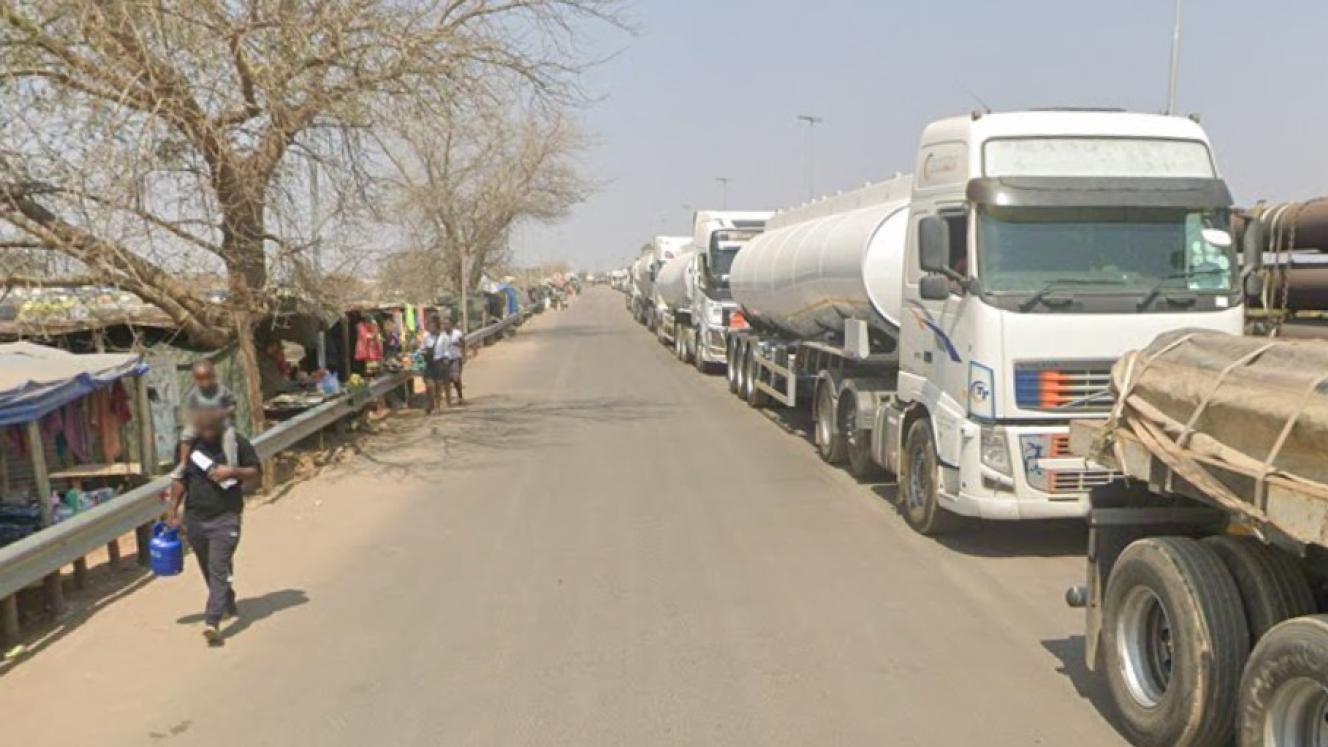
A number of studies have found that there are two systems operating at most borders in Africa – the formal one with its large trucks and logistics companies, and an informal one which has found a way round red tape but still pays customs duty to differentiate it from smuggling.
Several studies have estimated the average value of ICBT trade in the Southern African Development Community (SADC) region at around US$17.6 billion a year.
Informal cross-border trade is “incredibly fluid and efficient when compared with formal trade in Africa,” according to research conducted for the Food and Agriculture Organisation of the United Nations.
Items traded mainly include foodstuffs such as maize, rice and beans, as well as handicrafts, minerals, clothing and consumer goods.
Manufactured and re-exported products comprise low-quality processed goods from Asia such as electronic appliances, apparel and shoes.
Contraband and counterfeit goods are more difficult to discern but generally include fuels, cosmetics, pharmaceutical drugs and electronics, according to one research paper.
“In the region average custom delays can be up to 12.1 days – the longest in the world.
“In contrast, when the research team observed a line of ICBTs (informal cross-border traders) in Malawi and Botswana, customs officials stated that all would make it through in several hours on average,” according to the report which confirms earlier research on the extent of ICBT trade.
Research undertaken for USAID found that informal trade accounted for up to 70% of employment in sub-Saharan Africa, “providing access to domestic goods and services that are not available through the formal economy”.
Traders make use of informal trade channels because of barriers to entering the formal sector, including difficulty in getting access to travelling documents or trading licences, excessively long waiting times at borders, overcharging by customs officials, and inadequate knowledge of official procedures.
Despite the jobs and parallel economy that ICBT supports, “governments typically disapprove of informal activity as it results in revenue losses, and the difficulty of regulating such activities can often lead to negative effects on overall economic growth,” according to African Bank researchers Jean-Guy K Afrika and Gerald Ajumbo.
Researchers have found that while ICBT is largely the domain of small-scale entrepreneurs, small, medium and large importers and exporters as well as salaried people use it to supplement their income.
“There are formal firms that engage in informal trade and there are informal traders who are suppliers of the formal firms,” states the USAID report.
According to research commissioned by the African Development Bank, women make up 70-80% of informal cross-border traders in the southern Africa region.
The assessment found that contrary to stereotypes, women ICBTs were not under-educated. For example, 82% of Malawian women ICBTs have at least secondary or higher education.
A number also had other formal or informal jobs, including working as retailers.
These ICBTs sell the goods they bring back directly – in shops, in formal and informal markets, from their homes, or in their other workplace.
CAPTION
According to research, informal trade accounts for 70% of employment in sub-Saharan Africa.