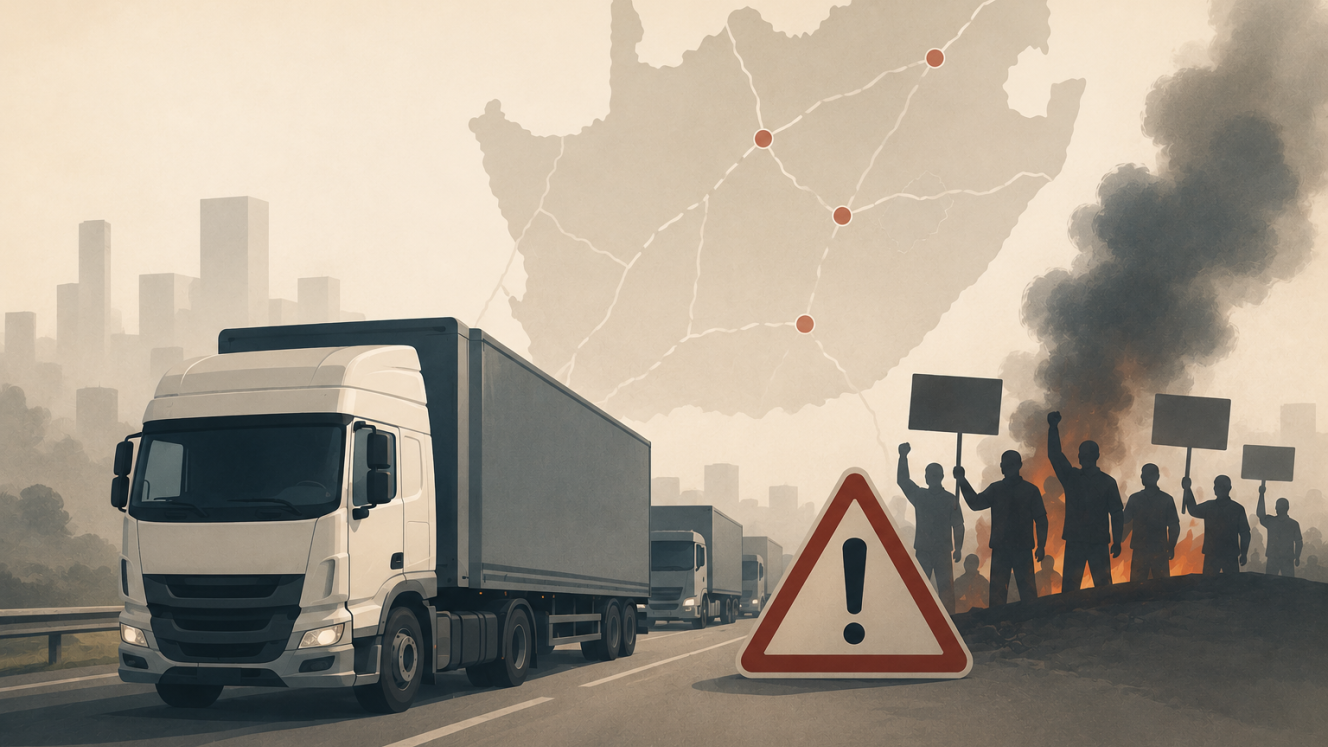
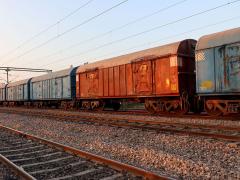
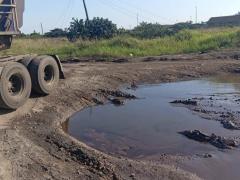
The entire freight and trade industry is sitting in the middle of an economic minefield, surrounded by explosive indicators. The SA Chamber of Commerce and Industry (Sacci) business confidence index (BCI) for May 2015, for example, blew up and confidence slipped to a 16-year low of 86.9, almost matching the equally disastrous 86.8 registered in September 1999. Also, the HSBC purchasing managers' index (PMI), another good indicator of private sector fortunes (or, in this case, misfortunes) declined from 51.5 in April to 50.1 in May – staying just a shade over 50 which is the cross-over point into a “no growth” scenario. Meanwhile, the rating agency Fitch recently left SA’s sovereign credit ratings unchanged at BBB. But it warned that there was a list of factors – like weak economic growth and failure to reduce the budget deficit, stabilise government debt, and to materially narrow the current account deficit – that could lead to a downgrade in future. And that would prove disastrous, as it would mean that SA, as far as Fitch and fellow rating agency Standard & Poor were concerned, would slip into the realms of junk bond status. Given this, plus all the other bad signs and the Eskom fiasco, which gets a pretty fair share of the blame for this sorry state of affairs, SA is now singing the economic blues. What are the indicators and feelings in the freight industry about present conditions? Dave Logan, CEO of the SA Association of Freight Forwarders (Saaff), agreed that the fortunes of the clearing and forwarding industry were in close alignment with the surrounding economic conditions. That when international and/or local trade was curbed for any reason, then the revenue of the c&f industry was equally restrained. “It is having to transact business in the current unfavourable SA economic environment,” he said. “This includes the current foreign exchange rates lowering the buying power of the rand, especially from an import point of view; the Eskom situation as mentioned; and the continuous stream of legislation with which to comply. This does not make doing business any easier.” Sue Moodley, MD of transport.com and chairman of the Durban Harbour Carriers' Association (DHCA), was in concord with this statement when related to road transport. “The freight industry is battling to sustain itself due to the economic decline. Should the present conditions not be timeously addressed, SA will find itself in a very difficult position.” Gavin Kelly, operations and technical manager of the Road Freight Association (RFA), agreed. “Just driving around the various second-hand truck dealers in Gauteng is a good indication of the drop in road freight demand,” he pointed out. “There are an estimated 4 000 second-hand/ repossessed trucks (rigid and combinations) that are unsaleable in Gauteng alone. There are also rumours that there are in excess of 1 000 new side-tippers and flat-deck trailer combinations at various trailer manufacturers which cannot be sold.” He also noted that there was a definite drop in freight demand – driven partly by the international drop in demand as well as the shrinking purchasing power of the average citizen in SA. “Major routes (N3/N4 N1) have seen drops of between 1.5% and 3.6% in freight traffic over the last 18 months,” Kelly added. “There has been some correction (especially along the N3) but this would not point to a ‘recovery’ of any sort. “Definitely – times are tough, economic activity has slowed and there is a general feeling of business pessimism.” And Moodley outlined the factors that have negatively impacted on the freight industry. “Due to the energy challenges which South Africans at large have faced daily, this has weakened our economic growth." She also noted that household spend had been slowed down due to excessive debt. Alongside this, SA has also been affected by weak employment growth, which in turn has constrained income generation, and has had a negative impact on household confidence. “This had a direct bearing on the supply and demand of consumer products,” Moodley added, “which, in turn, had a downward impact on freight transport demand.” Labour unrest and strikes have affected performance in the manufacturing, mining and agricultural sectors. “This has had a direct impact on the import and export industry, and the truckers who carry the goods. “Our existing rail, road and port infrastructure has also not been efficient in the present times. We have been inundated with bottlenecks in the transport industry and these conditions add to the declining economy.” INSERT & CAPTION Labour unrest has had a direct impact on the import and export industry, and the truckers who carry the goods. – Sue Moodley
Industry sings the economic blues as it battles sustainability
Comments | 0
© Now Media. This content is protected by copyright and may not be adapted or republished. If you would like to discuss cooperation opportunities, please contact: editor@freightnews.co.za.