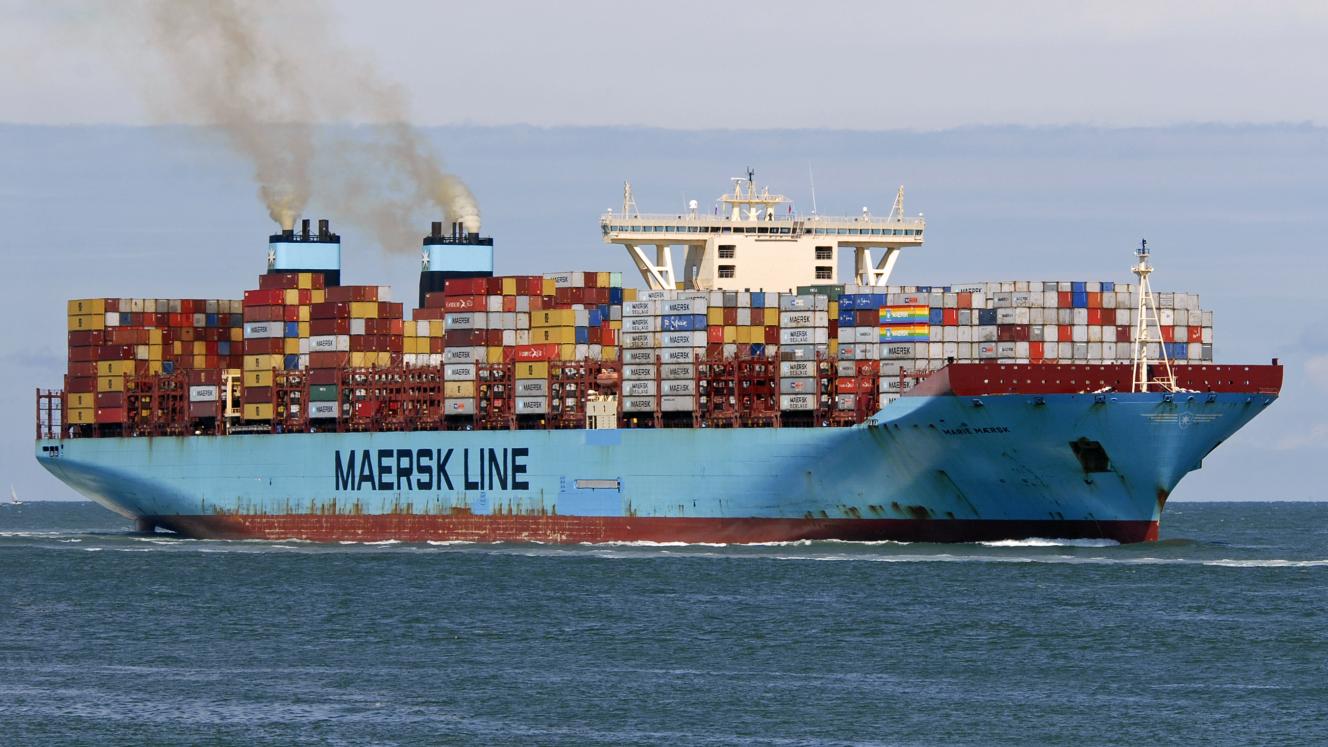
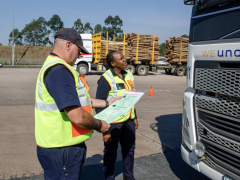
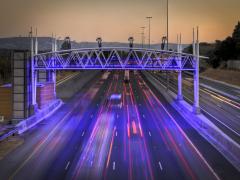
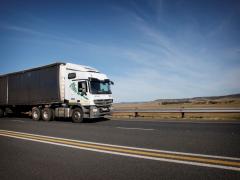
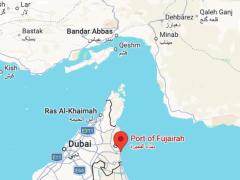
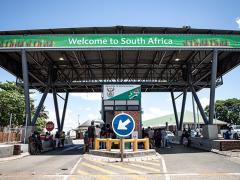
A year since its launch, the Durban Reefer Container Operations Forum (DRCOF) has made headway in streamlining problems surrounding the export of reefer (refrigerated) containers. Transnet Port Terminals (TPT) meets monthly with heads from all the stakeholders involved in the citrus export industry and has certainly come to the party on a number of issues, said Mitchell Brooke, logistics development manager of the Citrus Growers’ Association (CGA). These include increasing reefer plug points at the Durban port; shifting export stacks for the Europe vessels (which carry 60% of the port’s reefer exports) between Pier 1 and Pier 2 to avoid peak traffic and congestion; introducing reefer express lanes; and acquiring a dedicated reach stacker at Pier 1 to accept reefer boxes even in strong winds. But ongoing congestion at Durban container terminal (DCT) Pier 2, which has built up to critical proportions this year, has thrown a major spanner in the works, according to a week-long, on-site study recently undertaken by Brooke. The implications of this congestion make for a lengthy list, he told FTW. And many of the problems he highlighted are similar to those expressed by Sue Moodley, chairman of the Durban Harbour Carriers’ Association (DHCA), whose members have also been adversely impacted by the serious Pier 2 congestion. A specific problem for refrigerated fruit cargo is that it is in danger of suffering from quality problems as reefer containers remain without power in queues for hours on end. Another effect of congestion at Pier 1 and Pier 2 is that it can seriously delay the movement of fire, explosive and hazardous response vehicles due to roads being congested. “The list goes on,” said Brooke. And he added in his report, “DCT generally suffers from internal and external symptomatic problems”. One of these is that DCT internal planning and operations are constrained by vessel berthing windows causing cyclical volume demands. Another is that the main arterial routes leading to DCT are grossly ineffective to cope with the high-volume traffic flow. Brooke noted that the main arterial intersections were also grossly ineffective. “Bayhead Road, the sole access route to DCT Pier 2 is, at best, a diabolical shambles,” he said. “Added to that, the entire southern port precinct is grossly oversubscribed in the form of (container) logistics business operations – those in the Bayhead area, the Cutler Complex and Langeberg Road.” He also described the rail and road containerised transport from the port as being “grossly disproportionate” – with around 85% being hauled by road. In his study – between Monday July 20 and Sunday July 26 – Brooke found that Pier 2 vessel berthing was highly condensed. “There was bunching of the larger volume services to the terminal,” he said. “The resultant effects were increased import/export traffic flows – therefore congestion. The terminal waterside and landside operations were constrained, and there was an increased demand on manpower and equipment with terminal capacity running between 70% and 80%.” INSERT & CAPTION The main arterial routes leading to DCT are grossly ineffective to cope with the high volume traffic flow. – Mitchell Brooke
In-depth study reveals impact of congestion on reefers
Comments | 0
© Now Media. This content is protected by copyright and may not be adapted or republished. If you would like to discuss cooperation opportunities, please contact: editor@freightnews.co.za.