Economic activity in sub-Saharan Africa has weakened markedly although growth remains stronger than in many other regions, with growth expected at 3.75% in 2015 and 4.25% in 2016, the International Monetary Fund (IMF) said in a statement yesterday.
In its October 2015 Regional Economic Outlook for Sub-Saharan Africa, titled ‘Dealing with the Gathering Clouds’, the IMF attributed the slowdown to the combination of the sharp fall in commodity prices and more difficult financing conditions.
“This overall difficult picture masks considerable variation across the region,” said Antoinette Sayeh, director of the IMF’s African department. “In most low-income countries, growth is holding up, supported by ongoing infrastructure investment and solid private consumption. But even within this group, some countries are feeling the pinch from lower prices for their main commodity exports, even as lower oil prices ease their energy import bill.”
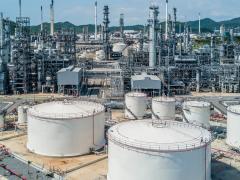
Even more hard hit are the region’s oil exporters, including Nigeria and Angola, as falling export incomes and resulting sharp fiscal adjustments are taking a toll on activity. Several middle-income countries, such as Ghana, South Africa and Zambia are also facing unfavourable conditions, including weak commodity prices, difficult financing conditions, and electricity shortages.
Furthermore, said Sayeh, a number of countries in the region are facing these circumstances with more limited external and fiscal buffers than they did at the time of the global financial crisis.
She said that policies needed to adjust to this new environment: “On the fiscal policy front, for the region’s oil exporters, the sharp and seemingly enduring decline in oil prices makes adjustment unavoidable, and while some had space to draw on buffers or borrow to smooth the adjustment, that space is becoming increasingly limited. For most other countries, fiscal policy needs to strike an appropriate balance between debt sustainability considerations, on the one hand, and addressing development needs, on the other.”