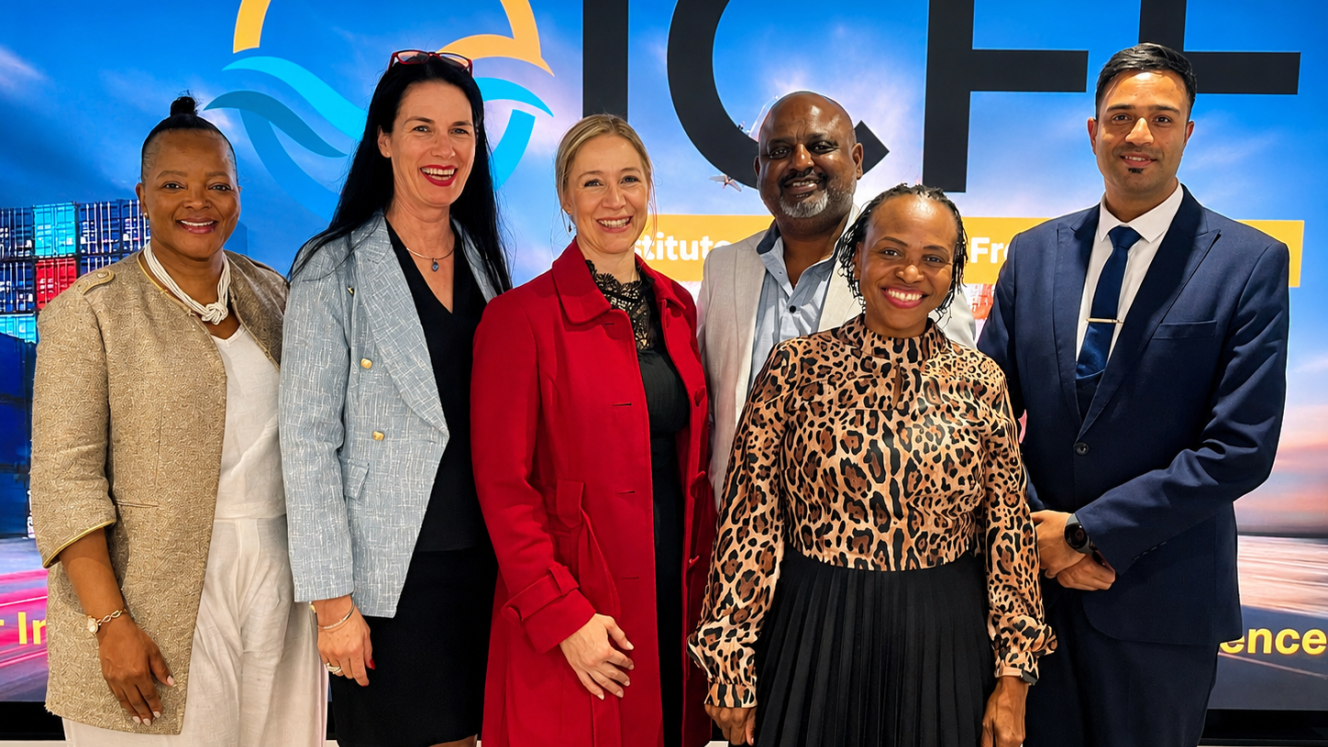
The Institute of Customs and Freight Forwarding (ICFF) has officially launched professional designations in supply chain management, extending its SAQA-recognised professionalisation framework beyond customs and freight forwarding into broader supply chain roles.
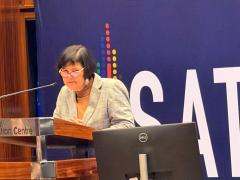
The designations were announced by ICFF CEO Ingrid Du Buisson at an ICFF roadshow in Sandton on Thursday.
Du Buisson said the move had followed a long process to reflect the industry’s broader role in trade facilitation. “This has been part of a long journey because our work extends beyond forwarding and clearing. We facilitate the supply chain from end to end,” she said.
The ICFF has submitted a professional ecosystem to SAQA to support designations in customs, freight forwarding and supply chain management, giving formal recognition to career pathways in a sector where many practitioners have operational experience but no formal qualification.
She said at least 70% of people working in the industry did not have formal qualifications, despite years of practical experience.
“Everybody stumbled into this industry – from shipping, from insurance, from banking, from wherever. But they have years of experience,” she said.
Practitioners who have built careers in customs, freight forwarding and supply chain roles without formal qualifications will now be able to seek recognition through the ICFF designation process.
About 75 candidates were already going through ICFF evaluations, with most of the demand coming from customs roles where companies were seeking assurance around compliance capability, she said.
Higher education stream
The ICFF framework is built around three streams: higher education, occupational training and continuous professional development (CPD).
Under the higher education stream, the ICFF has developed NQF level 5 higher certificates in customs compliance, freight forwarding and supply chain management with the Da Vinci Institute. It has also entered into a memorandum of understanding with the IMM Graduate School in the supply chain management space.
The institute has also introduced SMART programmes in customs compliance and freight forwarding for candidates who already have a qualification but need the practical skills required in forwarding and clearing operations.
Unlike formal NQF qualifications, these programmes draw on selected components of existing curricula and add operational content to help make graduates ‘job-ready’. Du Buisson said this included customs compliance, freight forwarding, management and leadership development, artificial intelligence and data analytics.
“Freight forwarding companies are employing process engineers to do their data analytics because we don’t have the capacity in this industry to analyse data, interpret it and convert it into processes and strategy,” she said.
Practitioners with 10 to 15 years’ work experience might also be considered for the SMART programmes if they met the entry requirements, she said.
Operations-led CPD pipeline
The ICFF is also developing continuous professional development programmes to support the new professional designations.
The framework was informed by an industry needs analysis, with companies asked to ensure that feedback came from people working in operations.
“We want the people on the ground to tell us whether we are on the right path or not,” Du Buisson said.
Focus areas identified include international shipping procedures, customs documentation and compliance, Incoterms and trade agreements, freight management systems, data and supply chain analytics, customs regulatory updates, freight cost optimisation, dangerous goods handling, trade finance and documentation, digital freight platforms, cargo handling, insurance and risk, and leadership and management.
To support this, the ICFF has established a learning and development chapter and is working with seven endorsed training providers, including two higher education institutions and five private providers. Du Buisson said the institute was also looking to appoint a learning and development specialist to help implement industry support strategies.
Designated members would also be required to comply with a code of ethics and conduct, with the risk of losing their designation if they were found to have acted unethically, she said.