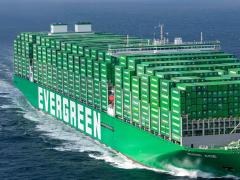
Dirk Hoffmann, Safmarine Southern African cluster manager, foresees distinct changes in shipping in the next decade, which will all have a profound effect. Purchasing decisions will be inf luenced by more than price and product. “The quality of a shipping line’s customer service is likely to become even more important,” he told FTW. “This as shipping as an industry becomes even more commoditised and there is little, if any, variation in the product and price offerings of different shipping lines.” Hoffmann also sees a continued focus on cost and cost management. “Container shipping,” he said, “is a capital-intensive, narrow-margin business and we expect profit margins to remain under pressure in the decade ahead. “But one area where we do have control is over our costs.” There will be a change in manufacturing patterns. A change in manufacturing patterns, which has led to increased local manufacture,” he said, “is likely to impact shipping in a number of ways. Not only will it continue to bring about a change in the types of goods moved and the volumes moved, but it is also likely to support the balancing of trades.” A more disciplined shipping process is also inevitable. “More and more countries are imposing stricter regulations – such as requiring upfront documentation,” according to Hoffmann. “And this will result in a more disciplined shipping process.” There will be an increased use of e-business tools and channels. “The emergence of e-business tools and channels has brought with it increased convenience, speed and efficiencies,” Hoffmann said. “And the shipping industry is likely to continue benefiting from the development of innovative e-business technologies.” “Safmarine supports the drive for increased e-commerce in shipping because we see benefit for all parties. There will be shorter cycles and higher/ deeper peaks and troughs. Said Hoffmann: “Shipping has always been a cyclical industry. But in recent years, we’ve seen the cycles shorten, the peaks heighten and the troughs deepen. “Longer-term contracts between shipping lines and shippers are likely to increase in order to provide some level of stability to this f luctuating situation.” Smarter containers will be developed. “Improved container technology has already made a huge difference to the reefer industry,” said Hoffmann. “The introduction of global positioning systems (GPS) and temperature recording technologies will allow reefer customers to not only keep track of their containers but will provide them with access to full, real-time data. These are further examples of the ‘smart container’ trend.” With a continued focus on environmental issues, slow steaming is here to stay, according to Hoffmann. Also he sees an on-going focus on green technologies and a greener supply chain. More ‘hub and spoke’ systems and transhipment is another inevitability. “As vessel capacities increase, so too will the introduction of ‘hub and spoke’ systems,” Hoffmann said. “Transhipment has been a growing trend over the past two decades. It is estimated that in the mid-80s, one in every ten containers was transhipped. Today, the number is closer to one in four, or, depending on the trade, even one in two.” And how does Hoffmann see a more modern shipping process transpiring? “Many of the shipping processes still in use today were implemented centuries ago,” he told FTW. “Shipping companies alone will not be able to modernise shipping. “Any change in shipping processes will have to be supported by the financial, legal and regulatory systems and the stakeholders involved.” INSERT & CAPTION Any change in shipping processes will have to be supported by the financial, legal and regulatory systems and the stakeholders involved. – Dirk Hoffmann CAPTION Charting a future course ... there will be continued focus on cost and cost management. Photo: Safmarine
Higher peaks and deeper troughs
Comments | 0
© Now Media. This content is protected by copyright and may not be adapted or republished. If you would like to discuss cooperation opportunities, please contact: editor@freightnews.co.za.