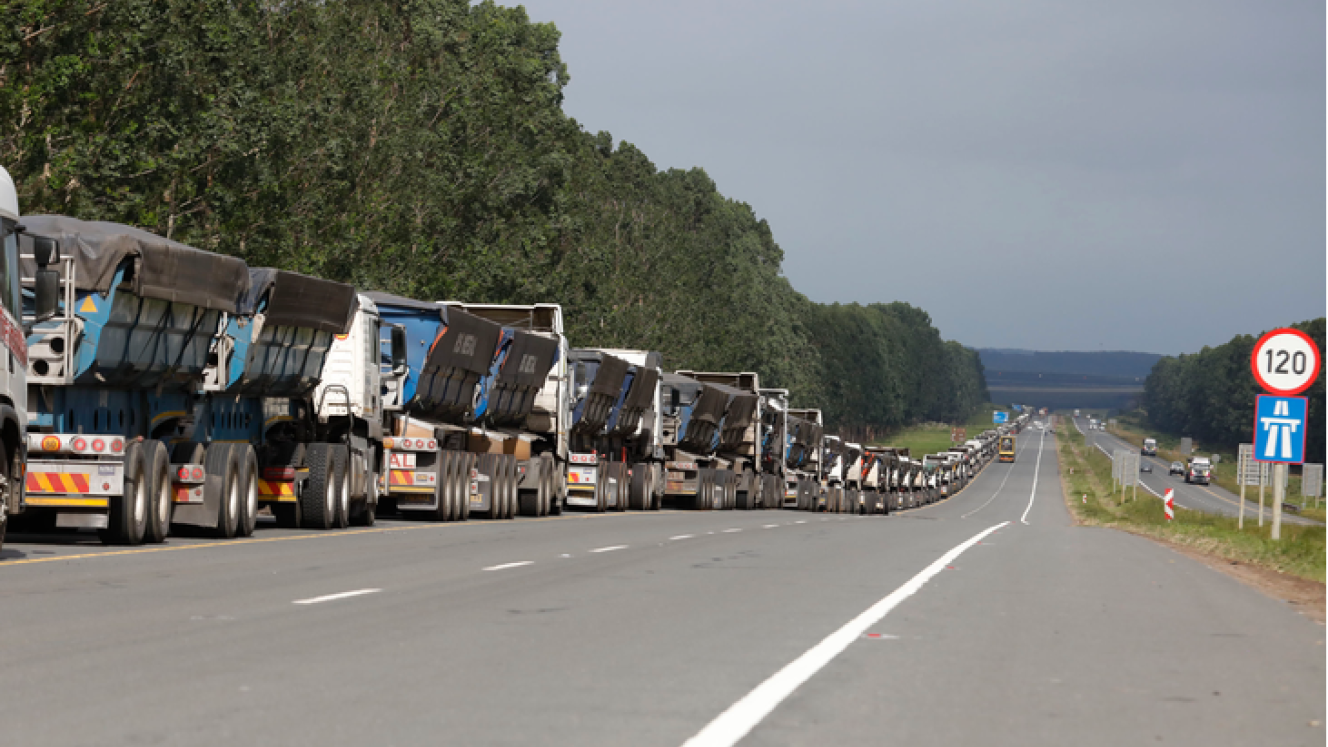
The Gautrain high speed commuter train that went into service between OR Tambo International Airport and Sandton during June appears to have become the catalyst for a move aimed at converting South Africa’s extensive Cape gauge (1067mm) railway network into the wider European standard gauge (1435mm). In so doing it has also drawn attention to fundamental differences between the policy makers of the Department of Transport and the operational requirements of Transnet, which despite being a transport company falls under the umbrella of a separate government department, Public Enterprises. The mood for building new railways to the standard gauge is one that is sweeping across much of Africa, where a legacy exists of laying the blame for 50 and more years of neglect of state-owned railways at the foot of the former colonial powers who now stand accused of introducing a cheaper railway system simply because it was for Africa and therefore didn’t matter. These are arguments that have been used in countries as far apart as Nigeria, Kenya, Uganda, Tanzania and now in South Africa, and which serve to cloud some of the real issues at stake. With the support of European ‘advisers’ and advice from bodies such as the World Bank and other funding agencies, a number of African countries appear to have embarked on a course of uprooting existing railway networks and replacing them at crippling cost with what is claimed to be a superior system. In South Africa the indications of clear disagreement between Transnet and the Department of Transport came to the fore when Transnet was accused by a parliamentary transport committee of not sharing the same vision for South Africa’s R750 billion infrastructure plan. On the other hand the Minister of Transport, S’Bu Ndebele, has firmly nailed his colours to the mast by indicating his desire for a new standard gauge railway between Durban and Gauteng, capable of carrying passengers at high speed between the two metropolitan areas at speeds in excess of 160 km/h. Ndebele believes this will become the catalyst needed to remove freight traffic from the roads. The minister said in April that he would seek cabinet approval for a feasibility study during the current fiscal year. He claimed that a high speed railway would encourage the movement of freight off the roads and onto rail along the country’s most congested traffic route and said that a Johannesburg to Cape Town standard gauge link should also be considered. His comments preceded the revelation that road maintenance in South Africa faced a R75 billion backlog. A somewhat differing view comes from Transnet, which earned itself criticism from MPs when a Transnet delegation told the parliamentary committee that it did not believe a standard gauge railway would be cost-effective. The committee was told that South Africa had 23 000 km of railway in Cape gauge along which trains already ran at internationally accepted speed levels. Transnet acting CEO Chris Wells said that Transnet was playing an integral part in the national infrastructure plan and had in fact initiated the transport infrastructure element of the national plan and was prepared to fund a feasibility study into building a wider gauge railway between Durban and Gauteng. But, he said, with all the money in the world the existing 23 000km of Cape gauge railway could not be wished away. The debate promises to be long and difficult, with vested interests lobbying for support on account of the vast amounts involved. And these include the South African Road Freight Federation (SARF) which is not going to let issues be considered without adding its voice. In April SARF endorsed the call for a feasibility study but said it was essential that an unbiased assessment be conducted by competent and experienced transport engineers and economists. Just one of the challenges facing a wide gauge high speed railway between Durban and Gauteng is that it will require completely new rolling stock and locomotives that will remain dedicated to the new line. There were also severe topographical challenges facing the engineering of a standard gauge line rising from sea level to almost 2000 metres at Johannesburg. “We believe that a high speed freight rail link with all its vastly increased costs would be a much more expensive option both to construct and to run,” said SARF president Mutshutshu Nxumalo, who added there was a global preference for road freight over rail because of its greater flexibility, speed and effectiveness. He said that although high-speed rail links have proven effective in other parts of the world, they have all been prone to intensive teething problems, and in most cases, considerable cost overruns. Nxumalo said that if it was the minister’s intention to relieve the N3 of the excessive heavy freight traffic it now carries, SARF suggests that a dedicated truck route would be far more effective. We believe that a high-speed freight rail link with its vastly increased costs would be a much more expensive option, both to construct and to run,” he said.
High speed rail link proposal gets flak
Comments | 0
© Now Media. This content is protected by copyright and may not be adapted or republished. If you would like to discuss cooperation opportunities, please contact: editor@freightnews.co.za.