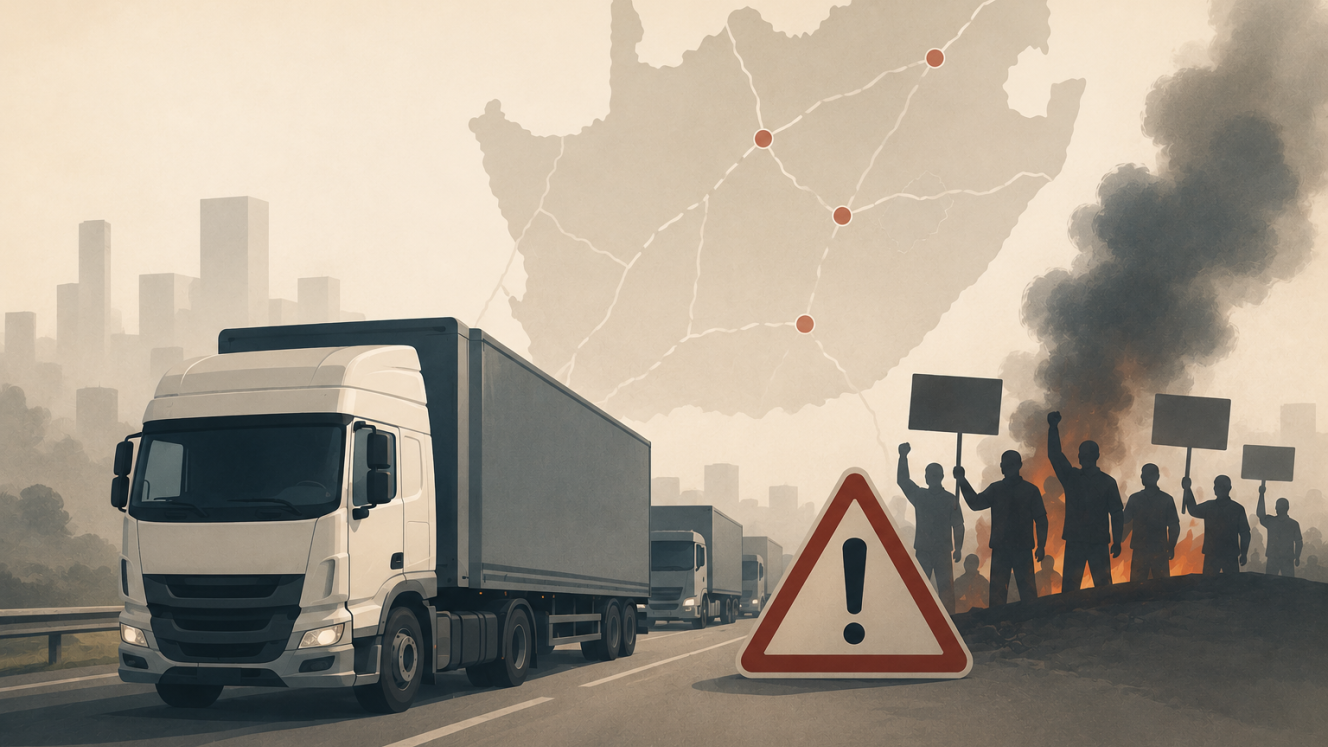
The road freight industry is bracing itself for the release this month of the revised carbon tax discussion paper. It is believed that the National Treasury is looking at a suggested carbon tax of about R120 per ton, which is bad news for an industry already carrying the burden of increased costs. According to economist Mike Schussler, the carbon tax will undoubtedly bring about major cost increases. “If the carbon tax even comes in at R75 a ton that translates to an increase of around 47c a litre in the price of fuel. The first and foremost reality for the trucking industry with the introduction of a carbon tax is that your fuel price will be a lot more expensive,” he said at the annual conference of the Road Freight Association (RFA) held in KwaZulu- Natal last week. “It affects South Africa dramatically in that we already have high logistics costs.” Schussler said in February this year the transporting of goods had increased by 29%. “We already use an expensive way to transport our cargo. The introduction of this carbon tax will only make it more expensive – ultimately making growth more difficult. But what one must not forget is that while the trucking industry will bear the brunt of the cost increase it will ultimately be passed on to the consumer.” According to Schussler, all indications are that smaller trucking companies will not be able to cope with a carbon tax of even R75 per ton – never mind R120. “So what we expect to see is smaller companies closing down and more trucks entering the secondhand market.” But Cecil Morden, chief director of the tax policy unit of the National Treasury, disagrees with Schussler saying that the carbon tax still remains a proposal, but that it should be contextualised and the impact not exaggerated. “I urge people to read the discussion paper because I think they will agree that pricing carbon is very necessary today. There is no difference between emissions trading and carbon tax. It is all about sending a particular signal about carbon and the importance of the environment.” He said the entire process would remain transparent as it had been up to this point and while the money would not be ring-fenced, when the tax is implemented the funds would be implemented in the right places. Morden said he realised there was much opposition to the decision to not ringfence. “We collect the revenue for the State coffers but how that money is distributed is a Budget process and the responsibility of the various departments. “Treasury does not spend the money, but we are also not going to keep it, because it is going to be ploughed back into the economy. South Africa is in the top twenty countries with the highest emissions in the world. We cannot sit back and do nothing,” he said. “If we do nothing we face a situation where we will not be allowed to export. Our exports are fairly carbon-expensive and the EU wants to penalise countries that are carbon high.”
Hauliers brace for carbon tax ‘damage’
Comments | 0
© Now Media. This content is protected by copyright and may not be adapted or republished. If you would like to discuss cooperation opportunities, please contact: editor@freightnews.co.za.