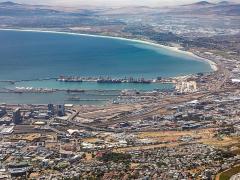
As Transnet National Ports Authority (TNPA) tariffs increased in the first week of April, industry heaved a sigh of relief that it was only a 4.8% increase and not the doubledigit figures initially requested by the country’s port authority. According to one industry source, while there was general consensus that the increase should in fact have been 0% since the country’s ports are among the most expensive in the world, the 4.8% increase was seen as a welcome breather in the current economic environment. “I have spoken quite extensively to colleagues and other industry role-players and there is agreement that anything under 5% is acceptable,” said the source. TNPA was in March granted a tariff increase of only 3.5% after requesting 9.47%. For the first time ever the Port Authority asked for a threeyear increase requesting 15.91% for 2016/17 and 6.49% for 2017/18, but the regulator has agreed to 5.9% for next year and 5.6% the following. According to industry, whilst these figures are welcomed and allow companies to plan in advance, the 2016 and 2017 increases will in all probability be reviewed – along the same lines as the increases granted by the national energy regulator. Whilst the tariff book had not yet been published by the time this issue went to print, it was expected to be distributed in the first few weeks of April, giving port users a far more detailed explanation of the various tariffs applicable for the next year. “Where there was always an 800% differential between us and the rest of the world in terms of port tariffs, it has now come down to around 500%. It is improving slowly but surely,” said the source. Transnet Port Terminals also increased its tariffs on April 1, but not being regulated was free to determine its own increase. “The TPT increase of 9.5% is quite high and there is increased support for the idea that they should be regulated as well and that the increase between TPT and TNPA should be correlated in some way or another,” said another industry spokesman. “It does not help if we are given a breather on the one side but costs significantly increase on the other.” INSERT 500% The port tariff differential between SA and the rest of the world. CAPTION Port of Cape Town
Growing support for regulation of TPT tariffs
Comments | 0
© Now Media. This content is protected by copyright and may not be adapted or republished. If you would like to discuss cooperation opportunities, please contact: editor@freightnews.co.za.