Rivers around
Swakopmund were
f lowing for the first
time in eight years
following a long drought when
FTW visited the town in March.
At the same time there are
early signs that the trickle of
freight along the Walvis Bay
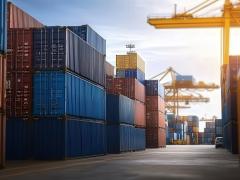
corridors and through the port
of Walvis Bay is starting to f low
stronger.
Over the medium to long
term volumes will certainly
grow, along with value-added
logistics and manufacturing
because Namibia is a country
with a plan – to be the preferred
logistics hub for neighbouring
Southern African Development
Community (SADC) countries.
The target market includes
South Africa and Angola – both
of which have their own port
systems.
There is a good business case
to be made for the country’s
vision, and for the investment
that the private sector is making
in strengthening the Namibian
logistics infrastructure.
It is estimated that traffic
to and from landlocked SADC
countries will have increased
to 50 million tons by 2030,
escalating to 148 million tons
by 2040 – an annual growth of
8.2%.
What makes Namibia
stand out in the region is
that the government and the
private sector are working
in partnership to implement
national policy.
Over the past year a whole
new logistics park has been
developed in Walvis Bay – in
line with the Master Plan
for the Development of an
International Logistics Hub for
SADC Countries in the Republic
of Namibia.
For its part the government
is investing billions in the ports
of Walvis Bay and Lüderitz Bay,
together with the connecting
road, rail and air links.
Studies commissioned by
the Namibian government
and international aid agencies
identified the focus on logistics
as one of the best ways for
Namibia to grow its economy
and create sustainable jobs.
This supports the two main
goals for economic growth – to
go beyond the limits of the small
domestic economy by tapping
into economic growth in the
whole southern African region;
and to diversify economic
activities away from mining.
If successful, the plan will
affect the f low of freight in the
region.
According to the logistics
hub master plan, around 60%
of cargo handled at Walvis Bay
Port is for transhipment.
The remaining 40% is broken
down into around 20% each for
domestic and transit cargo.
“The Logistics Hub Centre
(in Walvis Bay) will change the
situation. Transit cargo volume
is expected to increase from
0.8 million tons in 2013 to 3.6
million tons in 2025,” states the
logistics hub master plan.
Most of the public and private
sector building blocks needed
to support this growth are
either in place or in the process
of being put in place. The next
upturn in the commodity cycle
will put them to the test.
Volumes will follow if the
corridors deliver on their
promise of being the fastest
and most cost-effective links
between SADC and the rest of
the world.
New suburbs are being built in Walvis Bay as plans to establish the port city as an SADC logistics hub attract workers and their families.