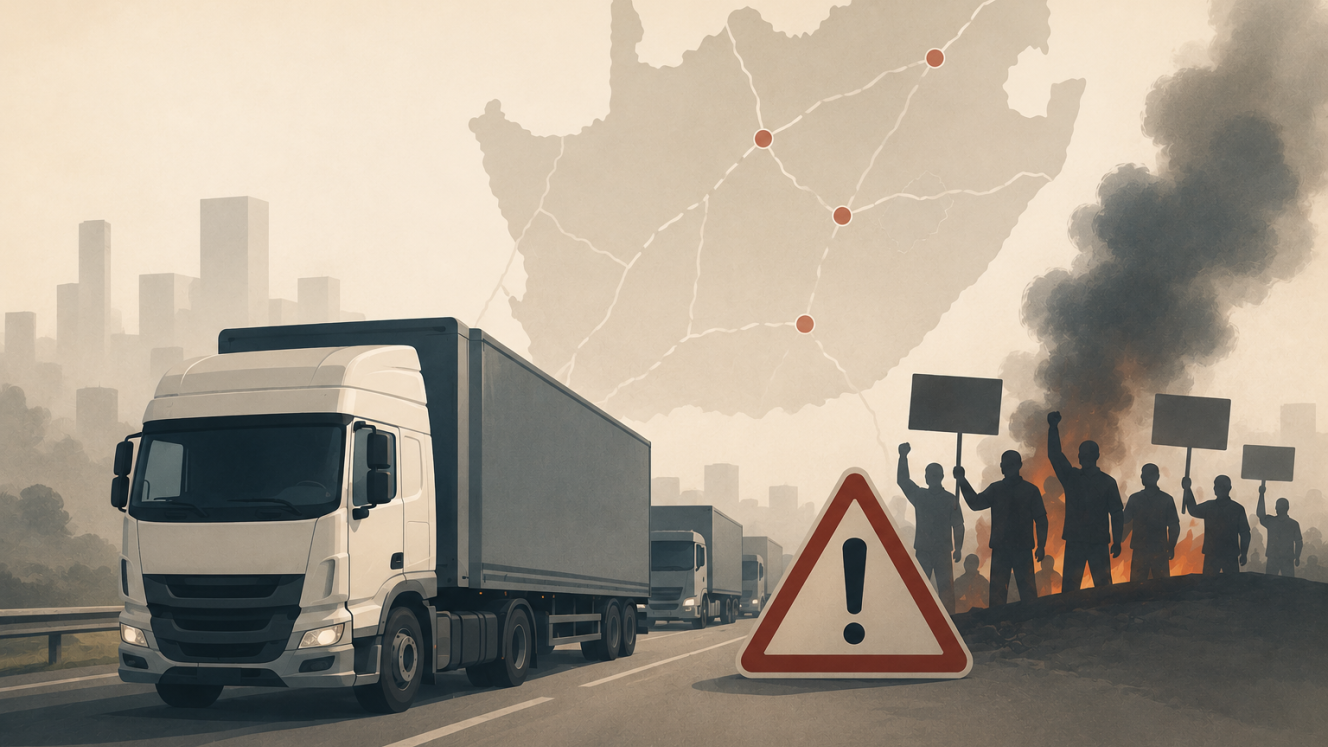
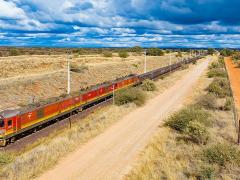
Expenditure on rail will not relieve road congestion WHILE GOVERNMENT argues that road congestion can be adequately dealt with through investment in other infrastructural areas such as rail and public transport, Cargo Carriers joint CEO Garth Bolton believes this thinking is flawed. “Congestion should be relieved by extending investment in road infrastructure,” says Bolton, who provided some telling statistics to illustrate his point. • A CSRI study has shown that rail moves one third of the country’s freight. • Trucks represent 4% of the number of vehicles on South African roads; however they travel five times further than average cars, and therefore constitute 20% of all road traffic. • Budgeted rail infrastructure expenditure over the next 5 years is R46bn. • Budgeted road infrastructure spend over the next 5 years is R60bn. However a large portion of this expenditure is on uneconomical smaller roads in remote rural areas such as Transkei. • Growth in the vehicle population has exceeded 7% in the last number of years. This compound growth means doubling vehicle population in ten years. “Logically then expenditure on busy roads would relieve not only congestion for two thirds of the freight moved but would also relieve congestion for the vast majority of car users. Expenditure on rail infrastructure will only assist one third of the freight moved and will have only a marginal effect on diminishing truck numbers,” said Bolton, who is also a director of the Road Freight Association. “The most frustrating aspect of the current situation is that the provision of more road infrastructure, with the additional fuel tax which increased road capacity would bring, would be highly profitable for the country’s fiscus. “One hundred kilometres of the Ben Schoeman freeway generates in excess of R450m per annum in fuel taxes based on an average of 150 000 vehicle passes per day. Multiplied over 20 years of its life, this equates to R9 bn. The estimated cost of building a 100 km Ben Schoeman equivalent is R2 bn. This highlights the case that road provision is a highly profitable undertaking for Government.” Based on international experience, the institution of punitive fuel taxes and high costs associated with using cars, have not successfully resulted in moving people to public transport, according to Bolton. “The bottom line here is that Government should let its citizens choose the infrastructure they require. With car sales shooting through the roof because of a burgeoning black middle class, it seems those citizens are voting with their wallets. Government is therefore not providing customers with the service they require. “The mindset of Government has been that roads are secondary to other service delivery priorities. But now there is a budget surplus, and resources are being directed to other infrastructural areas, such as the Gautrain. The Gautrain appeared viable when it was to cost R7bn, but with cost estimates now at some R24bn, its viability is highly questionable. Would it therefore not be a far better proposition to invest in freeways?” “Somehow the Government views a better road system as inefficient, and is effectively instituting a punitive system against its own citizens who are obviously in favour of road use. Roads are not a drain, but a positive benefit to the economy and development of the country.”
‘Government must prioritise investment in road infrastructure’
Comments | 0
© Now Media. This content is protected by copyright and may not be adapted or republished. If you would like to discuss cooperation opportunities, please contact: editor@freightnews.co.za.