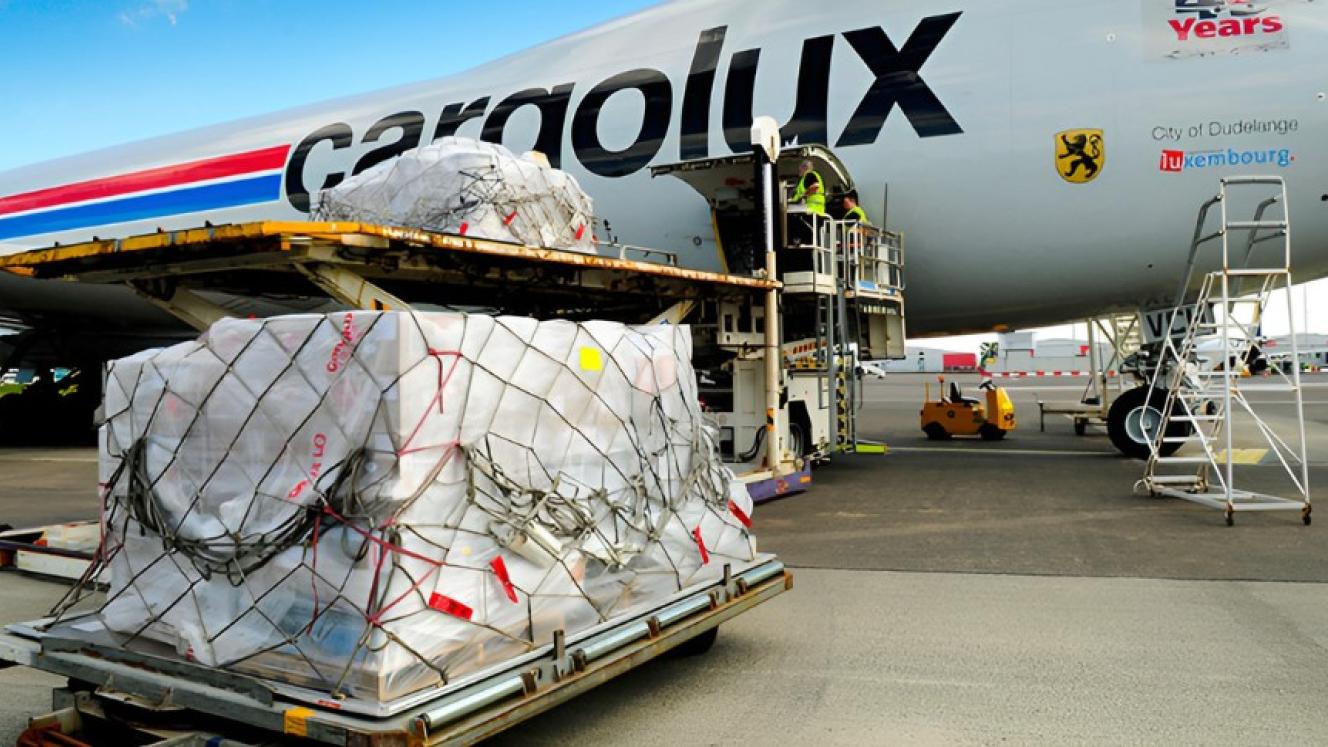
Global air cargo demand achieved record volume in 2025, according to the International Air Transport Association (Iata), with full-year growth of 3.4% in cargo tonne-kilometres (CTK) compared to 2024.
Iata’s latest cargo volume data, released on Thursday, shows international operations grew 4.2%.
Capacity, measured in available cargo tonne-kilometres (ACTK), rose 3.7% overall (5.1% internationally). In December 2025, demand increased 4.3% year-on-year (5.5% internationally), while capacity grew 4.5% (6.4% internationally).
Yields fell 1.5% year-on-year (y-o-y) for the full year, the smallest decline in three years as supply-demand balance normalised after Covid-19 lows. Yields remain 37.2% above 2019 levels.
Iata director general Willie Walsh said air cargo delivered a strong performance, with demand up 3.4% y-o-y in 2025.
“Global e-commerce strength drove volumes, even as trading relationships with the US faced rising tariffs, the removal of de minimis tariff exemptions and continuing policy uncertainty,” Walsh said.
“Air cargo rose to the occasion. It adapted quickly to support global businesses and supply chains as they front-loaded product deliveries ahead of tariff impositions and adjusted to rising demand within Asia and between Asia and Europe as US-Asia trade stagnated.”
Walsh said growth in 2026 was expected to moderate slightly to 2.4%, in line with historical trends.
“We can expect that demand will continue to be shaped by trade and geopolitical developments. Whatever trading patterns emerge, we can be confident that reliance on air cargo to keep global supply chains running will remain, with carriers responding to the challenge by deploying capacity and designing their networks for optimum flexibility.”
Asia-Pacific carriers led regional performance with 8.4% demand growth and 7.4% capacity increase. African airlines recorded 6.0% demand growth (7.8% capacity), European 2.9% (3.1%), Latin American and Caribbean 2.3% (4.5%), and Middle Eastern 0.3% (4.5%). North America was the only region to decline, with demand down 1.3% and capacity down 1.1%.
Trade lane shifts were pronounced, with Europe-Asia up 10.3% (21.5% market share), Routes within Asia rose 10.0% (7.4% share), and Middle East-Asia increased 5.8% (7.4% share). Asia-North America fell 0.8% (23.4% share).
Global trade in goods grew 4.4%, up from 2.4% in 2024. Jet fuel prices averaged 9.1% lower than 2024, although higher crack spreads offset some benefits.
The cargo load factor remained stable at 45.7% for the year (47.1% in December).
Iata represents around 360 airlines covering more than 80% of global air traffic.