A global reputation
for unethical business
practices is costing Africa
dearly, with some 90% of
fund requests for projects
on the continent rejected.
This was the message
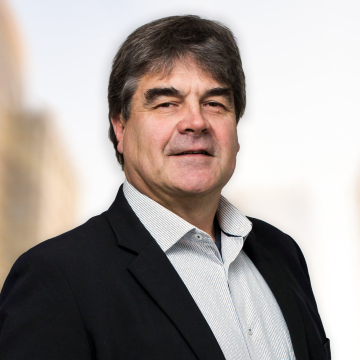
from Shaheen Hoosen,
managing director
Europe, Middle East,
Africa (EMEA) Islamic
Finance and Competence,
a South African-registered
company that helps
facilitate international
funding and financing for
African projects.
Speaking at an
incentives and investment
breakfast hosted by the
Johannesburg Chamber
of Commerce and
Industry (JCCI) recently,
Hoosen pointed out
that global investment
interest in South Africa
was dwindling due to a
perception of corruption
in the country and other
governance and policy
issues.
“Local companies
applying for global funding
also need to bear in mind
that they are competing
with other countries in
Africa. Countries whose
governments have woken
up to the fact that they
need to create a more
conducive investment
environment and are
proactively addressing the
international investment
barriers,” he commented.
He pointed out that
projects that were focused
on upliftment aspects
– such as community
development,
skills transfer
and knowledge
sharing,
job creation
and women
empowerment
– had a better
chance of
obtaining funding.
“Furthermore,
global investors
are currently
particularly
interested
in projects
around
renewable
energy,
water, agriculture
and information
and communications
technology,” said Hoosen.
He added that global
funders preferred 50/50
or 40/60 ratio financing
and funding schemes –
where the project owner
was prepared to invest a
big chunk of their own
money as well. “To funders
it shows that the project
owner is invested and more
fully committed, and that
they are also willing to
take the risks and will find
ways to mitigate those risks
if their own money is at
stake as well,” commented
Hoosen.
Companies applying
for funding also had to
ensure they submitted a
thorough business plan
which ensured sustainable
growth, he added. “Plans
should also include realistic
growth projections.”
Funders shy away from projects in South Africa
Comments | 0
© Now Media. This content is protected by copyright and may not be adapted or republished. If you would like to discuss cooperation opportunities, please contact: editor@freightnews.co.za.