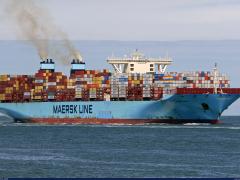
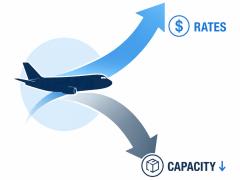
The shipping industry lost in the region of $20 billion in 2009, according to Drewry Consultants, and Safmarine did not escape unscathed. But there’s a plan in place and it’s already bearing fruit, says recently appointed CEO Tomas Dyrbye. The line’s recovery focuses on three core areas – costs, revenue and structures. “In terms of costs, we are keeping a tight rein on any kind of spending and looking carefully at head count,” Dyrbye told FTW. “While there have been some redundancies and more can’t be ruled out for 2010, it’s a small number and Safmarine has done well compared with the rest of the industry. “We are fortunate with regard to vessel costs since most are jointly shared with Maersk Line, giving us the benefits of scale on which we constantly work to produce at a lower cost than if we were standalone.” While Safmarine carried marginally higher cargo volumes last year, revenue was severely depressed and freight rate recovery is therefore a priority. “Although we have achieved a lot, freight rates are still not at the levels they were at the peak of 2008. We are maybe halfway back up from where we came.” Responding to shipper allegations that lines have cut capacity by withdrawing ships in order to increase rates, Dyrbye pointed out that it was a logical course of action. “When there is a drop in volumes, it’s logical for lines to withdraw capacity.” In addition to taking vessels out of service, slow steaming also saved a lot of money last year, he added. The bottom line is to create a leaner organisation but to improve customer service. A tall order, but with the right structures in place it can be achieved, says Dyrbye, pointing to Safmarine’s recently launched pilot scheme to process all e-commerce bookings through service centres in India, Manila and China. “Effectively it frees up local staff, giving the customer speedier turnaround because the service centres deal purely with e-commerce bookings.” Globally 75% of bookings are handled via ecommerce, according to Dyrbye, who makes it clear that there will always be the option of human interaction if the client requires it. There’s no question that the worst of the crisis is over, but Dyrbye is realistic – that recovery will be slow. He is however confident that Safmarine has weathered the worst of the storm and that the groundwork has been laid for a return to profitability as the world economy stutters back into a cycle of growth.
Freight rates a key focus as recovery begins
Comments | 0
© Now Media. This content is protected by copyright and may not be adapted or republished. If you would like to discuss cooperation opportunities, please contact: editor@freightnews.co.za.