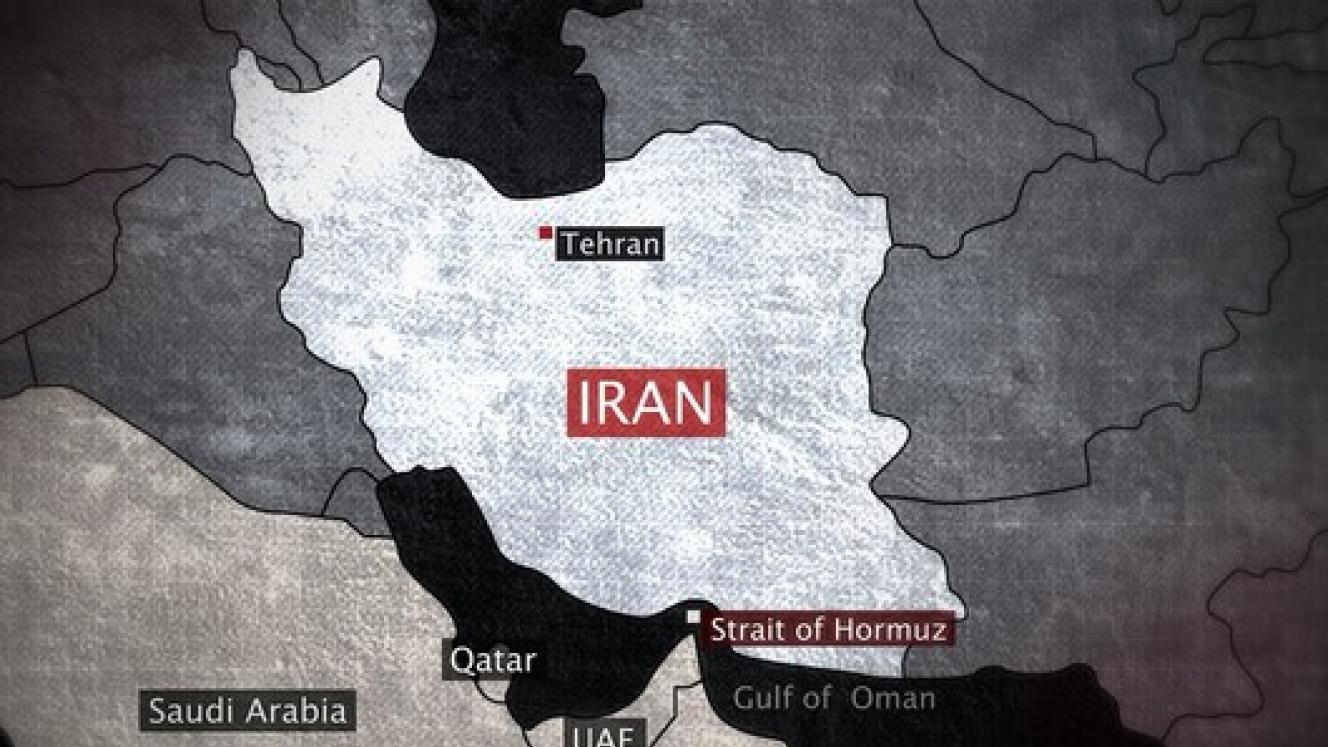
South African freight service providers are going to extraordinary lengths to keep shipments into the Middle East flowing despite the impact of the current conflict on supply chain.
The extent to which freight forwarders like JLOG International and cold-chain packaging innovators ESBD are going to sustain services doesn’t just speak of resilience and innovation in the face of extreme odds, but also shows a willingness to keep costs down while focusing on sustainable solutions.
Jonathan McDonald, managing director of JLOG, has said the company is on the verge of securing charter flights taking airfreight directly to Amman because of the effect transit flights via Dubai International Airport (DXB) have had on South African exports to Jordan.
Direct charter flights as an option to access that market came ahead of the recent Eid al-Fitr celebrations marking the end of Ramadan, when Driefontein Abattoir in Bethulie told Freight News it was struggling to get export lamb from the Karoo to its clients in time.
Situated in the south-western Free State, the shipper had built a successful business on sending fresh-slaughtered meat to Amman in under 92 hours, as per sanitary regulations agreed with its clients.
But attacks on DXB at the beginning of the Persian Gulf war severely disrupted time-sensitive cargo.
What this set in motion was a range of efforts to secure direct flights out of OR Tambo to Queen Alia International (AMM).
As always, cost reared its head, instilling fears among exporters that charter solutions will eat into profit margins, if feasible at all.
McDonald said one of the developments involved a client that had about 45 tonnes to fill a payload of 60 tonnes, and that they had access to other shippers to make up the remaining 15 tonnes.
What’s more is that it could be done affordably.
According to McDonald, compared with the US$12 per kilo that some shippers anticipated and which would have “killed the market”, they managed to secure a rate of about $5.60 a kilo to AMM direct.
“The client we spoke to wants two to three flights per week for at least two weeks and loads will make up a mixture of cargo, not just lamb. Several of the meat exporters we have spoken to have expressed interest.”
He said one prospective client wanted a rate of $4 per kilo, marginally up from the $2.50 paid under ordinary circumstances, but that was too low to secure charter services.
“If you consider that the price of jet fuel has doubled since the war started and that we’re flying into a war zone, I don’t think a rate of under $6 a kilo is bad.”
ESBD managing director Sean Petzer explained that cost was also a serious factor in his business – providing affordable time- and temperature-sensitive packaging solutions for clients trading in pharmaceuticals.
A lot of high-value cold-chain cargo involves reusable boxes, but these are expensive and have to be returned either to their point of origin or the nearest hub.
“Because of what’s happening in the Middle East right now, the cost to bring back one of these PCM (phase-change material) boxes is often the same as renting the box,” he said.
“Plus, you’re dealing with clients in a war zone and getting the return logistics figured out is a nightmare.”
An alternative is to use single-use, recyclable boxes – a far more cost-effective and practical option, but often with a validation period not exceeding three days.
Because of industry fears that the return costs of PCM boxes are going to skyrocket, “there’s going to be a growing need for single-use boxes,” Petzer said.
The problem with a lot of these, he added, was that they comprised polyurethane, posing environmental challenges on the recycling end of a used box.
That is why ESBD has come up with what he calls a “cardboard box solution”, offering the same cold-chain requirements at both ends of the spectrum – a five-day validation period offered by PCM boxes without the expense and return logistics, while also being far more sustainably recyclable than polyurethane boxes.
He said the water-based coolant they used to replace the engineered substances of PCM boxes gave ESBD’s single-use boxes the same cold-chain cargo integrity, with added kerbside recyclability.
“War requires medicine and it’s a commodity that we specialise in protecting,” said Petzer.