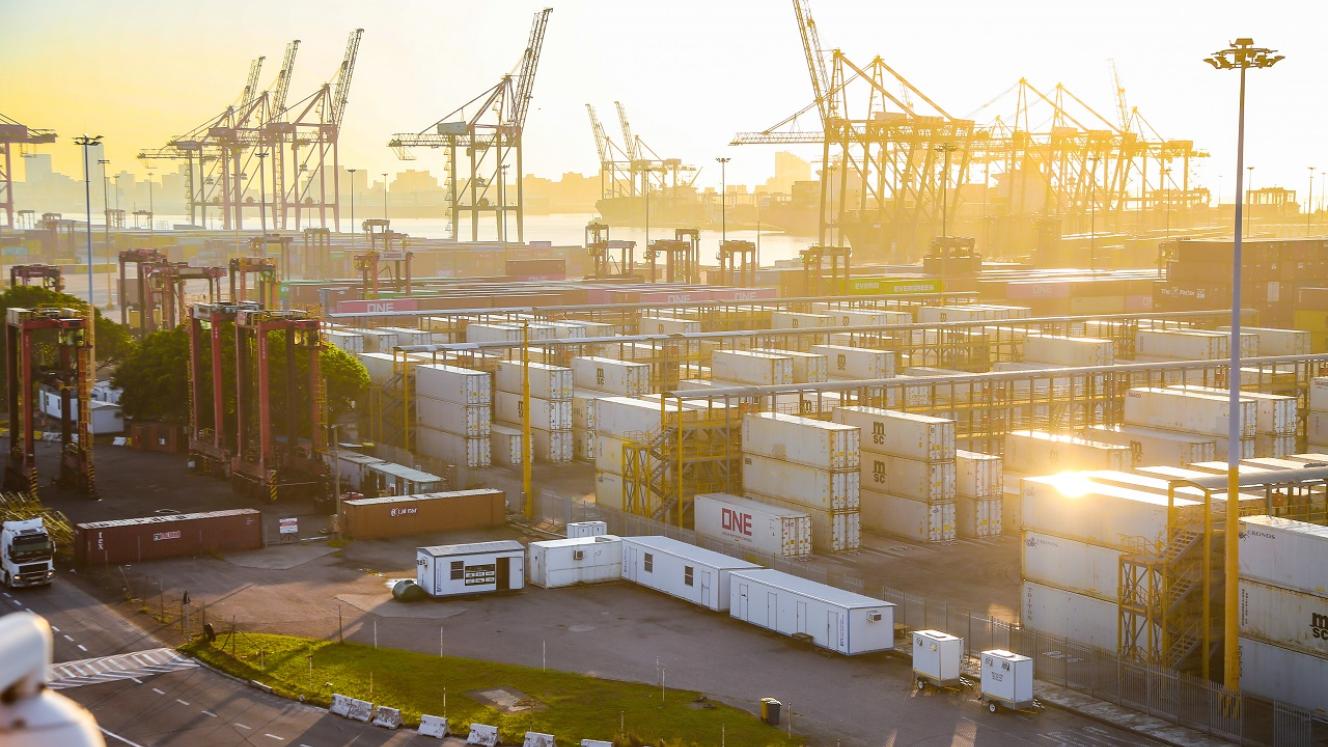
South Africa needs a more coordinated approach to protecting ports, railways and logistics corridors, with industry-wide security frameworks replacing fragmented company-by-company approaches, according to Tom Kruger, director at Hussar Security Solutions.
Participating in a panel discussion at the Oceans Economy Conference in Cape Town, Kruger said the scale of security threats facing critical logistics infrastructure had grown beyond the capacity of individual operators to manage effectively.
"Our view is that within ports, railways and road corridors, the authorities and the state should remain in control, but interaction with the private sector should take place at an industry level," he said. Kruger argued that infrastructure protection and logistics security challenges had become too large and too dispersed to be addressed through isolated company initiatives.
“Our experience is that the challenges around infrastructure protection, safety and security are simply too large and too widespread for individual solutions implemented on a purely competitive basis.” He said any large-scale introduction of drones into ports would first require a regulatory and management framework.
“In South Africa, the approach is often that when a new technology is introduced into a system, it becomes a competitive point within that system,” said Kruger. “It doesn't matter what industry you're talking about, we don't build the layered control mechanisms needed to manage it at an industry level. Instead, it remains at the competitive level of individual companies interacting with the state or semi-state institutions.”
Citing the Port of Rotterdam as an example, Kruger said an airspace management system was used to coordinate multiple drone operators within the port environment. According to Kruger, the system provides a centralised control layer that manages activity across a busy operating environment, helping to ensure that authorised operations can take place safely and efficiently.
Turning to the rail sector, Kruger said the scale of the security challenge had grown beyond the capacity of any single organisation to manage effectively, particularly as operations expanded.
“Our view is that within ports, railways and road corridors, the state needs to maintain control.
“Interaction with the private sector needs to take place at an industry level. Rather than focusing on individual entities, you create an interactive project management layer where specialists from across the industry can focus on their areas of expertise and the regions where they are strongest.
“Really, that is the only way we can approach these kinds of large-scale and serious security issues.”
Kruger said the scale of the challenges facing critical infrastructure required a far more integrated approach involving both the state and private sector.
“If we start talking about the level of problems that we have, it becomes clear that this is a matter for the state, its representatives and the private sector acting at an industry level rather than as individual companies,” he said. “That is where collaboration needs to go, and it has to be integrated. You cannot start by introducing technology if there is no management, coordination or regulatory framework in place. Those layers need to come first. That's how we develop a sustainable solution.”