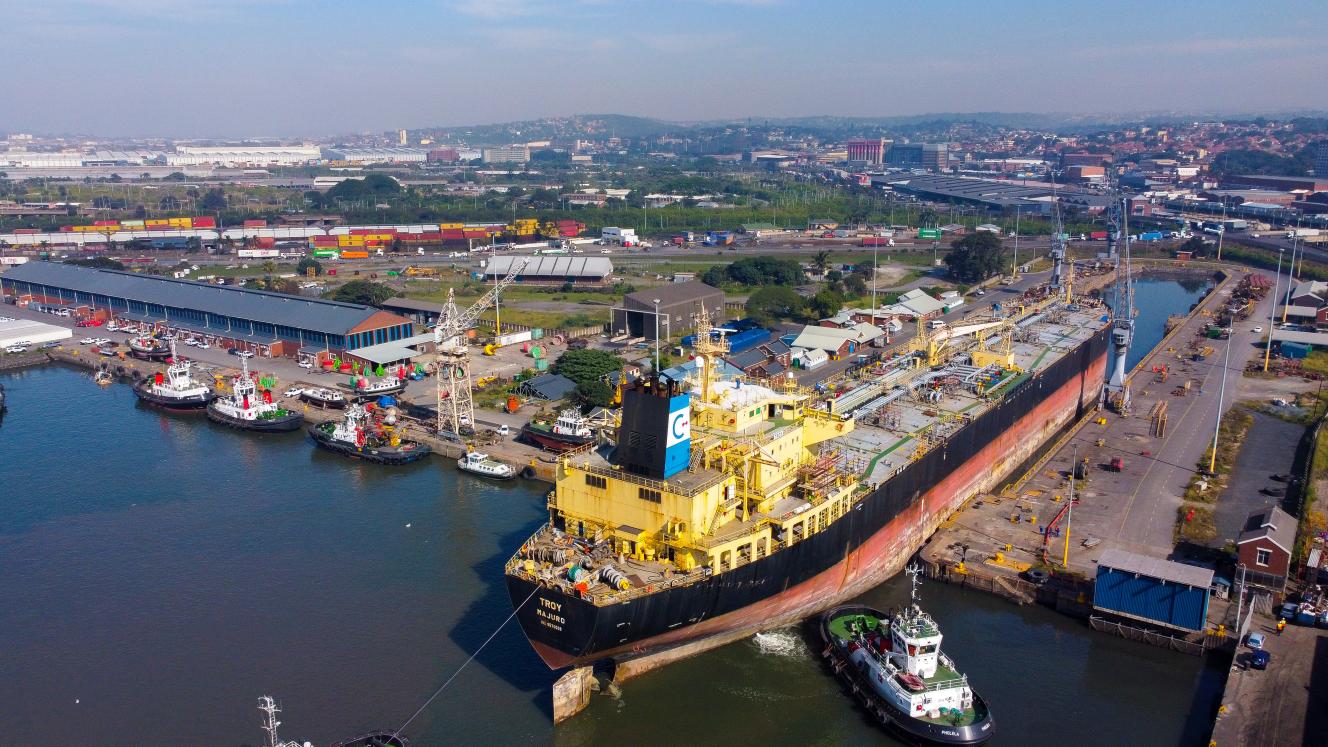
After a year in which the shipping industry was seen to be moving in the right direction, with rising demand and disciplined capacity supporting recovery in all trades, shippers should expect more of the same for the year ahead. According to Clarksons Research, risks remain on the demand side, but in 2018 the containership sector will be looking to push on and build further on the progress made in 2017. “The critical factor for me is the supply side and the serious number of over 14 000-TEU vessels which are going to hurt demand and hasten further cascade into smaller trades,” a source who preferred to remain anonymous told FTW. It’s a sentiment shared by Polaris Ship Agencies CEO Malte Kersten. “Some of the big shipping lines still plan to add more capacity to the market, which doesn’t necessary require it. Once these huge vessels hit the main trades, smaller units will be pushed down into smaller trades, which actually don’t require additional capacity.” Statistics provided by a source close to the market revealed that overall imports into South Africa rose by 4.3% with a strong December lift – probably the result of delayed flows into Durban following damage to the port in October. The graphs are driven by Transnet Port Terminals monthly stats – and are a tale of two trades. AsiaSouth Africa was up over 8% in 2017 but Europe trade imports declined by 4.5%. He attributes the Europe decline to the avian flu in Europe which saw South America replacing it as a poultry supply source for South Africa. “This has stripped out over 1600 TEUs per month from the Europe trade since about March 2017 so it is significant. There were other weaknesses coming on the auto trade but that will turn in 2018.” The jury is still out on why the Asia–SA trade inbound was so healthy and what was driving it but volumes remained robust throughout the year, according to an industry source. And while the economics certainly did not support it a relatively healthy rand would have helped, he said. “The result of this is that it helped the freight market from Asia to SA in 2017 whilst in spite of weakness in Europe trade generally rates held up. Europe trade inbound is less sensitive to demand/supply.” DAL Agency managing director David McCallum pointed to fairly consistent capacity on the Europe-SA trade lane over the past few years. “We would expect this to remain the same in 2018 and would be surprised to see any further increase in capacity in 2018 resulting from the cascading of vessels.” He said that rates had been a little firmer in the second half of 2017. “We would expect to see these increase further as a recovery from the rate reductions that were experienced in 2016 and early 2017.” “The strong citrus crop led to a massive growth in reefer volumes to Asia and also Europe whilst the dry cargo volume on both trades rose over 5-6% with good volumes across all sectors – but notably in mining volumes, the likes of chrome, manganese and copper. There was also a definite swing over to containers in the chrome sector due to fewer Handymax bulkers in the market since the maize crop recovery in 2017 which meant no imports were required,” according to our source. With the dwindling number of shipping lines thanks to mergers and acquisitions Kersten is cautiously optimistic that the demand/supply ratio will continue to work in favour of the lines. “The supply/demand side clearly worked on the AsiaSA trade during 2017,” said another source. “This trend started in July 2016 once lines took a more aggressive approach to really low unsustainable levels. “Lines seem to have maintained discipline although longer-term contract rates did not follow the same higher levels that the spot market followed. Levels have held up post the peak but this is more to do with technical supply side reduction post the Durban storm where the ASA and FAX consortium voided additional weeks rather than inject more tonnage.” With no signs of any major supply side changes on either Europe or Asia trades, there’s a generally positive outlook for 2018. “But this is only driven by supply/ demand – nothing else – and often it does not take much to shift this,” he said.
IMAGE

INSERT with IMAGE
With the dwindling number of shipping lines the demand/ supply ratio should continue to work in favour of the lines. – Malte Kersten