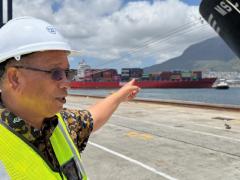
First TradeMark Southern Africa (TMSA) closed its doors – and then the Federation of East and Southern African Road Transport Associations (Fesarta) followed suit almost a year to the day later. Be it funding or politics at play, the reasons for the closure of these two fundamental organisations remain unclear. Suffice it to say that the closing down of TMSA already compromised the progress made in transport efficiency in southern Africa. Fesarta’s closure is set to compound this even further. Fesarta has for the past decade or more played a critical role in the heavy vehicle transport industry across southern and East Africa. Currently there is real uncertainty across the industry as to how the current Comesa/EAC/SADC tripartite programmes and projects will proceed without the role of Fesarta. “Harmonisation of road transport regulations is a critical lever for promoting economic growth on the continent by reducing costs and optimising the smooth flow of goods and services between countries,” says Paul Nordengen, research group leader: network asset management systems for the CSIR Built Environment. “Minimising delays at border posts is another critical issue. Unfortunately many countries in the region tend to be introspective, focusing primarily on domestic issues. Fesarta has been a significant voice in making regional issues more prominent by sharing information and being vocal at relevant regional conferences, workshops and committee meetings. They have facilitated bridging the gap between industry (primarily transport operators) and governments on numerous road transport-related issues. The sharing of information regarding regional initiatives and developments in road transport has, in my mind, been most beneficial for a wide range of government and industry stakeholders, helping them to take into consideration developments in other parts of the continent when dealing with their own local issues.” Barbara Mommen, CEO of the Maputo Corridor Logistics Initiative (MCLI), agrees, saying that organisations such as MCLI have depended on Fesarta’s insights into various initiatives that affect trade and transport in the region. “It allowed us to spot immediately any regulations or similar things that would have a negative impact on the industry and we could react timeously,” she says. The Regional Economic Communities (RECs) – SADC, Comesa and EAC – primarily represent the governments of member states. Fesarta represented primarily the road freight industry in the region. “This was a healthy situation, ensuring that both perspectives of important regional issues relating to road transport were highlighted and addressed. It is thus unlikely that the RECs or the Tripartite on their own could fulfil the role of Fesarta. A more industry-representative body is required. It is thus most unfortunate that Fesarta has ceased operating,” says Nordengen. According to Brenda Horne Ferreira, CEO of the Southern Africa Shippers Transport and Logistics Council, there remains a real disconnect between countries and the regions that have to implement policy and programmes as per the Tripartite. “Fesarta – and really Barney Curtis who headed up the organisation – played a major technical role in the harmonisation drive that was facilitated across the Tripartite. The question is who is going to do it now?” This, the experts agree, is the big question. What now? Says Mommen: “I really don’t know what the answer is, and I am always averse to forming new institutions when existing ones could be beefed up and used effectively. But, I do think that SADC should try to find funding to support Fesarta and to ensure its continuity, as they have been a pillar of support to SADC’s transport initiatives.” Horne Ferreira agrees saying allowing one organisation to close to just start up another is pointless. “It is maybe time to rethink what we need as regions from both a public and private sector perspective, what policies have to be implemented and what is the best platform to drive it with.” Nordengen says as a matter of urgency stakeholders in the region, including both government and industry, are going to have to sit down to discuss the way forward – be it through the establishment of a follow-on organisation or the resuscitation of Fesarta so that its valuable contribution to the road transport sector in Africa is not lost. Gavin Kelly, technical director of the Road Freight Association, says it is essential to have someone monitoring policy and programmes from a regional perspective. “The RFA won’t sit idly by and watch decisions being made at regional level that negatively affect our operators, and we will get involved. Already there have been one or two issues that have had to be taken up that would usually have been handled by Fesarta,” he told FTW. “In the interim the road freight organisations in the various countries can work together to address issues as and when they come up, but it’s not a feasible long- term solution.” INSERT & CAPTION 1 Barney Curtis played a major technical role in the harmonisation drive that was facilitated across the Tripartite. INSERT & CAPTION 2 Fesarta has been a significant voice in making regional issues more prominent. – Paul Nordengen
Fesarta's closure puts the brakes on further regional harmonisation
Comments | 0
© Now Media. This content is protected by copyright and may not be adapted or republished. If you would like to discuss cooperation opportunities, please contact: editor@freightnews.co.za.