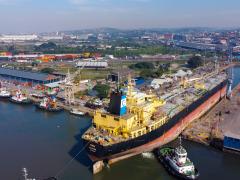
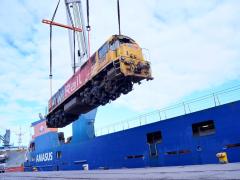
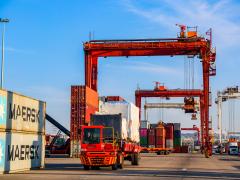
The Walvis Bay Corridor Group (WBCG) is changing the mindset of both importers and exporters about the benefits of using the Port of Walvis Bay. Ongoing information sessions as well as the establishment of a branch office in Gauteng are paying off as importers and exporters increasingly become more aware of the advantages – savings in travel distance and time translating ultimately into savings across the whole supply chain. Agnetha Mouton, WBCG business development officer, says it remains a challenge to change perceptions. The WBCG, a public private partnership, aims to increase the utilisation not only of the three corridors it serves through the port of Walvis Bay – the TransKalahari, the TransCaprivi and the TransCunene. “We have seen some major developments in recent months,” says Mouton. “This includes several feasibility studies that have been conducted and concluded as well as a major port expansion project that will see us increasing the port capacity from the current 200 000 TEUs per year to 500 000 per annum.” The conclusions of a feasibility study around a one-stop border post between Trans Kalahari and Mamuno border posts were presented to the governments of Namibia and Botswana recently, as was a proposal for a corridor performance management system. “A feasibility study is also in progress regarding the extension of the railway lines along the TransKalahari Corridor. A separate study has been completed on the upgrade of the Okavango River/ Divundu Bridge which proposes increasing the carrying capacity of the bridge from its present 60 tons and widening it from a single to a double lane bridge.” Mouton says all of this continues to show importers and exporters the commitment of the WBCG to the corridors and the port. “We have more direct shipping lines calling from Europe, North and South America, the Middle East, the Far East and Africa, which also results in increased opportunity for importers and exporters. There is no doubt that the Walvis Bay Corridors provide an ideal opportunity to add economic value to countries like Angola, Botswana, the DRC, Zambia, Zimbabwe and South Africa.”
Feasibility studies ensure constant improvement on Walvis corridors
Comments | 0
© Now Media. This content is protected by copyright and may not be adapted or republished. If you would like to discuss cooperation opportunities, please contact: editor@freightnews.co.za.