Against a background of
growing uncertainty around
global trade, foreign direct
investment (FDI) into
Africa has declined by 13%
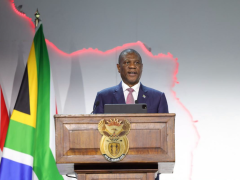
according to Dr Mukhisa
Kituyi, secretary general
of the United Nations
Conference on Trade and
Development (Unctad).
Delivering a keynote
address at the annual
Investing in Africa Mining
Indaba recently, the former
Kenyan
minister of
trade and
industry
said the
decline was
much more
substantial in those
countries that depended on
the extractives sector.
“Flows to Angola
more than halved while
Mozambique saw a drop
of 11%. Only areas that are
not traditionally drivers of
investment in extractives
saw a slight improvement –
led by Egypt which for the
second year in a row was the
largest recipient of FDI on
the continent.”
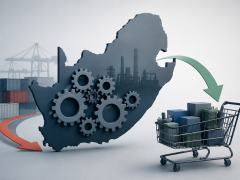
He said similarly South
Africa had performed
extremely well in attracting
investment. After having
the third highest drop the
previous year, the country
saw a 38% increase in the
latest report – albeit still
with a very modest value of
only $2.4 billion dollars of
FDI.
Kituyi said expectations
of an improvement in 2017
were not high although at
present an increase was
expected.
Weak global
economic
growth and
slow gains in
world trade
volumes are
cited as the major reasons
for the ongoing decline.
Investment in greenfield
FDI projects reached a low
in 2012 at only $7 billion,
down from $37 billion in
2008. While it increased
slightly reaching $22 billion
in 2014 it declined again last
year to $16 billion.
“We do not see significant
improvements in 2017,” he
said. “However the actual
stock of mining FDI in
Africa has been on the rise
– reaching $575 billion in
2014, a five-fold increase
over 15 years.”
While many consider
Africa as the final frontier
in terms of land-based
mineral resources, the
level of improvement
and utilisation of its
potential remains a
basis of concern for
the long term, said
Kituyi.
“Traditional
investment in Africa
has been a resourceseeking
venture. At
the height of the crisis
years there was an
inverse relationship between
trouble and investment in
countries such as the DRC,
Angola and the Niger Delta.
It would seem the more
trouble there was, the more
investment they received.”
He said this questioned
the approach that good
governance and stability
were big drivers of
investment.
Africa, said Kituyi, had
two challenges to address.
“Firstly how do we realise
the potential of greater
Africa. For example, while
the
stock
of mineral
investment
has been
growing in
Africa, relative
to other areas it
has been falling
back. The second
challenge is
around good
governance.”
With many
African countries
not even aware of how
much was being mined
out of their countries, the
continent was also very
vulnerable to taxation,
with taxes being the largest
source of public revenue.
Africa needed to address
governance on all levels.
At the same time, said
Kituyi, Africa had to
improve performance as its
exports were stagnant.
In 1995 the country
exported $68 billion of
manufactured goods but by
2014 this had only increased
to around $90 billion.
FDI on the decline – but not in SA
Comments | 0
© Now Media. This content is protected by copyright and may not be adapted or republished. If you would like to discuss cooperation opportunities, please contact: editor@freightnews.co.za.