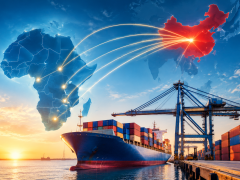
In a book called “Ninety Percent of Everything” written by British journalist and author Rose George, she called shipping “the invisible industry”.
“These ships and boxes belong to a business that feeds, clothes, warms, and supplies us,” she wrote. “They have fuelled if not created globalisation.
“They are the reason behind your cheap T-shirt and reasonably priced television. But who looks behind a television now and sees the ship that brought it? Who cares about the men who steered your breakfast cereal through winter storms?
“How ironic that the more ships have grown in size and consequence, the less space they take up in our imagination.”
So, how about some facts about the shipping industry from George and from separate lists compiled by David Pegg and Eric Levenson just to tickle the imagination.
* Almost 90% of everything we buy arrives via ship.
* Around two-thirds of ship crews in the world have no means of communication while they are on the open sea. Only about 1-in-10 will have freely-available Internet.
* Every year, more than 2 000 sailors die at sea, and an incredible two ships are lost every day. In 2012, the attack rate on seafarers was higher than the number of violent crimes in SA, rated the highest-crime nation on Earth.
* The largest ships can cost over 200 million dollars to build.
* Females constitute only about 2% of seafarers. People from the Philippines make up more than a third of all crews worldwide, with nearly a quarter million at sea.
* Compared to the energy expended moving goods by plane or truck, shipping is far less damaging in terms of greenhouse gases released. Sending a container from Shanghai to Le Havre emits fewer greenhouse gases than the truck that takes the container on to Lyon. However, the shipping industry is so big that, if you added shipping to the list of the world’s most polluting countries, it would come in sixth place. So it’s not exactly environmentally beneficial.
* The largest of container ships on the seas can carry about 18 000 boxes, which would hold almost 917 million bananas. This would be about one banana for every person in Europe and three each for everyone in SA – with quite a few left over to feed to the monkeys.
* At least 20 million containers are currently traveling across the oceans. That’s a lot of bananas!
* Economically, the shipping industry is monstrous in its size. In the UK, for example, shipping accounts for more of the gross domestic product (GDP) than restaurants, takeaway food, and civil engineering combined — about 2% of the GDP by itself, just behind construction.
* Shipping is incredibly cheap. It’s less expensive to ship Scottish cod 10 000 miles away to China to be filleted and then sent back to Scotland than it is to pay Scottish filleters to do the job. Of course, this reflects mostly on the cheapness of Chinese labour, but it does also show shipping’s low costs.
* Inspection of containers is rare. Only 5% of the containers shipped to US ports are physically inspected, and that number is even lower in Europe.
* A container ship travels the equivalent of three-quarters of the way to the moon and back in one year during its regular travel across the oceans.
Facts about “the invisible industry”
Comments | 0
© Now Media. This content is protected by copyright and may not be adapted or republished. If you would like to discuss cooperation opportunities, please contact: editor@freightnews.co.za.