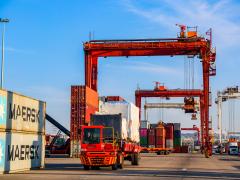
It is two years since the International Chamber of Shipping (ICS) and the World Shipping Council (WSC) published guidelines for the safe transport of containers by sea. In this, these two august bodies (the WSC, for example, represents lines controlling approximately 90% of the global liner vessel capacity) stated categorically that overloading of a container was something that can never be condoned. The publication went on to say that the party packing the container was responsible for ensuring that the gross mass of the container was in accordance with the gross mass given on the shipping documents. Furthermore, the guidelines stated that terminal operators should verify the weights of incoming containers before they were loaded. But, two years later, it seems that no steps have been taken to enforce these recommendations, according to Shippers Voice (SV) – an independent freight industry information portal and networking site. This despite the fact that few would deny that the weighing of all containers before they are loaded on board a vessel would represent a major advance in improving vessel safety. Also, with manufacturers of container handling equipment having been busy developing ways of automatically weighing containers this should be a fairly straightforward practice. So, asked SV editor, Dr Andrew Traill, how long might it be before this happens? Looking at the local scene, Peter Newton, director of Seaboard and Cape Town port users’ spokesman, told FTW he agreed with Traill’s sentiments. “This is a universal problem,” he added, “and the only (practical) way of dealing with it is to have terminal operators weigh the boxes on arrival. “Many are equipped to do this, even if they do not/will not utilise the facility. That’s the case here in SA where the container terminals are state-owned and operated – although the wind may be changing.” The point is that the latest container straddle carriers at the SA ports are fitted with appropriate weighing devices – intended to automatically trim the carrier to the load it has to lift. FTW asked Kevin Martin, MD of Freightliner and chairman of the SA Association of Freight Forwarders (Saaff) truckers’ division – the Durban Harbour Carriers Association: Why not use these to check for overloading? “This is something we’ve put to Transnet Port Terminals (TPT) on a number of occasions. It seems only sense that – as they have these weighing devices fitted to all the latest straddle carriers – they should link this weight measurement to the documentation in their system.” Certainly, you’d need an assized weighbridge before you could invoice for a verified overweight container, Martin added. “The machines are not that accurate,” he said. “But they could certainly show which boxes are seriously overweight – and this would be a major safety contribution for the road trucking and shipping industries.”
Experts debate answer to overloading conundrum
Comments | 0
© Now Media. This content is protected by copyright and may not be adapted or republished. If you would like to discuss cooperation opportunities, please contact: editor@freightnews.co.za.