The ongoing regional crisis
involving the Arab states in the
Gulf has yet to make any real
impact on international energy
prices, but it is a conflict that
must be closely monitored.
With Qatar being the
world’s leading LNG exporter,
restrictions imposed on
the country by Saudi
Arabia, the UAE,
Bahrain and Egypt
restricting
air, land
and sea
access have
seen energy
prices
remaining
relatively
unchanged
while
maritime
routes
have also
not been
significantly
affected.
According to Jean-
François Seznec, a political
scientist specialising in
business and finance in the
Middle East, the blockade
imposed on Qatar – now
in its fourth month – has
seen the small, but wealthy
country trying to flex its
muscles.
“They are trying, and to
a certain extent succeeding,
in using their limited power
very well against the Middle
East’s giants, Saudi Arabia
and the UAE,” he told FTW.
“How long they can continue
to do this and survive is
arguable.”
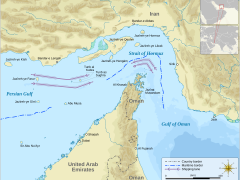
He said to date the impact
on Qatar had been relatively
contained, with the country
still able to
export its
gas as
main sea
routes
were
accessible
through
Iranian waters.
The crisis
was, however,
making Qatar
more dependent
on Iran and the
sustainability
of this was
questionable.
“The blockade
has forced Qatar closer to
Iran as all of its food and
transport is through Iranian
air and water space. This
entire situation gives Iran
great power over Qatar.”
And this, said Seznec, would
go against the grain of most
of Qatar’s population which
is traditionally Sunni Muslim
as opposed to Iran which is
home to the largest number
of Shia Muslims in the world.
INSERT
The blockade
imposed by Qatar is
seeing the small but
powerful country
flexing its muscles.
Energy prices contained despite Gulf crisis
Comments | 0
© Now Media. This content is protected by copyright and may not be adapted or republished. If you would like to discuss cooperation opportunities, please contact: editor@freightnews.co.za.