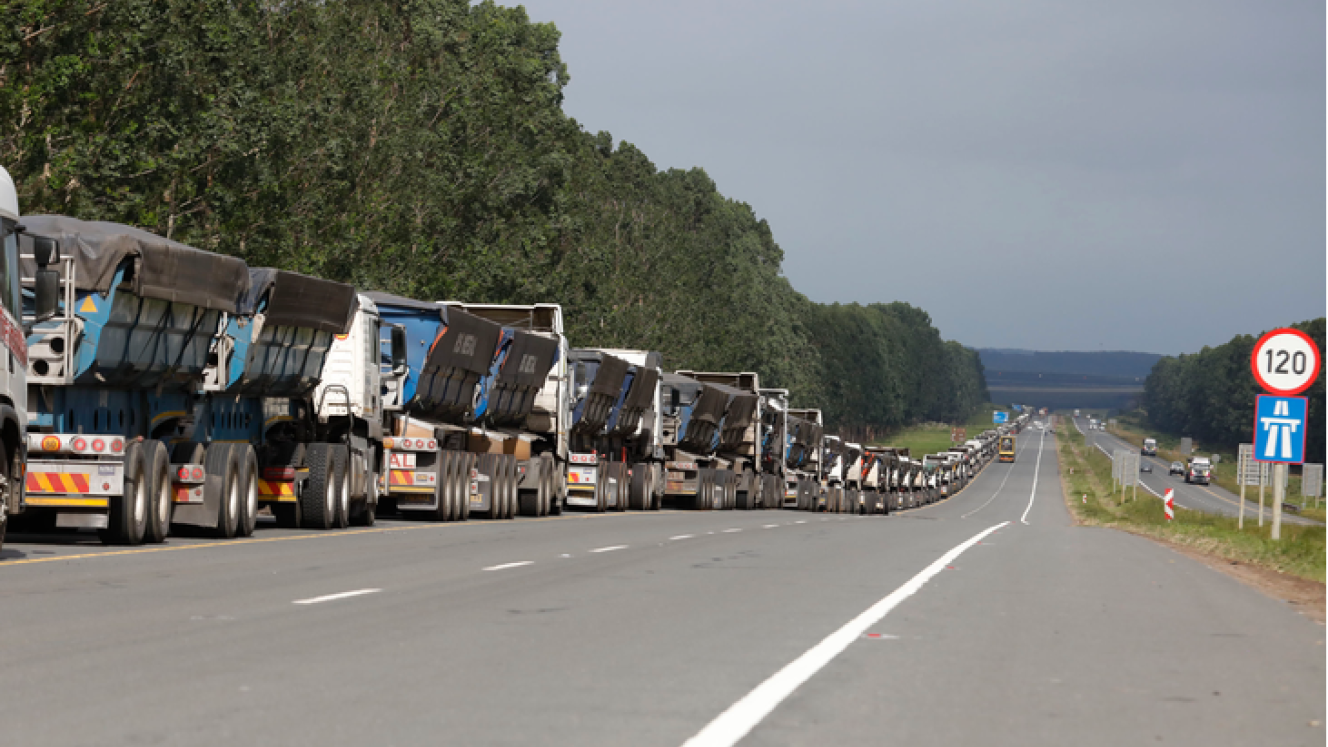
In the past few years an extensive involvement with road freight into neighbouring member countries of the Southern African Customs Union (Sacu) has led Compu-Clearing to develop a special system for the job, according to account manager Gavriel Rootshtain. “This targets the BLNS countries (Botswana, Lesotho, Namibia, Swaziland) and, in particular, the Asycuda system that they use,” he told FTW. “Based on our experience we have developed a system specifically designed for the capturing of customs documentation for these countries.” The current BLNS system, he added, is extremely quick, accurate and powerful. He also pointed to various features which he felt underlined its versatility. “These include creating road manifests; details of all the different tariff headings which are linked to our online tariff book that is updated daily; and a dynamic national credit limit check, which instantly suspends the entry if the credit limit is exceeded. “The system also creates a unique UCR number as per the SA Reserve Bank (SARB) requirements.” Another of the more recent developments to the system is a direct electronic data interchange (EDI) link with customs - making the entire process paperless, and ensuring a quicker, more effective and accurate practice all round. Another of the features highlighted by Rootshtain was the enquiry screen. “This,” he said, “shows exactly what is happening with the user’s shipment, updating them on how far along the process is, or why it was rejected. The user will no longer have to wait for documentation at the border or have shipments delayed.” Amongst Compu-Clearing’s latest enhancements is a working interface with the Asycuda system – allowing the user to directly interface local data into the Asycuda system. “This means that, with one click, the entire entry is now copied into Asycuda and can be sent to both sides of the border,” said Rootshtain. “This interchange of data disposes of any need for double-capturing or having to struggle on the Asycuda system because of slow lines and down time.” He saw the entire system as “a seamless solution” – helping companies to generate better communication and manage their business procedures more efficiently. And the system development is an on-going evolutionary process, Rootshtain added. “It is only through constant innovation and development that we can find ways to make these processes simpler and rule out mistakes in the work place. “This will allow businesses to retain a healthy relationship with our neighbours across the border and continue to build strong economic growth throughout Africa.”
Electronic clearance system designed for BLNS countries
Comments | 0
© Now Media. This content is protected by copyright and may not be adapted or republished. If you would like to discuss cooperation opportunities, please contact: editor@freightnews.co.za.